
Fence and Deck Staining Tips for First-Time Homeowners
Buying your first home is exciting, but it also comes with a long list of responsibilities you may not have thought about before. Outdoor wood features like fences and decks add beauty, privacy, and value to a property, but they also need regular care to stay in good condition. If you are new to home maintenance, learning how to protect these surfaces does not have to feel overwhelming. With a few smart strategies, you can keep your outdoor spaces looking great and lasting longer.
This guide covers practical new homeowner staining tips to help you understand when to stain, how to prepare wood correctly, what products to choose, and how to build a simple maintenance routine. Whether you are caring for a backyard privacy fence or a gathering space for family and friends, these steps will make deck maintenance and fence upkeep much easier.
Why Staining Matters for Fences and Decks
Many first-time homeowners assume stain is only about appearance, but it does much more than improve color. A quality stain helps protect wood from moisture, sun exposure, mildew, cracking, and warping. Since fences and decks are constantly exposed to the elements, staining creates a barrier that helps preserve the wood’s strength and appearance over time.
Without proper protection, wood can fade, dry out, absorb water, and begin to deteriorate faster than expected. This is especially true for decks, which experience foot traffic, outdoor furniture movement, and direct weather exposure. Good deck maintenance starts with recognizing that stain is both a cosmetic and protective investment.
Know the Difference Between Sealing, Painting, and Staining
Before you begin, it helps to understand your options. While people often use the terms interchangeably, staining is different from sealing or painting.
Stain
Wood stain enhances the natural grain while adding color and protection. It is available in transparent, semi-transparent, and solid finishes.
Sealer
A clear sealer primarily protects against moisture but does not add much color. Some products combine stain and sealer in one.
Paint
Paint forms a solid surface coating over the wood. It offers strong coverage but can peel or chip over time, especially on high-use deck surfaces.
For many homeowners, stain is the preferred choice because it balances protection, durability, and natural appearance. It is especially useful if you want your fence or deck to keep a wood-like look rather than a fully painted finish.
When to Stain a New or Existing Fence and Deck
Timing matters. One of the most helpful new homeowner staining tips is to avoid staining too early or too late. If your fence or deck is newly installed, the wood may need time to dry out before it can absorb stain properly. Pressure-treated lumber in particular often holds excess moisture and may need several weeks or even a few months before it is ready.
For older wood, stain when the surface is clean, dry, and free of peeling finish. A simple water test can help: sprinkle a little water on the wood. If it beads up, the old finish may still be active. If it soaks in quickly, the wood may be ready for staining.
In terms of weather, choose a stretch of mild, dry days. Avoid staining in direct harsh sun, before rain, or during very humid conditions. Moderate temperatures usually provide the best results and allow the stain to cure evenly.
Start with Proper Cleaning and Preparation
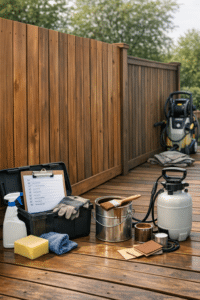
If there is one step beginners should never skip, it is prep work. A stain will only perform well if the surface underneath is ready. This is a core part of any fence care beginner guide, because poor preparation often leads to blotchy color, peeling, or reduced lifespan.
Inspect the Wood First
Check for loose boards, popped nails, mildew, splinters, or signs of rot. Make repairs before staining so you do not seal in damage.
Clean Thoroughly
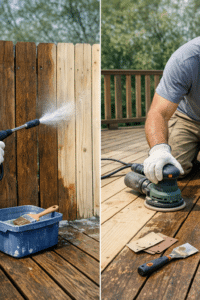
Remove dirt, pollen, algae, mildew, and old debris. You can use a wood cleaner or deck wash designed for exterior lumber. A pressure washer can help, but use caution. Too much pressure can damage the wood fibers and create an uneven surface.
Sand Where Needed
Rough spots, raised grain, and old peeling finish should be lightly sanded. This helps the stain absorb more evenly and gives a smoother final look.
Let It Dry Completely
After washing, allow enough drying time before staining. Trapped moisture is one of the main reasons stain fails early.
For first-time homeowners, taking your time during preparation can make the actual staining process much more successful.
Choosing the Right Stain for Your Project
Not all stains are the same, and the best choice depends on the condition of your wood, the look you want, and how much maintenance you are willing to do.
Transparent Stain
This option shows off the natural wood grain and is ideal for newer or high-quality wood. It offers a more natural appearance but may need more frequent reapplication.
Semi-Transparent Stain
A popular middle-ground choice, semi-transparent stain adds some color while still allowing wood grain to show through. Many homeowners choose this for both fences and decks.
Solid Stain
Solid stain provides the most color coverage and can help hide imperfections in older wood. It looks more uniform but covers much of the natural grain.
Another decision is oil-based versus water-based stain. Oil-based stains tend to penetrate deeply and are known for rich finish quality, while water-based options often dry faster and are easier to clean up. Read the manufacturer’s instructions carefully and choose a product made specifically for exterior use.
Best Application Tips for Beginners
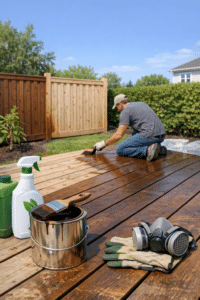
Once the wood is prepped and the stain is selected, it is time to apply. These simple new homeowner staining tips can help you get professional-looking results even if it is your first time.
Use the Right Tools
Brushes, rollers, stain pads, and sprayers can all work depending on the project. Brushes are great for detail and control, while sprayers can speed up larger fence jobs. Many homeowners use a combination, such as spraying and then back-brushing for even coverage.
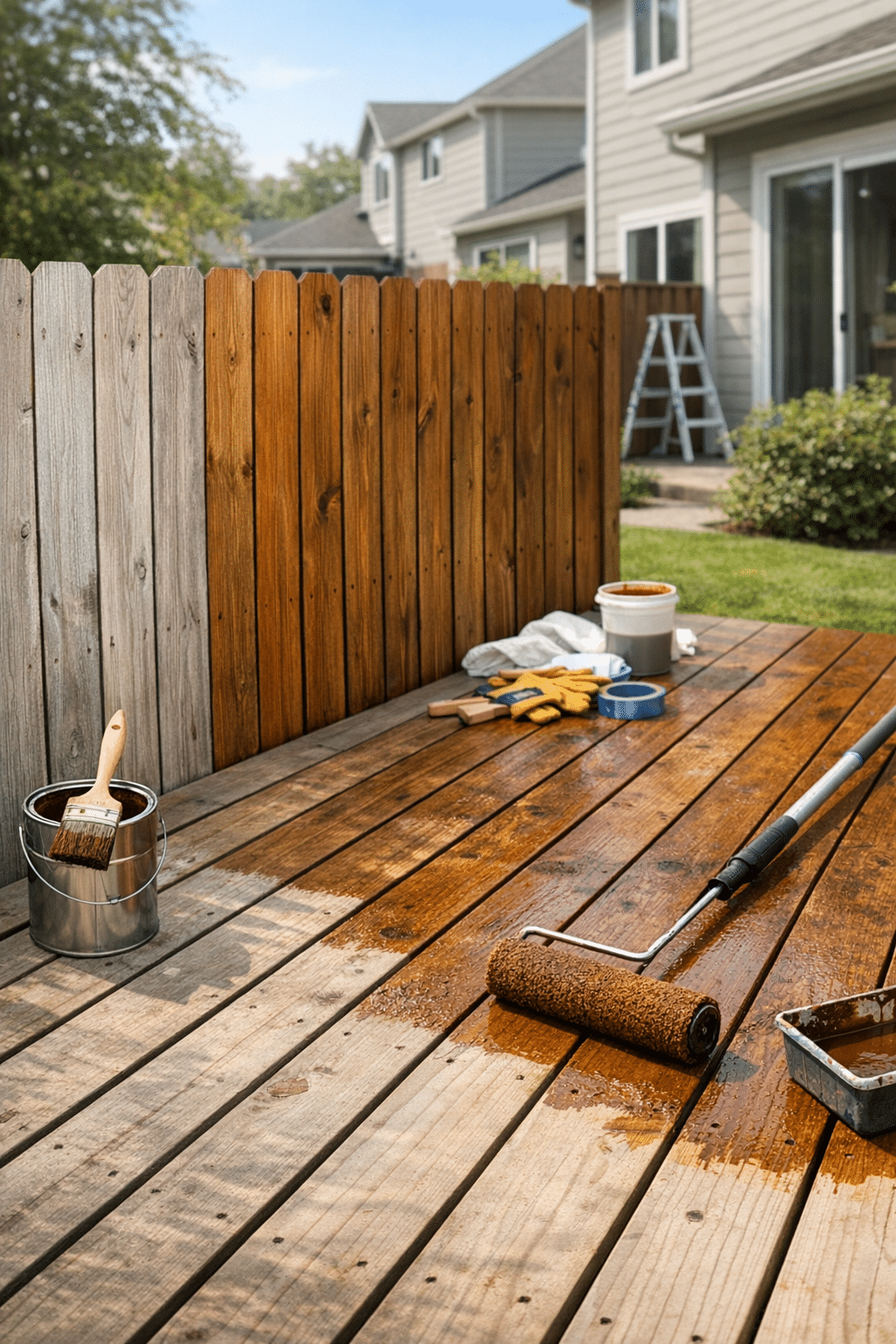
Work in Small Sections
Do not try to cover the entire deck or fence at once. Move board by board or section by section to avoid lap marks and uneven drying.
Apply Thin, Even Coats
More stain is not always better. Thick coats can puddle, dry unevenly, or become sticky. Follow product directions for coverage and drying time.
Follow the Wood Grain
Applying stain in the same direction as the grain helps create a cleaner, more natural finish.
Watch for Drips and Overlap Marks
This is especially important on vertical fence boards and railing spindles. Smooth out excess stain as you go.
If you are staining a deck, remember to plan your exit path so you do not trap yourself in a corner. Start at the far end and work backward toward the stairs or door.
A Simple Fence Care Beginner Guide for Long-Term Results
Once your fence is stained, regular upkeep becomes much easier. A good fence care beginner guide focuses on prevention rather than waiting for major problems to appear.
Trim back grass, weeds, and bushes that hold moisture against the fence. Keep sprinklers from constantly soaking the boards. Check each year for mildew, discoloration, or loose hardware. Wash the fence when dirt and buildup begin to collect, especially after pollen season or wet weather.
Depending on climate, sun exposure, and stain type, most fences need re-staining every two to five years. South-facing sections often wear out faster because they receive more sunlight. Inspect the fence regularly so you can touch up worn areas before the wood becomes vulnerable.
Deck Maintenance Tips Every New Homeowner Should Know
Compared to fences, decks often require more attention because they handle foot traffic, furniture, grilling, spills, and weather all at once. Consistent deck maintenance helps preserve both safety and appearance.
Sweep Regularly
Leaves, dirt, and debris trap moisture and can stain the wood surface over time.
Clean Spills Quickly
Grease, food, and drink spills can soak into wood and damage the finish if left too long.
Move Furniture Occasionally
This helps prevent uneven fading and allows you to check for trapped moisture underneath rugs or planters.
Inspect for Wear
High-traffic paths, stairs, and railings may need touch-ups sooner than the rest of the deck.
Wash Seasonally
A gentle seasonal cleaning removes buildup and helps you spot problem areas early.
One of the best new homeowner staining tips is to make deck checks part of your seasonal routine. A quick inspection in spring and fall can help you catch issues before they turn into repairs.
Common Mistakes First-Time Homeowners Should Avoid
Learning what not to do is just as valuable as learning the correct steps. Here are some common mistakes beginners make when staining fences and decks:
Skipping prep work: Dirt, mildew, and moisture can ruin even the best stain.
Staining in the wrong weather: Rain, intense heat, or high humidity can affect drying and finish quality.
Using interior or low-quality products: Always use exterior stains made for decks or fences.
Applying too much stain: Thick coats often lead to tacky surfaces and uneven protection.
Ignoring maintenance: Even the best stain needs periodic cleaning and reapplication.
A reliable fence care beginner guide and a steady deck maintenance routine can help you avoid these issues and extend the life of your outdoor wood surfaces.
How Often Should You Re-Stain?
There is no one-size-fits-all timeline. Climate, sun exposure, wood type, stain quality, and foot traffic all play a role. In general, decks may need more frequent staining than fences because they experience more wear. Transparent finishes usually require more frequent upkeep, while solid stains may last longer.
The best approach is to inspect rather than guess. If water stops beading, color starts fading, or the wood looks dry and worn, it may be time for another coat. Staying proactive is far easier and less expensive than restoring neglected wood.
Final Thoughts for First-Time Homeowners
Caring for a wood fence or deck does not have to be complicated. With the right preparation, product selection, and follow-up care, even beginners can achieve lasting results. These new homeowner staining tips are designed to help you protect your investment, improve curb appeal, and build confidence in your home maintenance routine.
Use this fence care beginner guide and stay consistent with deck maintenance so your outdoor spaces stay strong, attractive, and ready to enjoy year after year. If you want the best results with less stress, consider speaking with a local staining professional or creating a seasonal care checklist today.