
The Environmental Impact of Fence and Deck Stains
Fence and deck stains do more than improve curb appeal. They protect outdoor wood from moisture, sunlight, mold, and wear, helping homeowners extend the life of their structures. But while these products serve an important purpose, they can also carry environmental costs that are often overlooked. From air pollution to runoff contamination, the stain you choose can influence the health of your home environment and the wider ecosystem.
Understanding the environmental impact of fence and deck stains is especially important today, as more consumers look for eco-friendly products that balance performance with sustainability. Whether you are staining a backyard fence, refinishing a deck, or maintaining outdoor furniture, learning about VOC content, product ingredients, and responsible application methods can help you make a smarter and greener choice.
In this guide, we will explore how staining products affect the environment, what separates conventional formulas from green stains, and how to choose products that reduce harm without sacrificing durability.
Why Fence and Deck Stains Matter Environmentally
Outdoor wood stains are exposed to the elements from the moment they are applied. Unlike many indoor coatings, fence and deck stains face direct sunlight, rain, temperature shifts, and foot traffic. Over time, ingredients from the stain can evaporate into the air, wash into the soil, or break down under UV exposure.
The environmental impact of a stain generally comes from several areas:
1. Chemical emissions into the air: Many stains release solvents and other compounds during and after application.
2. Runoff into soil and waterways: Rain can carry trace chemicals from stained surfaces into surrounding landscaping, storm drains, and groundwater.
3. Manufacturing and packaging: The production of coatings uses energy, raw materials, and plastic or metal containers that contribute to waste.
4. Maintenance frequency: Products that fail quickly may require more frequent reapplication, increasing total resource use over time.
This means the most sustainable option is not always just the product with the “greenest” label. It is often the one that combines safer ingredients, lower emissions, and long-lasting protection.
The Role of VOC Content in Environmental Impact
One of the most important factors to evaluate in any stain is its VOC content. VOCs, or volatile organic compounds, are chemicals that evaporate easily into the air. They are commonly found in many paints, stains, sealers, and finishing products, especially solvent-based formulas.
When a stain with high VOC content is applied, those compounds are released into the atmosphere. This contributes to air pollution and can play a role in the formation of ground-level ozone and smog. In enclosed or poorly ventilated spaces, VOC exposure can also affect indoor or nearby air quality and may cause headaches, dizziness, or irritation for applicators.
Although fence and deck staining typically happens outdoors, that does not eliminate the issue. VOCs released outside still affect the broader environment. In neighborhoods with frequent home improvement activity, cumulative emissions can become significant.
Why Lower VOC Content Matters
Products with lower VOC content generally release fewer harmful emissions during application and curing. This can mean:
Better air quality around the home
Reduced contribution to smog formation
Safer working conditions for homeowners and contractors
Less lingering odor after application
Regulations on VOC levels vary by region, and many manufacturers now offer low-VOC or zero-VOC alternatives. However, it is still important to read labels carefully, since terms like “low odor” do not always mean low environmental impact.
Oil-Based vs. Water-Based Stains
A major environmental distinction in the stain market is the difference between oil-based and water-based products.
Oil-Based Stains
Oil-based stains have long been popular for their deep penetration and rich finish. They often perform well on older wood and can provide strong water resistance. However, they typically contain more solvents and higher VOC content than water-based alternatives.
Environmental drawbacks of oil-based stains may include:
Higher air emissions during application and drying
More difficult cleanup, often requiring mineral spirits or other chemical solvents
Greater disposal concerns for rags, brushes, and leftover product
Improperly discarded oil-soaked rags can also create safety risks, including spontaneous combustion.
Water-Based Stains
Water-based stains are often considered a greener option because they tend to have lower VOC content and are easier to clean up with soap and water. Many modern water-based formulas have improved significantly in durability, color retention, and mildew resistance.
Benefits of water-based options include:
Lower emissions and reduced odor
Simpler cleanup with fewer chemical cleaners
Faster drying times, which may reduce exposure to dust and debris
That said, not every water-based product is automatically among the best eco-friendly products. Some still contain additives or preservatives that may not be ideal for the environment. Product quality and ingredient transparency still matter.
How Stains Affect Soil, Plants, and Waterways
The environmental impact of stain does not stop once the coating dries. Outdoor surfaces interact constantly with rain, irrigation, and runoff. Over time, degraded finish particles and residual chemicals can move into nearby soil and water systems.
If a deck is positioned above a lawn, garden bed, or drainage area, runoff can carry small amounts of stain ingredients into the surrounding landscape. Conventional products with harsher solvents, fungicides, or synthetic binders may pose greater concerns, especially if they are applied carelessly or excessively.
Potential effects include:
Soil contamination that may affect microorganisms essential to healthy plant growth
Stress on ornamental plants if overspray or drips contact leaves, roots, or mulch
Water pollution when chemicals enter storm drains and eventually reach streams, lakes, or coastal waters
Choosing green stains with reduced toxicity can help lower these risks. So can proper preparation, careful application, and avoiding staining before rainfall.
What Makes a Stain More Eco-Friendly?
Consumers searching for eco-friendly products should look beyond marketing language and focus on practical features. A stain is generally more environmentally responsible when it minimizes harmful emissions, reduces toxic runoff, and lasts long enough to avoid excessive reapplication.
Key Qualities to Look For
Low or zero VOC content: This is one of the clearest indicators of reduced air pollution potential.
Water-based formulation: Often a better option for cleanup, odor reduction, and lower solvent use.
Biobased or renewable ingredients: Some green stains include plant-derived oils or resins instead of petroleum-heavy inputs.
Third-party certifications: Eco labels or environmental certifications can offer more confidence than vague claims like “natural” or “safe.”
Durability and longevity: A longer-lasting stain reduces the total amount of product used over the life of a deck or fence.
Responsible packaging: Recyclable containers and reduced packaging waste are also positive signs.
When comparing eco-friendly products, think in terms of the entire lifecycle: manufacturing, application, performance, maintenance, and disposal.
The Rise of Green Stains
Green stains have grown in popularity as homeowners become more aware of both personal health and environmental sustainability. These products are designed to lower the impact associated with traditional stains while still preserving wood against moisture and UV damage.
Some green stains use naturally derived oils, mineral pigments, or biodegradable components. Others focus on low emissions and safer chemistry rather than fully plant-based ingredients. The best options usually combine low VOC content with strong weather resistance, so the coating does not need constant reapplication.
However, it is important to stay realistic. No coating is completely impact-free. Even greener formulas require raw materials, transportation, packaging, and eventual replacement. The goal is not perfection. It is choosing better-performing, lower-impact solutions that reduce harm over time.
Application Practices That Reduce Environmental Harm
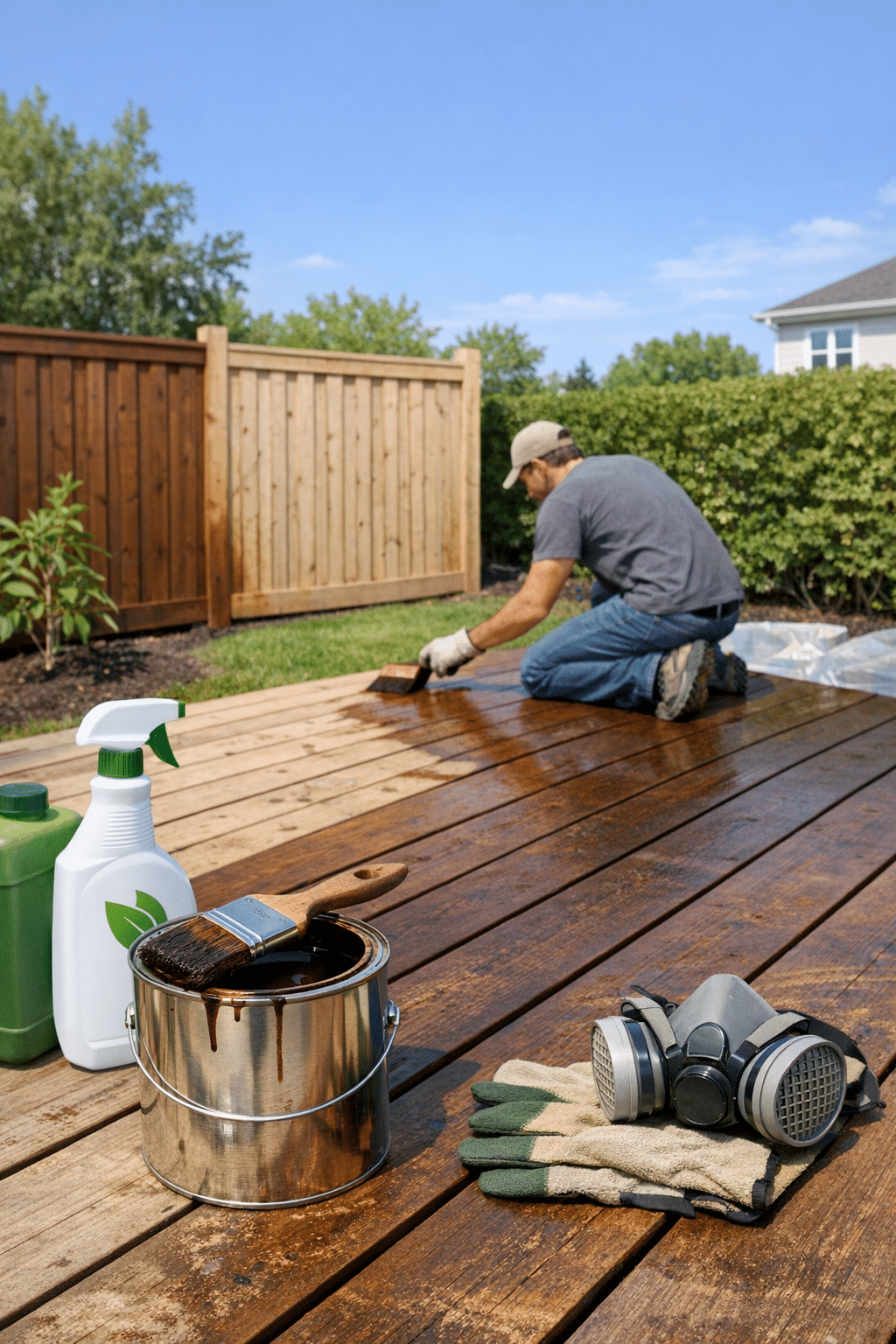
Even the best eco-friendly products can create avoidable problems if they are applied poorly. Responsible staining practices are a major part of reducing environmental impact.
Best Practices for Greener Application
Check the weather forecast: Avoid staining before rain, which can wash uncured product into the soil or storm drains.
Use only what the wood needs: Overapplication wastes product and increases drying time and runoff risk.
Protect nearby plants and surfaces: Use drop cloths and shield landscaping from drips or overspray.
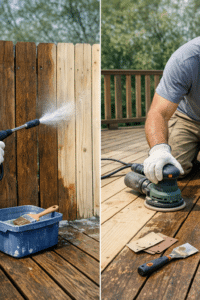
Prepare wood properly: Clean, dry wood accepts stain more evenly, reducing the need for repeat coats.
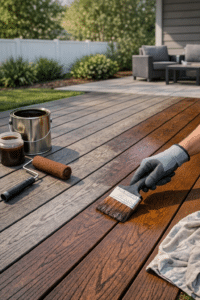
Choose the right tools: Brushes and pads often provide more controlled application than sprayers.
Ventilate storage areas: Store leftover stain safely and away from heat or ignition sources.
These simple steps help maximize product performance while minimizing unnecessary waste.
Proper Disposal and Cleanup
One of the most overlooked parts of stain use is what happens afterward. Leftover stain, contaminated rags, empty cans, and solvent-laden cleanup materials all require responsible handling.
For conventional oil-based products, improper disposal can release chemicals into landfills or drainage systems. Cleanup solvents can also create secondary pollution. By contrast, many water-based and lower-impact green stains simplify cleanup and reduce hazardous waste.
Smarter Disposal Tips
Never pour leftover stain down drains or onto the ground.
Check local hazardous waste rules for paints, stains, and solvents.
Allow approved containers to dry out fully if local regulations permit before recycling or disposal.
Handle oily rags carefully and store them according to fire safety guidelines.
Buy the right amount in the first place to reduce leftovers.
Product disposal may not be as visible as VOC content, but it is a major part of the overall environmental footprint.
Long-Term Sustainability: Maintenance Matters
A sustainable staining strategy is not just about the first coat. It also involves ongoing care that helps the wood last longer and reduces how often full refinishing is needed.
Regular cleaning, prompt repairs, and seasonal inspections can preserve a deck or fence so that stain performs better for longer. This means fewer stripped surfaces, fewer total gallons of product used, and less waste over the structure’s lifespan.
In many cases, using high-quality eco-friendly products once and maintaining the wood properly is greener than repeatedly applying cheaper, short-lived coatings. Durability is a key part of sustainability.
How to Choose the Best Greener Stain for Your Project
If you are shopping for a new stain, start with a practical checklist:
Review the VOC content on the product label or technical data sheet.
Look for water-based or low-solvent formulas when appropriate for your wood type and climate.
Research manufacturer transparency about ingredients and environmental claims.
Compare durability ratings so you do not sacrifice longevity for a greener label alone.
Consider tinted versus clear finishes, since added UV protection can extend the life of the wood and the coating.
Read local regulations, especially in areas with stricter VOC standards.
The right choice balances environmental responsibility, performance, aesthetics, and maintenance needs. Fortunately, there are more green stains and better eco-friendly products on the market now than ever before.
Conclusion
The environmental impact of fence and deck stains goes far beyond color and finish. Air emissions, runoff, waste, and product lifespan all play a role in determining how sustainable a stain really is. By paying attention to VOC content, choosing reliable eco-friendly products, and considering modern green stains, homeowners can protect their wood while making more environmentally responsible decisions.
If you are planning your next outdoor project, take the time to compare greener options and apply them carefully. A better stain choice today can mean cleaner air, less waste, and longer-lasting results tomorrow.