
Eco-Friendly and Low-VOC Fence and Deck Stains: A Smarter Way to Protect Outdoor Wood
Choosing the right stain for a fence or deck is about more than color and durability. For many homeowners, it is also about making a healthier, more responsible choice for their home, family, and the environment. If you are looking for a finish that protects wood while reducing harsh chemical exposure, eco-friendly and low-VOC fence and deck stains are worth serious consideration.
Today’s environmental stain options are more advanced than ever. They can enhance the natural beauty of wood, help resist weather damage, and reduce the strong fumes and air pollution often associated with traditional coatings. Whether you are refreshing an aging deck or staining a brand-new fence, understanding low VOC products and the basics of green staining can help you make a confident, informed decision.
Why Eco-Friendly Stains Matter
Outdoor wood surfaces take constant abuse from sun, rain, foot traffic, dirt, and seasonal changes. Stains are essential because they add a layer of protection against moisture penetration, UV damage, and premature aging. However, many conventional wood stains contain high levels of volatile organic compounds, commonly known as VOCs.
VOCs are chemicals that evaporate into the air as the stain dries. In high concentrations, they can contribute to air pollution and create strong odors that may be unpleasant or irritating. For homeowners concerned about indoor-outdoor air quality, pet safety, and environmental impact, choosing low VOC products is a practical step toward a healthier maintenance routine.
Eco-conscious stains are designed to reduce these emissions while still delivering performance. In many cases, they are also made with more sustainable ingredients, fewer toxic solvents, and formulations that are easier on surrounding plants, soil, and water systems when used correctly.
What “Low-VOC” Really Means
Not all products marketed as safer or greener are the same. Low VOC products generally contain fewer volatile organic compounds than traditional solvent-heavy stains, but the exact amount can vary by brand, region, and product category.
When evaluating a stain, it helps to look beyond the front label. Review the technical data sheet or product specifications to see the actual VOC level. Some products are labeled “low-VOC,” while others may be “zero-VOC” or water-based. Even then, colorants and additives can slightly change the final VOC content, so product details matter.
A low-VOC stain often offers several benefits:
Reduced odor: Less intense fumes make the staining process more comfortable.
Improved air quality: Lower emissions can be better for households and nearby outdoor living areas.
Easier cleanup: Many low-VOC, water-based products clean up with soap and water.
Environmental advantages: These can be among the best environmental stain options for minimizing chemical impact.
Key Types of Eco-Friendly Fence and Deck Stains
Water-Based Stains
Water-based stains are among the most popular choices for green staining. They typically have lower VOC content than oil-based products, dry faster, and produce less odor. They are also available in a wide range of transparent, semi-transparent, and solid finishes.
Many homeowners like water-based stains because they preserve wood appearance while offering good resistance to peeling and cracking. Modern formulas have improved significantly in terms of penetration, color retention, and weather durability.
Plant-Based or Natural Oil Stains
Some environmentally conscious brands offer stains made with natural oils such as linseed oil, tung oil, or other plant-derived ingredients. These can be attractive environmental stain options for those seeking a more natural finish and a lower synthetic chemical load.
Natural oil stains can deeply penetrate wood and create a rich, warm appearance. However, performance varies, so it is important to compare maintenance requirements, mold resistance, and UV protection before choosing one.
Hybrid Eco-Friendly Formulas
Hybrid formulas combine the benefits of traditional durability with newer low-emission technology. These products are designed for homeowners who want a balance of long-lasting performance and lower environmental impact. They may not be fully natural, but they can still qualify as excellent low VOC products when compared to older stain formulations.
How to Choose the Best Environmental Stain Options for Your Project
The best stain depends on your wood type, local climate, design goals, and maintenance expectations. Here are the most important factors to consider.
1. Check VOC Content Carefully
Start with the product label and technical information. If your goal is truly eco-conscious green staining, choose a stain with clearly stated low VOC levels rather than vague marketing language. Transparency from the manufacturer is a good sign.
2. Consider the Wood Surface
Different woods absorb stain differently. Cedar, redwood, and pressure-treated lumber may each respond in unique ways. Some low-VOC stains penetrate better into dense wood, while others work best on porous surfaces. Always confirm that the product is recommended for your deck or fence material.
3. Think About Finish and Appearance
Do you want to showcase the natural grain, deepen the color, or fully cover weathered boards? Transparent stains offer a natural look but usually require more frequent maintenance. Semi-transparent stains balance beauty and protection. Solid stains provide stronger UV shielding and more color coverage, which can be useful for older wood.
4. Evaluate Durability
A product is not automatically the best choice just because it is eco-friendly. The stain should also protect against moisture, mildew, fading, and sun damage. High-quality environmental stain options should perform well in real outdoor conditions, not just look good on the shelf.
5. Review Application Requirements
Some stains require a perfectly dry surface, specific temperature ranges, or multiple coats. Others are more forgiving. If you are hiring a contractor, ask what low VOC products they recommend and why. If you are doing it yourself, choose a product that fits your skill level and schedule.
Benefits of Green Staining for Fences and Decks
There are practical and lifestyle advantages to choosing green staining methods for outdoor wood.
More pleasant application experience: Fewer harsh fumes mean your backyard is more comfortable during the project.
Better for families and pets: Lower chemical exposure is often a major concern for homes with children and animals.
Reduced environmental impact: Lower emissions and safer ingredient profiles make many eco stains strong environmental stain options.
Modern performance: Today’s low VOC products can provide very good adhesion, color retention, and wood protection.
Responsible home improvement: Small material choices add up. Choosing greener products is one way to make everyday maintenance more sustainable.
Common Myths About Low-VOC Stains
Myth 1: Eco-Friendly Means Less Durable
This was once a common concern, but modern stain technology has changed significantly. Many premium low VOC products now compete well with traditional stains in terms of weather resistance and appearance retention.
Myth 2: Low-VOC Products Only Come in Limited Colors
Not true. Today’s manufacturers offer a wide range of tones, from natural cedar and redwood hues to gray washes and rich modern browns. Whether you want a subtle wood-enhancing finish or bold design contrast, there are plenty of environmental stain options available.
Myth 3: Green Staining Is Too Expensive
While some eco-friendly stains cost more upfront, the difference is often modest. When you factor in easier cleanup, reduced odor, and potential long-term performance, the value can be very competitive. Plus, many homeowners consider the environmental and health benefits well worth the investment.
Tips for Applying Eco-Friendly Deck and Fence Stains
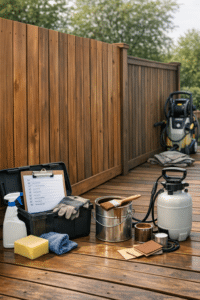
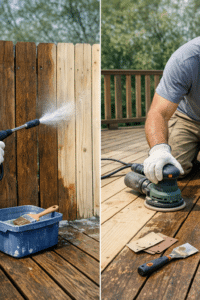
Even the best stain will not perform well without proper preparation. To get the most from your green staining project, follow these basic best practices.
Clean the Surface Thoroughly
Remove dirt, mildew, algae, and old debris before staining. A clean surface allows better penetration and more even color. Use a wood-safe cleaner and avoid leaving chemical residue behind.
Let the Wood Dry Properly
Moisture is one of the biggest reasons stain fails. After washing or rainfall, allow the fence or deck to dry fully before application. Check the manufacturer’s instructions for ideal moisture conditions.
Test a Small Area First
Wood species, age, and previous exposure can all affect the final result. Testing a hidden section helps confirm the true color and absorption rate before you commit to the entire project.
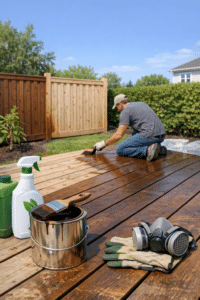
Apply Thin, Even Coats
Many low VOC products perform best when applied in controlled, even layers. Overapplication can lead to tackiness, uneven color, or reduced curing quality. Use a brush, pad, roller, or sprayer as recommended.
Watch the Weather
Avoid staining in direct hot sun, high humidity, or when rain is expected. Moderate temperatures support better curing and more consistent results. A well-timed application improves the lifespan of even the best environmental stain options.
How to Read Labels Like a Smarter Buyer
If you want to compare products confidently, focus on more than buzzwords. Look for:
Actual VOC numbers instead of general “eco” claims
Water-based or natural oil formulas when appropriate for your project
Coverage rates so you can estimate value accurately
Dry and cure times for planning use of the deck or yard
Mildew and UV resistance for long-term performance
Recommended surfaces to ensure compatibility with your wood type
It can also help to seek third-party certifications or environmental standards where available. These add credibility and help separate true environmental stain options from simple marketing language.
Maintaining a Fence or Deck with Low-VOC Stains
Ongoing care matters just as much as the initial stain choice. To extend the life of your finish, sweep decks regularly, rinse away dirt, trim back plants that hold moisture, and inspect boards for wear or damage. Fences benefit from similar seasonal checks, especially after heavy rain or winter weather.
Maintenance schedules vary based on sun exposure, foot traffic, and product type. Transparent finishes often need reapplication sooner than solid stains, but regular light maintenance is usually easier than waiting until wood is heavily weathered. Choosing high-quality low VOC products from the start makes this routine more manageable and more pleasant.
Making the Right Choice for a Greener Outdoor Space
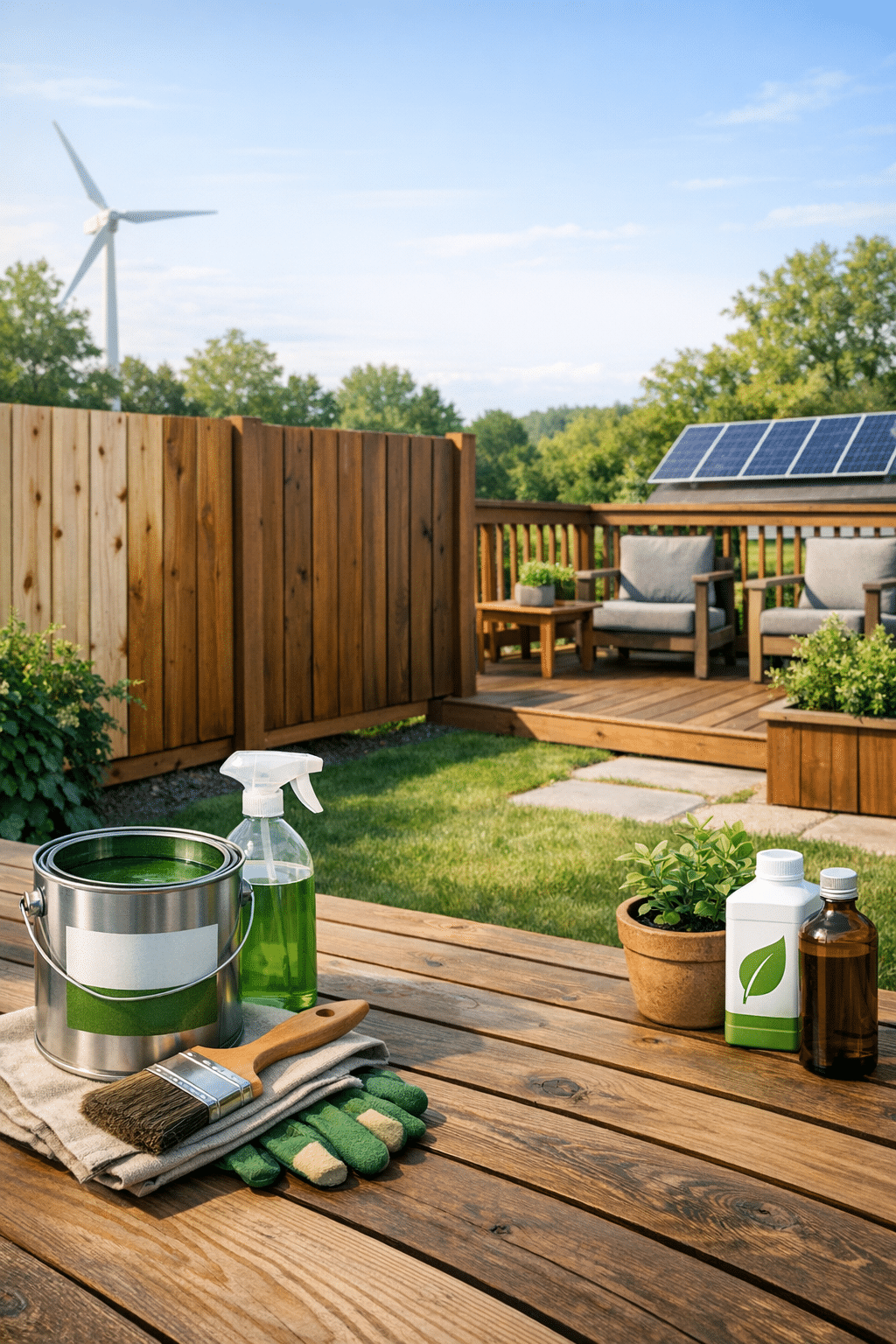
If you are balancing performance, appearance, and sustainability, eco-friendly stains are an excellent place to start. The ideal product should protect your investment, fit your design goals, and align with your values. With today’s improved stain technology, homeowners no longer have to choose between durability and responsibility.
By comparing ingredients, VOC levels, finish types, and maintenance needs, you can find environmental stain options that work beautifully for fences, decks, railings, and other outdoor wood features. Thoughtful green staining is not just a trend. It is a smarter way to care for your property while reducing unnecessary chemical impact.
Conclusion
Eco-friendly and low-VOC fence and deck stains offer a practical path to beautiful, long-lasting wood protection with fewer harsh emissions and a lighter environmental footprint. From water-based coatings to modern hybrid formulas, there are more low VOC products and environmental stain options available than ever before. If you are planning your next outdoor project, make green staining part of the plan and choose a product that protects both your wood and your peace of mind.
Ready to upgrade your outdoor space? Start comparing eco-friendly stain options today and choose a finish that keeps your fence or deck looking great while supporting a healthier home environment.