
Best Practices for Maintaining Stained Fences and Decks
A freshly stained fence or deck can completely transform an outdoor space, adding warmth, color, and long-term protection to the wood. But even the best stain will not stay beautiful forever without proper care. Sun exposure, rain, dirt, mildew, foot traffic, and seasonal temperature changes all slowly wear down the finish. The good news is that with the right maintenance schedule, routine cleaning, and timely touch-ups, you can keep stained surfaces looking attractive and performing well for years.
Whether you have a backyard deck for entertaining or a perimeter fence that frames your property, regular upkeep is the key to protecting your investment. In this guide, we will cover the best practices for maintaining stained fences and decks so you can preserve both their appearance and durability.
Why Maintenance Matters for Stained Wood
Stain does more than improve the color of wood. It acts as a protective layer that helps defend against moisture penetration, UV damage, mold growth, and general weathering. Over time, that protective barrier starts to weaken. If neglected, the wood may begin to fade, crack, warp, or absorb water, which can lead to rot and costly repairs.
Consistent maintenance helps you:
Extend the life of the stain. Routine care reduces premature wear and keeps the finish intact longer.
Protect the wood underneath. A healthy stained surface helps block moisture and sun damage before they reach the wood fibers.
Maintain curb appeal. Clean, rich-looking fences and decks enhance the overall look of your property.
Reduce future restoration costs. Minor upkeep and small touch-ups are far less expensive than a full strip, sand, and restain.
Create a Simple Maintenance Schedule
The best approach to preserving stained wood is to follow a realistic maintenance schedule. Instead of waiting until the surface looks worn out, break upkeep into smaller tasks throughout the year.
Monthly Checks
Once a month, take a quick walk around your fence or across your deck and look for early signs of wear. Check for:
Fading or uneven color
Water no longer beading on the surface
Dirt buildup, mildew, or green algae
Peeling, cracking, or rough spots
Nails or boards that have become loose
These short inspections make it much easier to catch issues early, when touch-ups are still enough to solve them.
Seasonal Maintenance
Each season brings different conditions, so your maintenance schedule should adjust accordingly.
Spring: Inspect for winter damage, clean away grime, and identify areas that may need stain repair.
Summer: Watch for UV fading, dry spots, and heavy traffic wear on decks.
Fall: Remove leaves and debris, especially from deck boards and fence bases where moisture can collect.
Winter: Minimize standing water and avoid letting snow or ice sit too long on wood surfaces.
Annual Review
At least once a year, perform a more thorough evaluation. This is the time to determine whether your fence or deck needs a few small touch-ups or a broader maintenance coat. Depending on the stain type, climate, and sun exposure, a full recoat may be needed every two to four years.
Best Practices for Cleaning Stained Fences and Decks
Regular cleaning is one of the most important parts of maintaining stained wood. Dirt, pollen, mildew, and debris can trap moisture against the surface and break down the finish faster. Keeping the wood clean not only improves appearance but also helps the stain last longer.
Use the Right Cleaning Method
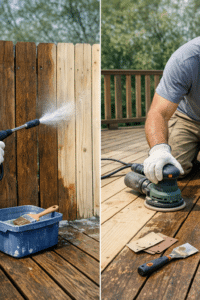
Gentle care is usually best. Start with a broom or leaf blower to remove loose debris. Then wash the surface using water, a mild wood-safe cleaner, and a soft-bristle brush. Scrub lightly in the direction of the wood grain.
For everyday cleaning, avoid harsh chemicals that can strip the stain or discolor the wood. If mildew is present, choose a cleaner specifically formulated for exterior wood surfaces.
Be Careful with Pressure Washing
Pressure washing can be useful, but it must be done carefully. Excessive pressure can gouge the wood, lift fibers, and remove stain unevenly. If you use a pressure washer, keep the setting low and maintain a consistent distance from the surface. When in doubt, hand cleaning is often the safer option.
Clean Spills and Problem Areas Quickly
Decks are especially vulnerable to food grease, plant stains, muddy footprints, and standing water from furniture or planters. Fences may collect sprinkler overspray, soil splash, or mildew in shaded areas. The sooner you clean these spots, the less likely they are to stain permanently or damage the finish.
Inspect for Damage Before It Becomes Serious
Maintenance is not just about the stain itself. The wood structure needs regular attention too. During inspections, look closely for:
Splitting, cupping, or warped boards
Soft spots caused by moisture damage
Rusting fasteners or popped nails
Loose railings, posts, or fence pickets
Mold, mildew, or insect activity
If the wood has structural issues, fix those first before adding stain or doing cosmetic touch-ups. Applying new stain over damaged boards will not solve the underlying problem.
When and How to Handle Touch-Ups
One of the smartest ways to preserve stained fences and decks is to perform small touch-ups as needed. These minor repairs can refresh worn areas and help prevent a complete refinishing job before it is necessary.
Common Areas That Need Touch-Ups
Not all sections of a fence or deck weather evenly. Focus on areas that typically wear the fastest, such as:
Deck stairs and high-traffic walking paths
Horizontal rail tops exposed to direct sun
Fence sections facing prevailing weather
Gate edges and latch areas
Spots around planters, grills, or outdoor furniture
How to Do Touch-Ups Correctly
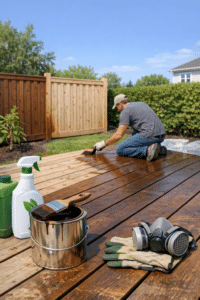
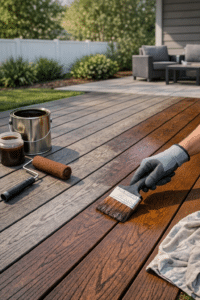
For best results, clean the area first and let it dry completely. If the wood is rough or flaking, lightly sand it to smooth the surface. Then apply a matching stain according to the manufacturer’s directions. Feather the edges so the repaired area blends naturally with the surrounding finish.
Always test the stain in an inconspicuous area if the original color has aged. Even the same product may look slightly different over time due to sun exposure and weathering.
Protect Stained Surfaces from Everyday Wear
Beyond cleaning and stain maintenance, daily habits can make a big difference in how long your finish lasts.
Reduce Moisture Exposure
Moisture is one of wood’s biggest enemies. Keep gutters and sprinklers from directing water onto your fence or deck. Move planters occasionally so trapped water does not create dark patches. On decks, ensure there is proper drainage between boards and sweep away wet leaves promptly.
Minimize Sun Damage
Constant direct sunlight can fade stain and dry out wood faster. If possible, use shade structures, umbrellas, or landscaping to reduce intense afternoon exposure. On fences, south- and west-facing sections often need more frequent inspections and touch-ups.
Prevent Surface Scratches
Furniture legs, grills, and heavy foot traffic can wear through stain over time. Use protective pads under furniture and lift items instead of dragging them. This is especially important on decks, where the finish on walking surfaces naturally wears faster than vertical surfaces.
Know When It Is Time for a Maintenance Coat
Even with excellent care, every stained fence and deck will eventually need more than spot repairs. A maintenance coat helps restore color and protection before the wood becomes severely weathered.
Signs it may be time for a new coat include:
Noticeable fading across large sections
Water soaking into the wood instead of beading up
Uneven appearance after repeated touch-ups
Dry, chalky, or dull-looking surfaces
Mild cracking or surface wear across broad areas
Applying a maintenance coat at the right time is much easier than waiting until the finish has fully failed. In most cases, a well-timed recoat requires less prep and produces better long-term results.
Choose Products That Support Easier Maintenance
Not all stains perform the same way. When selecting products for future applications, consider how easy they will be to maintain. High-quality stains often provide better UV resistance, moisture protection, and color retention. They may cost more upfront, but they can save time and money by reducing the frequency of major maintenance.
Transparent and semi-transparent stains typically highlight the wood grain beautifully, but they may need more frequent care in high-exposure areas. Solid stains offer stronger coverage and can hide imperfections, though they may eventually show wear differently. The best choice depends on your climate, wood type, and desired appearance.
Seasonal Maintenance Tips at a Glance
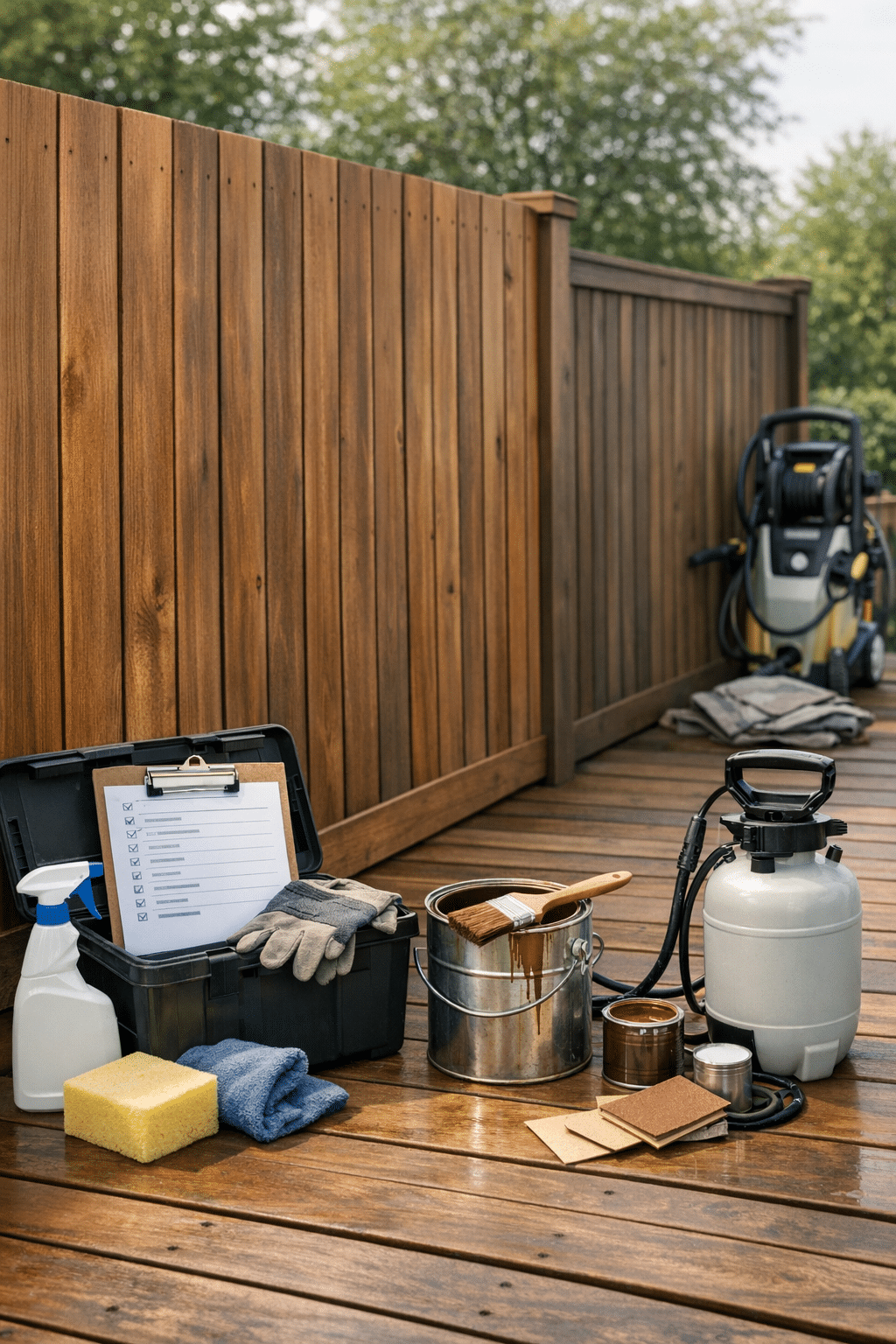
If you want a simple plan to follow, use this practical maintenance schedule:
Spring: Deep cleaning, inspect for winter damage, and handle early touch-ups.
Summer: Monitor sun-exposed areas and high-traffic deck surfaces.
Fall: Remove leaves, dirt, and moisture-trapping debris.
Winter: Keep surfaces clear of standing snow and avoid prolonged wet conditions.
This routine helps prevent neglect and keeps your stained fence and deck in consistently good condition year-round.
Final Thoughts
Maintaining stained fences and decks does not have to be complicated. A dependable maintenance schedule, regular cleaning, and prompt touch-ups can dramatically extend the life of your stain and keep your outdoor wood surfaces looking their best. Small efforts done consistently are what protect against fading, moisture damage, and expensive restoration later.
If your fence or deck is starting to show signs of wear, now is the perfect time to inspect it and create a maintenance plan. Take action today with a thorough cleaning and a few strategic touch-ups to keep your stained wood looking fresh, protected, and ready for every season.