
How to Seal a Fence or Deck After Staining
If you have already stained your fence or deck, you have taken an important step toward improving its appearance and helping the wood last longer. But staining alone is not always the final step. To truly protect wood surfaces from moisture, sun exposure, temperature swings, and everyday wear, sealing is often what makes the difference between a short-lived finish and one that holds up season after season.
A good sealer helps lock in the stain, reduce water penetration, and create a stronger barrier against the elements. Whether you are working on a brand-new build or refreshing an older outdoor structure, learning how to seal fence deck surfaces correctly can save you time, money, and maintenance later on. In this stain and seal guide, we will walk through why sealing matters, when to do it, how to choose the right product, and the steps to get a smooth, durable result.
Why Sealing After Staining Matters
Wood is naturally porous. Even after stain is applied, it can still absorb moisture, expand and contract, and gradually break down from UV exposure. That is especially true for outdoor structures like decks and fences that face rain, snow, direct sunlight, and humidity throughout the year.
Sealing after staining provides several major benefits:
1. Improved Weather Resistance
A quality sealer helps repel water and reduces the risk of warping, cracking, swelling, and rot. This is essential if you want better long-term performance from your outdoor wood.
2. Longer-Lasting Color
Stain can fade over time, especially in areas with intense sunlight. A sealer can help preserve the look of the stain and slow down UV-related fading.
3. Better Surface Durability
Decks in particular experience foot traffic, furniture movement, spills, and daily wear. Sealing adds an extra layer of defense that helps protect wood surfaces from damage.
4. Easier Maintenance
When moisture and dirt stay closer to the surface instead of penetrating deep into the wood, cleaning and future maintenance become much simpler.
In short, if you want your project to look better for longer, it makes sense to seal fence deck boards after staining whenever the stain system and manufacturer instructions recommend it.
Do You Always Need to Seal After Staining?
Not every wood stain requires a separate topcoat sealer. Some modern products are designed as a combination stain-and-seal formula. Before applying anything, check the product label carefully. If the stain already includes protective sealing properties, adding another coat on top may not be necessary and could even create adhesion problems.
However, many traditional stains, especially penetrating oil-based stains, benefit from a dedicated sealer or water repellent finish. This is where following a reliable stain and seal guide becomes important. The right answer depends on the stain type, wood species, climate, and how much exposure the fence or deck gets.
If you are unsure, review the manufacturer instructions first. That should always guide your timing, product compatibility, and application method.
When to Seal a Fence or Deck After Staining
Timing matters. If you apply sealer too soon, you can trap moisture or solvents in the wood, which may lead to peeling, cloudiness, tackiness, or poor curing. If you wait too long, the stained surface may already begin losing some of its fresh protection.
Most stained wood needs time to dry fully before sealing. Depending on the stain and weather conditions, drying time may range from 24 hours to several days. Factors that affect drying include:
Humidity: Higher humidity slows drying.
Temperature: Mild, warm temperatures help finishes cure more evenly.
Shade or sun exposure: Heavily shaded areas can stay damp longer.
Wood type: Dense woods may absorb and release finishes differently.
Stain formula: Oil-based and water-based stains cure at different rates.
A simple test is to lightly touch a small, inconspicuous area. If it still feels tacky, do not seal yet. The surface should feel dry and stable before you move forward.
Choosing the Right Sealer
Not all sealers are the same, and selecting the correct product can have a major impact on performance. If your goal is to protect wood surfaces without changing the look too much, you will want to match the sealer to both the stain and the project.
Clear Water Repellent Sealers
These are often used when you want the stained wood appearance to remain visible while adding moisture resistance. They are a common choice for fences and decks where you want a natural finish.
UV-Resistant Sealers
If your fence or deck gets strong direct sunlight, choose a sealer with UV protection. This helps preserve color and reduce fading.
Oil-Based Sealers
These can penetrate deeply and often provide a rich finish, but they may take longer to dry and can have a stronger odor. They are often favored for older wood or high-exposure areas.
Water-Based Sealers
These tend to dry faster, have easier cleanup, and emit fewer fumes. Many homeowners prefer them for convenience and environmental reasons.
Whichever product you choose, make sure it is labeled for exterior use and compatible with the stain already on the wood. A strong stain and seal guide always starts with product compatibility.
How to Prepare Before Sealing
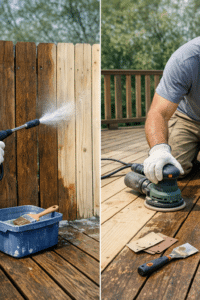
Preparation is key to getting even coverage and long-lasting protection. Even if the surface is freshly stained, do not skip this stage.
Inspect the Surface
Look for any sticky spots, pooling stain, dust, debris, or signs that the stain has not dried evenly. Any problem areas should be corrected before sealing.
Clean Off Dirt and Debris
Use a broom, leaf blower, or soft brush to remove dust, leaves, and loose particles. A clean surface helps the sealer bond properly.
Make Sure the Weather Is Right
Plan for a dry stretch of weather. Most sealers should be applied when no rain is expected for at least 24 to 48 hours. Avoid extreme heat, high humidity, or very windy conditions when possible.
Protect Surrounding Areas
Cover nearby plants, siding, concrete, and outdoor furniture if you are spraying or using a large brush. Taking a few minutes here can prevent a messy cleanup later.
Step-by-Step: How to Seal a Fence or Deck After Staining
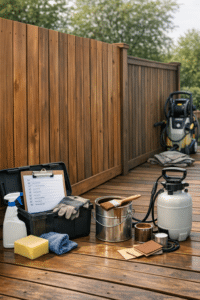
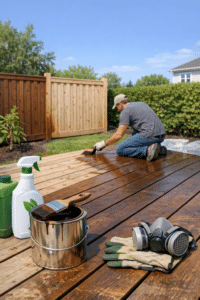
If you want to seal fence deck surfaces the right way, follow these practical steps.
Step 1: Stir the Sealer Thoroughly
Do not shake the container unless the manufacturer specifically says to do so. Stirring helps distribute ingredients evenly without creating too many bubbles.
Step 2: Test a Small Area
Before coating the entire fence or deck, apply the sealer to a hidden section. This helps you confirm compatibility, finish appearance, and drying behavior.
Step 3: Choose Your Application Tool
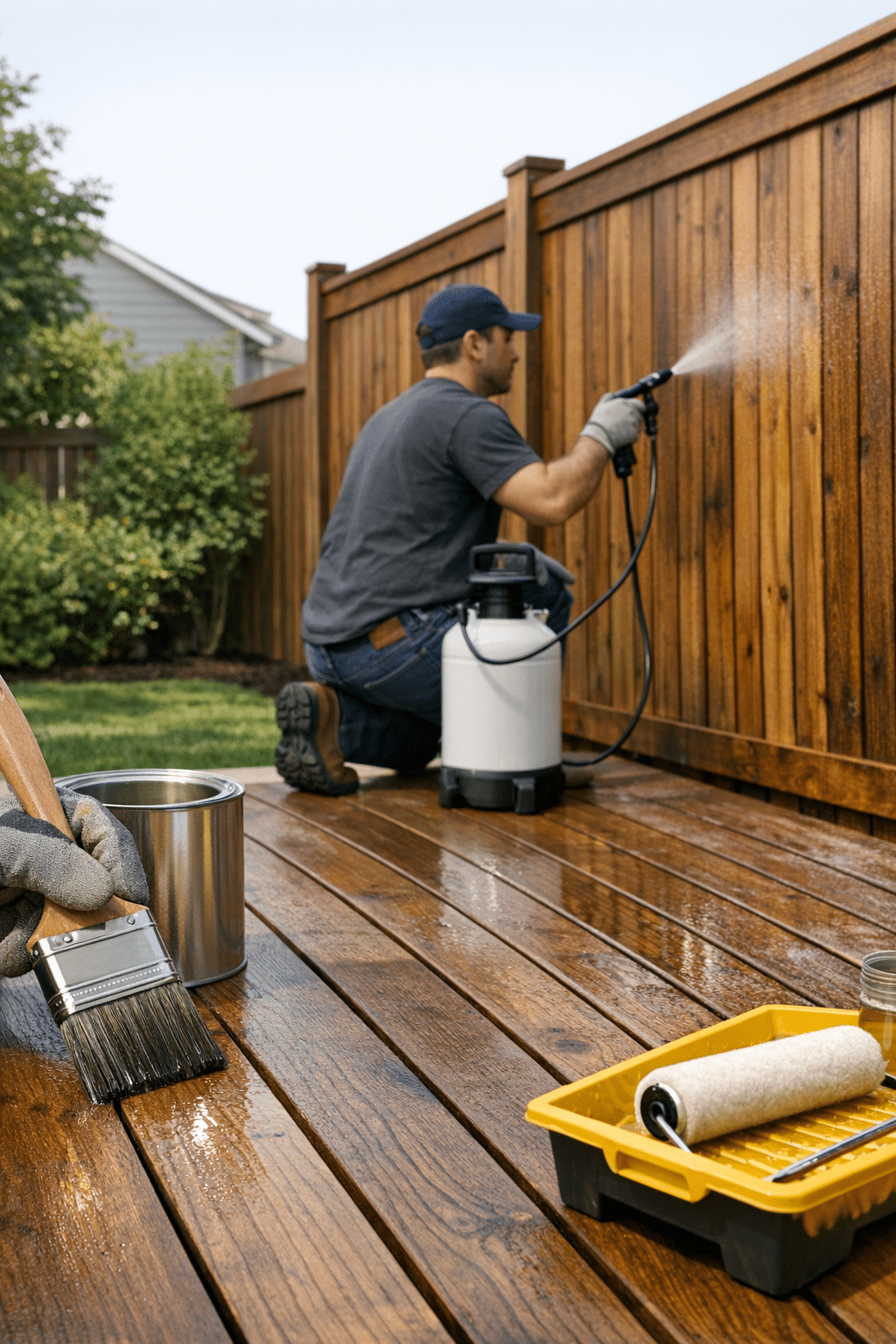
You can use a brush, roller, pad applicator, or sprayer depending on the product and surface. Brushes are excellent for detail work and forcing sealer into the grain. Rollers can speed up broad deck boards. Sprayers work well for fences, though back-brushing is often recommended for even penetration.
Step 4: Apply a Thin, Even Coat
More is not better. A thin, consistent coat usually performs better than a heavy one. Work in manageable sections and follow the wood grain. Watch carefully for drips, puddles, or overlapping marks.
Step 5: Pay Attention to End Grain and Joints
Board ends, seams, and horizontal surfaces tend to absorb more moisture over time. Give those areas extra attention, since they are often the first places to show damage.
Step 6: Allow Proper Drying Time
Once the sealer is on, leave it alone long enough to cure. Keep foot traffic, pets, and furniture off the deck during this time. Fence sections should also remain untouched until fully dry.
Step 7: Add a Second Coat Only If Recommended
Some sealers are single-coat products, while others may allow a second coat within a specific time window. Always follow the instructions. Overapplying can lead to peeling or a sticky finish.
Common Mistakes to Avoid
Even a quality product can underperform if it is applied incorrectly. Here are some of the most common sealing mistakes:
Sealing Before the Stain Has Dried
This is one of the biggest causes of finish failure. Be patient and let the stain cure fully first.
Applying Too Much Product
A thick coat may sit on the surface instead of penetrating properly. That can lead to blotchiness, tackiness, or peeling.
Ignoring Weather Conditions
Rain, strong sun, excessive heat, and humidity can all affect how the sealer cures.
Using Incompatible Products
Not every sealer works with every stain. Always check labels and manufacturer recommendations.
Skipping Maintenance
Sealing is not a one-time fix forever. Outdoor wood still needs inspection and periodic reapplication.
How Often Should You Reseal?
The lifespan of a sealer depends on the product, climate, and amount of wear the surface receives. A deck often needs more frequent attention than a fence because of heavier use and horizontal exposure to water and sun.
As a general rule, inspect your outdoor wood annually. Signs that it may be time to reseal include:
Water no longer beads on the surface.
Color looks faded or uneven.
The wood feels dry or rough.
There are areas of increased absorption or weathering.
Routine upkeep is one of the best ways to protect wood surfaces and avoid expensive repairs. A little maintenance every year or two is usually easier than restoring badly weathered boards later.
Fence vs. Deck: Is the Sealing Process Different?
The overall process is very similar, but there are a few practical differences.
For Fences
Fences are vertical, so they typically shed water more easily than decks. They do not see foot traffic, but they are often exposed to full sun and rain on both sides. A sprayer can make the job faster, especially on large fence runs.
For Decks
Decks are horizontal and take much more abuse. They deal with standing water, furniture, grilling, and constant use. Because of that, deck sealers often need to be more durable and may require more frequent maintenance.
Whether you are working on a fence or a deck, the goal is the same: seal fence deck surfaces in a way that supports the stain, blocks moisture, and extends the life of the wood.
Final Thoughts
Sealing after staining is one of the smartest ways to keep an outdoor fence or deck looking good and performing well. With the right timing, the right product, and a careful application process, you can add valuable protection against moisture, sun, and wear. A dependable stain and seal guide is not just about appearance. It is about helping protect wood surfaces so they stay stronger for years to come.
If your stained fence or deck is ready for the next step, do not leave it exposed longer than necessary. Choose a compatible sealer, follow the instructions closely, and give your wood the lasting protection it deserves.