
Common Causes of Fence and Deck Stain Failure
A well-stained fence or deck can make an outdoor space look clean, warm, and well cared for. It also helps protect wood from moisture, sun exposure, and everyday wear. But when a stain begins to peel, fade, crack, or change color too soon, the results can be frustrating and expensive. Understanding why this happens is the first step toward better long-term performance.
If you have noticed blotchy boards, flaking areas, or early deck discoloration, you are not alone. Many homeowners deal with stain issues because of preventable mistakes in preparation, product selection, application, or maintenance. In this guide, we will break down the most common stain failure reasons for fences and decks so you can protect your wood surfaces and avoid repeat problems.
Why Fence and Deck Stains Fail
Wood stain is designed to enhance appearance while adding a layer of defense against weather and moisture. However, stain is not a permanent coating. It must be compatible with the wood, applied under the right conditions, and maintained over time. When any of those factors are off, failure can happen much sooner than expected.
Some problems appear quickly, such as bubbling, tackiness, or uneven drying. Others develop more slowly, such as fading, graying, or peeling after one or two seasons. These issues often trace back to a few core causes that repeat across many projects.
Poor Surface Preparation
Dirty, Damaged, or Previously Coated Wood
One of the biggest stain failure reasons is inadequate surface preparation. Stain needs a clean, porous surface to penetrate properly. If the wood still has dirt, mildew, algae, old finish, or construction residue on it, the stain may sit on top instead of soaking in. This can lead to uneven color, poor adhesion, and early wear.
On fences and decks, residue often builds up faster than people realize. Pollen, leaf stains, grill grease, and mildew can all interfere with a fresh coat. If old stain is peeling or failing, applying new stain over it usually makes the problem worse. The new product bonds to the weak layer instead of the wood itself.
Skipping Sanding or Stripping
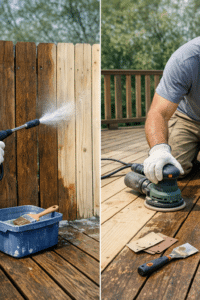
In some cases, cleaning alone is not enough. Rough patches, glossy sealers, or leftover film-forming coatings may require sanding or stripping. If these steps are skipped, the stain may absorb differently across the boards, creating a patchy look or causing sections to fail at different times.
Proper prep may take extra effort, but it greatly improves stain performance. When homeowners search for peeling stain causes, poor prep is often near the top of the list.
Moisture in the Wood
Staining Before the Wood Is Dry
Moisture is a major enemy of a successful stain job. If wood is damp when stain is applied, the product may not penetrate correctly. Instead, it can become trapped near the surface, leading to blotching, slow drying, or peeling later on. This is especially common with newly installed pressure-treated lumber, which often contains a high level of moisture.
Many people assume new wood is ready to stain right away, but that is often not true. Depending on the wood type, weather, and treatment process, it may need significant drying time before staining. Applying stain too early is one of the most overlooked stain failure reasons.
Water Intrusion After Application
Even if the wood was initially dry, ongoing water intrusion can cause failure. Sprinklers hitting a fence daily, poor deck drainage, clogged gaps between boards, or constant shade can keep wood wet for too long. Over time, this trapped moisture can push stain out, create mildew, and contribute to deck discoloration.
When moisture cannot escape, the finish weakens. That is why drainage, airflow, and drying time matter just as much as the stain itself.
Using the Wrong Type of Stain
Film-Forming Products on Horizontal Surfaces
Not all stains are the same. Some are designed to penetrate deeply into the wood, while others form more of a surface film. On decks, especially high-traffic horizontal surfaces, thick film-forming products are more likely to peel under foot traffic and weather exposure. This is one of the most common peeling stain causes.
Penetrating stains tend to perform better on deck boards because they soak into the wood instead of sitting heavily on top. Fences may tolerate a broader range of products, but even then, choosing the wrong stain can shorten the finish life.
Choosing the Wrong Opacity or Formula
Transparent, semi-transparent, semi-solid, and solid stains each behave differently. A lightly pigmented stain may not provide enough UV protection in very sunny areas, leading to fast fading. A heavier product may hide the wood grain but be more prone to visible peeling if applied too thickly or over an incompatible surface.
Oil-based and water-based stains also differ in penetration, drying time, and maintenance needs. The best choice depends on wood condition, climate, and how much natural grain you want to show. Using a product that does not match the project is another leading source of stain failure.
Weather and Timing Problems
Applying Stain in Direct Sun or Extreme Heat
Weather conditions at the time of application can make or break a staining project. If stain is applied in direct sun or during very hot temperatures, it may dry too fast on the surface. That can reduce penetration and create lap marks, uneven color, or premature wear.
Heat can also cause stain to flash dry before it levels properly, especially on decks where wide open surfaces absorb sunlight. What looks fine on application day may later show signs of failure as the finish weathers unevenly.
Rain, Humidity, and Cold Temperatures
Rain too soon after staining can wash away pigment, leave water spots, or interfere with curing. High humidity slows drying and can trap moisture beneath the finish. Cold temperatures may prevent proper bonding and cure development. These factors are frequent stain failure reasons, especially when a project is rushed to fit a tight schedule.
Checking the forecast, surface temperature, and manufacturer recommendations is essential. The best stain in the world cannot compensate for poor timing.
Overapplication and Uneven Application
Applying Too Much Product
More stain is not always better. In fact, overapplication is a common problem. Wood can only absorb so much product. When excess stain is left on the surface, it may become sticky, shiny, or prone to peeling. This is particularly true with dense woods or when multiple coats are applied without need.
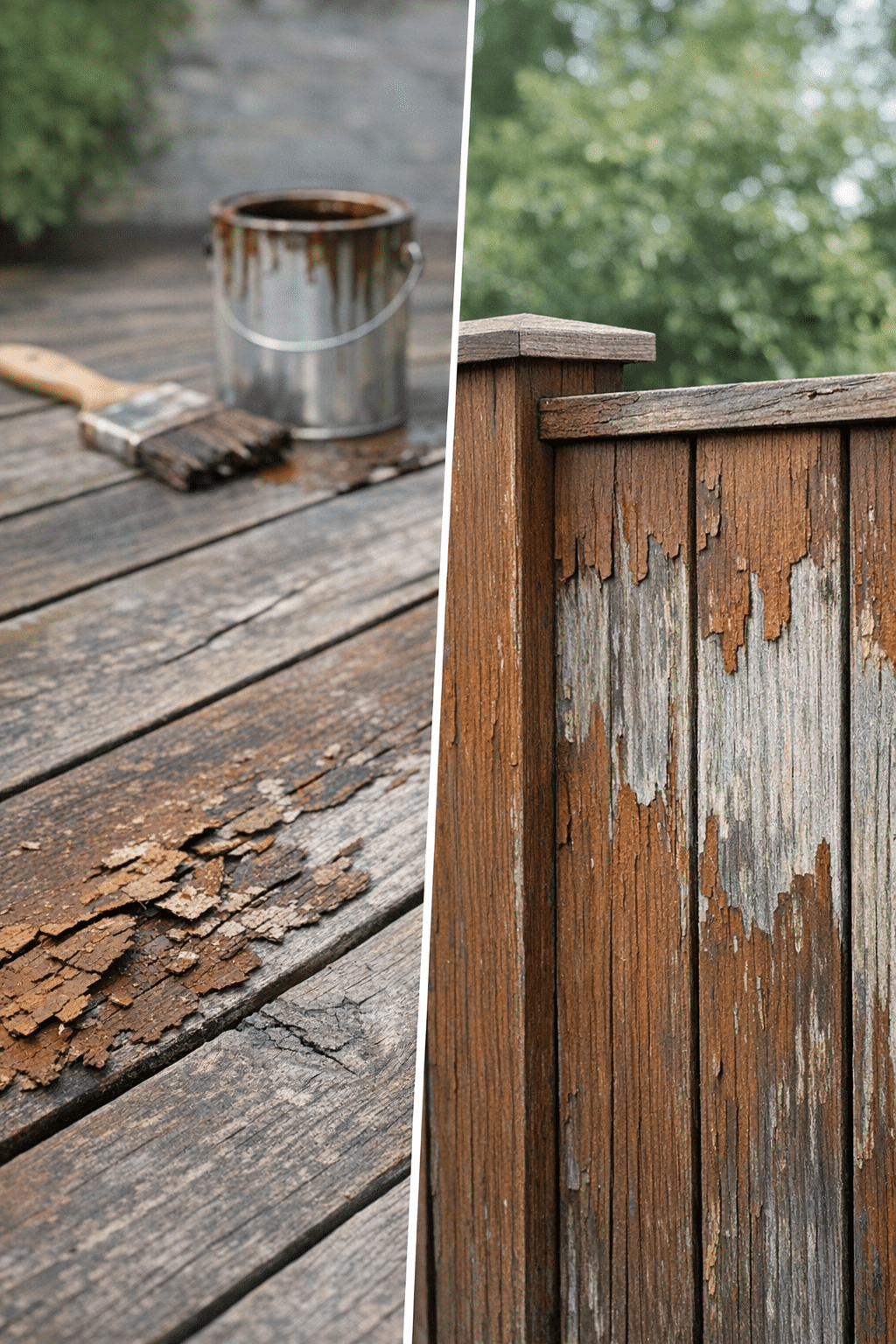
Thick buildup often leads to some of the most obvious peeling stain causes. Instead of wearing away naturally, the finish lifts in sheets or flakes because it never bonded correctly below the surface.
Failing to Wipe or Back-Brush
Even distribution matters. If stain pools in corners, sits heavily between deck boards, or is not back-brushed into the wood, some areas will absorb differently than others. The result can be a blotchy appearance, glossy patches, or inconsistent durability.
Careful application helps prevent early deck discoloration and improves the overall look of the project. Attention to detail goes a long way toward avoiding long-term problems.
Sun Exposure and UV Damage
Sunlight steadily breaks down wood fibers and stain pigments. Areas exposed to strong direct sun will usually fade faster than shaded sections. This is why some decks develop uneven color over time, with exposed boards turning pale or gray while covered areas remain richer in tone.
UV damage is one of the most predictable stain failure reasons, but it is often underestimated. Without enough pigment or regular maintenance, the finish may lose color long before it loses water resistance. Once the wood begins to weather and gray, restoring the original look may require cleaning, brightening, and re-staining.
For homeowners dealing with deck discoloration, sunlight is often part of the explanation. Even a good stain needs periodic renewal when exposed to harsh UV conditions.
Wood Type and Age
Different wood species absorb stain differently. Softwoods like cedar and pine generally take stain well, while denser hardwoods can be more difficult. Pressure-treated wood, reclaimed boards, and older weathered lumber also present unique challenges. Knots, mill glaze, and prior weathering all affect how the surface accepts stain.
Older decks and fences may have cracked fibers, splinters, or inconsistent porosity from years of exposure. Newer wood may have milling residue that limits absorption. If the stain is not matched to the condition of the wood, failure becomes more likely.
This is another reason a one-size-fits-all approach rarely works. The age and species of the lumber should always be part of the planning process.
Lack of Ongoing Maintenance
Even a properly applied stain needs maintenance. Leaves left to sit on a deck trap moisture. Dirt and mildew slowly break down the finish. Heavy foot traffic wears away protection in specific paths. Fences may suffer from soil contact, plant growth, or sprinkler overspray.
When maintenance is ignored, small issues become larger ones. A deck that only needed a light cleaning and touch-up may later require full stripping because the finish was allowed to fail too far. Many recurring peeling stain causes begin with delayed maintenance rather than the original application alone.
Routine inspection helps catch warning signs early. If you notice fading, water no longer beading, or isolated deck discoloration, it may be time for cleaning or a maintenance coat before more extensive failure develops.
How to Prevent Stain Failure
The best way to avoid fence and deck stain problems is to focus on the basics. Start with a clean, dry, properly prepared surface. Choose a stain that fits the wood type, surface orientation, and climate conditions. Apply it in suitable weather, at the recommended spread rate, and with careful attention to even coverage.
It also helps to maintain realistic expectations. No exterior stain lasts forever. Sun, rain, temperature swings, and foot traffic all take a toll. The goal is not to create a permanent coating, but to apply and maintain a finish that protects the wood and ages gracefully.
Regular cleaning, periodic inspections, and timely reapplication can extend the life of the stain and reduce major restoration work. When you understand the most common stain failure reasons, you are much better equipped to protect your investment.
Conclusion
Fence and deck stain failure usually comes down to a handful of preventable issues: poor preparation, moisture, the wrong product, bad timing, overapplication, UV exposure, and lack of maintenance. By identifying these common peeling stain causes and watching for early signs like fading or deck discoloration, you can keep your outdoor wood surfaces looking better for longer.
If your fence or deck is already showing signs of trouble, now is the time to assess the cause and plan the right fix. Take action early, choose the right stain system, and give your wood the care it needs to last.