
How to Choose Between Stain and Paint for Your Fence or Deck
When it is time to refresh your outdoor wood surfaces, one of the biggest decisions is whether to use paint or stain. If you are comparing fence paint vs stain, the right answer depends on more than color alone. You also need to think about durability, maintenance, appearance, climate, and the current condition of the wood.
For homeowners trying to narrow down the best wood finish options, understanding the differences between these products can save time, money, and frustration. Both finishes offer protection and style, but each comes with distinct pros and cons. In this guide, we will break down how paint and stain perform on fences and decks, when each makes the most sense, and how to choose the finish that fits your goals.
Why the Right Finish Matters for Fences and Decks
Fences and decks are constantly exposed to sun, rain, moisture, dirt, and temperature swings. Without a protective finish, wood can fade, crack, warp, rot, and become more vulnerable to mildew and insect damage. A quality finish helps extend the life of your outdoor structure while also improving its appearance.
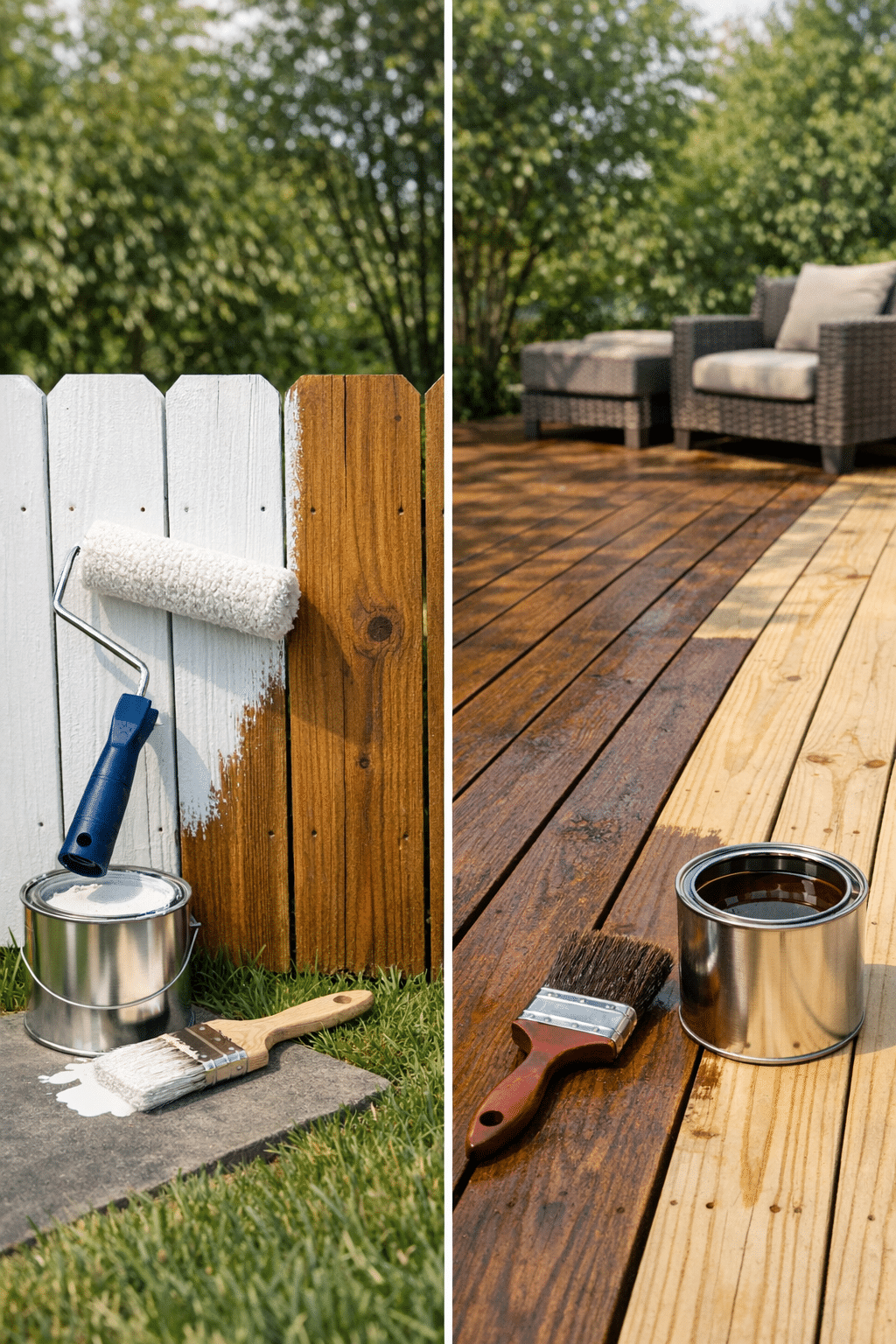
Still, not all finishes behave the same way. Paint forms a coating on the wood surface, while stain penetrates the wood fibers. That difference affects how the finish looks, how long it lasts, and how much work is involved when it is time for maintenance. Choosing between fence paint vs stain is really about balancing looks, protection, and long-term upkeep.
What Is the Difference Between Paint and Stain?
Paint
Paint sits on top of the wood and creates a solid, opaque layer. It completely covers the grain and gives you the widest range of color choices. Because it acts like a protective shell, paint can shield wood from UV rays and moisture when applied correctly.
Stain
Stain soaks into the wood rather than covering it with a thick film. It enhances or changes the color while still allowing some or all of the wood grain to show through, depending on the type of stain. Stain is often chosen for a more natural, textured look.
When reviewing your wood finish options, this basic difference is important. If you want a bold, uniform color, paint may be the better fit. If you want to highlight the natural beauty of the wood, stain is usually the preferred choice.
Fence Paint vs Stain: Appearance and Style
Appearance is often the first factor homeowners consider. Your finish can dramatically change the look of your yard, outdoor living area, and overall curb appeal.
When Paint Looks Best
Paint works well if you want:
A clean, polished appearance with solid color coverage
More design flexibility with classic white, modern black, soft gray, or custom shades
A uniform finish that hides variations in older wood
Paint is especially useful if your fence or deck has mismatched boards, stains, or cosmetic imperfections. It provides a more consistent look from end to end.
When Stain Looks Best
Stain is often favored if you want:
A natural wood appearance that showcases grain and texture
A rustic or organic style that blends with landscaping
A finish that ages more gracefully in many outdoor settings
Among popular wood finish options, stain is ideal for cedar, redwood, pressure-treated lumber, and other wood species with attractive grain patterns. Instead of hiding the wood, it enhances what is already there.
The Pros and Cons of Paint
If you are deciding between fence paint vs stain, it helps to look closely at the pros and cons of paint.
Pros of Paint
1. Wide color selection: Paint offers nearly unlimited shades, which makes it easier to match your home, trim, or outdoor décor.
2. Strong surface protection: A high-quality exterior paint can create a barrier against sun and moisture.
3. Great for older wood: Paint can hide discoloration, repairs, and surface flaws better than stain.
4. Bold visual impact: If you want a dramatic transformation, paint often delivers the strongest change.
Cons of Paint
1. Peeling and chipping: Over time, paint can crack, blister, or peel, especially on horizontal surfaces like decks.
2. More prep work: Surfaces usually need thorough scraping, sanding, and priming before painting.
3. Harder maintenance: Once paint starts failing, touch-ups can be obvious, and full refinishing may require significant labor.
4. Covers the wood grain: If you love the natural look of wood, paint may feel too heavy or artificial.
Paint can be a smart choice for fences, but it is often less forgiving on decks because foot traffic and moisture can wear down the painted surface faster.
The Pros and Cons of Stain
Stain also comes with its own set of pros and cons, and in many cases it is the more practical option for outdoor wood.
Pros of Stain
1. Enhances natural beauty: Stain brings out the wood grain instead of hiding it.
2. Easier maintenance: Stain usually fades gradually rather than peeling, making reapplication simpler.
3. Better penetration: Because it soaks into the wood, stain can perform well in changing weather conditions.
4. Ideal for decks: Many homeowners prefer stain for decks because it handles expansion, contraction, and foot traffic better than paint.
Cons of Stain
1. Less color variety: While stain comes in many tones, the palette is more limited than paint.
2. Less concealment: Stain will not fully hide patched areas, uneven boards, or heavy discoloration.
3. May need more frequent refreshing: Some stains, especially transparent formulas, require more regular maintenance depending on exposure.
4. Results vary by wood type: Different wood species absorb stain differently, which can affect the final look.
For many homeowners comparing fence paint vs stain, stain wins on ease of maintenance and natural appearance, especially for newer wood or wood in good condition.
Best Wood Finish Options for Different Situations
Not every fence or deck needs the same treatment. The best choice depends on the age of the wood, how the surface is used, and the look you want.
Choose Paint If:
Your fence is older and has visible imperfections
You want a solid, decorative color
You are trying to match exterior trim or architectural details
You do not mind more prep and future maintenance
Choose Stain If:
Your deck or fence has attractive natural wood grain
You prefer a more classic or rustic appearance
You want simpler long-term upkeep
Your deck sees regular foot traffic and weather exposure
When looking at wood finish options, one useful rule is this: paint is often better for fences when aesthetics and color control matter most, while stain is often better for decks where durability and easier maintenance are priorities.
How Climate and Sun Exposure Affect Your Choice
Local weather can play a major role in the fence paint vs stain decision. Outdoor wood in hot, sunny climates may experience faster fading, while wet or humid climates create more risk of moisture damage, mildew, and peeling.
In areas with intense sunlight, a UV-resistant stain can help reduce fading while still allowing the wood to breathe. In wet climates, stain often performs well because it penetrates the wood and is less likely to trap moisture beneath a film. Paint can still work, but it must be applied carefully and maintained consistently to avoid cracking or peeling.
If your fence or deck gets full sun all day, darker finishes may absorb more heat and weather faster. If the area stays damp or shaded, mildew-resistant products become especially important. The best wood finish options are always the ones suited to both your material and your environment.
What About New Wood vs Old Wood?
The age and condition of the wood should heavily influence your choice.
New Wood
Newer wood is often a great candidate for stain because the grain is still attractive and the boards are less likely to need cosmetic hiding. However, pressure-treated wood may need time to dry out before staining or painting, so always follow product recommendations.
Old Wood
Older wood can go either way. If it is weathered but still structurally sound, a semi-solid or solid stain may refresh it while minimizing maintenance headaches. If it has many visual flaws, paint may provide a cleaner final look.
This is where understanding the pros and cons becomes essential. Paint may improve appearance faster, but stain may make maintenance easier over time.
Types of Stain to Consider
If stain seems like the better option, there are several finishes to choose from:
Transparent stain: Shows the most grain and offers a natural look, but usually needs more frequent upkeep.
Semi-transparent stain: Adds color while still revealing the wood texture.
Semi-solid stain: Provides richer color and more UV protection with some grain still visible.
Solid stain: Looks closer to paint but penetrates like stain, offering a middle ground in the fence paint vs stain debate.
These options make stain more versatile than many people realize. If you want better coverage without fully committing to paint, solid stain can be one of the smartest wood finish options.
Maintenance Expectations: Which Lasts Longer?
Many homeowners ask which finish lasts longer, but the answer depends on application quality, weather, and surface use.
Paint may last several years on a fence if the prep work is excellent and the conditions are favorable. On a deck, however, paint often wears faster because of foot traffic and standing water. Once it begins to fail, maintenance can become labor-intensive.
Stain usually needs refreshing more often than paint in terms of appearance, especially lighter or more transparent formulas. But because stain tends to fade rather than peel, the maintenance process is generally simpler and less costly.
So when weighing the pros and cons, the better question may not be “Which lasts longer?” but “Which is easier to maintain in the long run?” For many outdoor wood surfaces, stain wins that category.
Questions to Ask Before You Decide
Before choosing between paint and stain, ask yourself:
Do I want to show off the wood grain or cover it?
Is the wood new, old, repaired, or discolored?
How much maintenance am I willing to do later?
Is this a fence, a deck, or both?
What kind of weather does the surface face year-round?
Do I want a natural look or a more decorative finish?
Your answers will usually point clearly toward the best wood finish options for your project.
Final Verdict: Fence Paint vs Stain
If you want maximum color choice, a polished appearance, and better concealment of imperfections, paint may be the right finish for your fence. If you want a natural look, easier upkeep, and better performance on a deck, stain is often the better choice.
There is no one-size-fits-all answer to fence paint vs stain. The best decision comes from understanding the pros and cons of each product, the condition of your wood, and the level of maintenance you are prepared to handle.
Ready to upgrade your fence or deck? Take a close look at your surface, compare your goals, and choose the finish that will protect your investment and complement your outdoor space for years to come.