
How to Remove Stain from Wood Fence or Deck if Needed
If your wood fence or deck is looking patchy, weathered, or coated with peeling old stain, it may be time to remove the finish before applying something new. While not every project requires complete stain removal, knowing the right stain removal methods can make the difference between a long-lasting result and a finish that fails too soon. Whether you are tackling light cleanup or full fence stripping, the goal is to protect the wood while preparing it for a fresh, even coat.
Removing stain from exterior wood takes more than brute force. The safest approach depends on the age of the stain, the type of product originally used, and the condition of the wood itself. In many cases, a combination of deck cleaning, stripping, and sanding produces the best outcome. Below, you will learn when stain should be removed, which tools and products work best, and how to get your fence or deck ready for a beautiful new finish.
When Do You Need to Remove Old Stain?
Not every deck or fence needs to be stripped down to bare wood. If the existing stain is still in good shape and you are applying a similar product in the same color family, a thorough cleaning may be enough. However, full stain removal is often necessary when:
- The old stain is peeling, flaking, or unevenly worn
- You want to switch from a solid stain to a semi-transparent finish
- The wood has dark blotches, mildew stains, or product buildup
- Previous coatings are preventing proper absorption
- You are restoring older wood and want a more natural appearance
Trying to apply new stain over failing stain usually leads to more peeling, poor color consistency, and wasted time. Proper prep is the foundation of any successful exterior wood project.
Before You Start: Inspect the Wood Surface
Before choosing among different stain removal methods, inspect the fence or deck carefully. Look for:
- Loose boards or nails
- Splintered or cracked wood
- Mildew, algae, or gray weathering
- Areas exposed to heavy sun or standing moisture
- Type of existing coating, if known
Older wood can be softer than it looks, especially on horizontal deck boards. That matters because aggressive deck cleaning or harsh pressure washing can damage wood fibers. Once you understand the condition of the surface, you can choose the safest and most effective removal process.
Tools and Materials You May Need
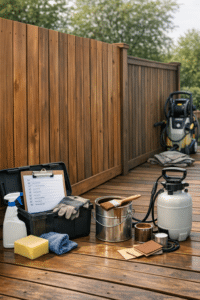
Depending on the project, you may need a mix of cleaning and stripping supplies:
- Garden hose or pressure washer on a low setting
- Wood stain stripper
- Pump sprayer or brush for stripper application
- Stiff-bristle brush or deck scrub brush
- Plastic sheeting and painter’s tape for protection
- Protective gloves, goggles, and long sleeves
- Sander or sanding sponge
- Oxalic acid wood brightener
- Buckets and clean water
Using the right materials helps you avoid overworking the wood and improves the final look of the stain you apply later.
Best Stain Removal Methods for Fences and Decks
1. Use a Wood Stain Stripper
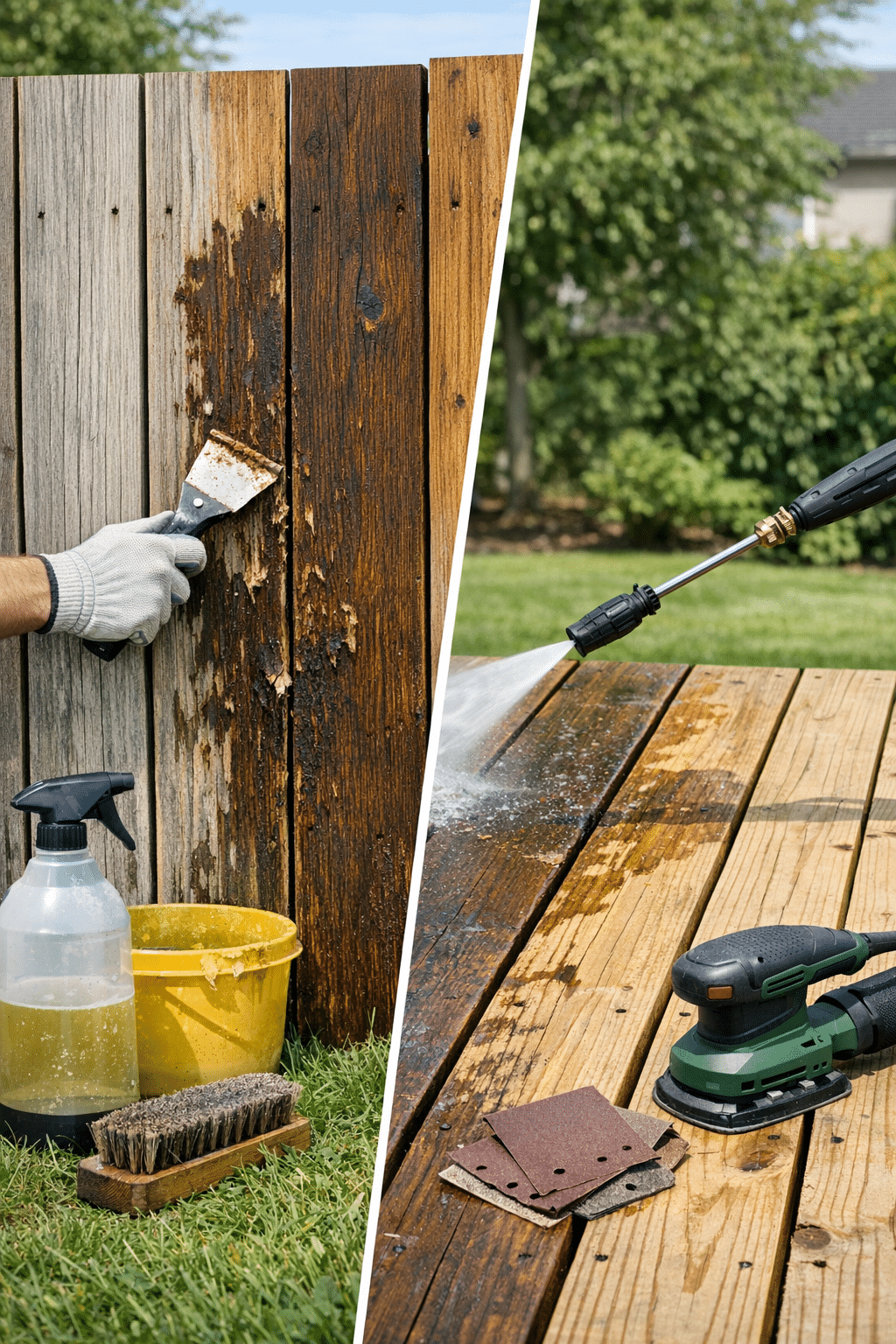
For many exterior wood projects, a dedicated stain stripper is the most reliable option. This is especially true when dealing with semi-transparent, oil-based, or heavily weathered coatings. Quality stripping products loosen the bond between the stain and the wood so the old finish can be washed or scrubbed away.
For effective fence stripping or deck restoration:
- Choose a product made specifically for exterior wood
- Apply it evenly with a sprayer, roller, or brush
- Let it dwell for the manufacturer’s recommended time
- Keep the surface wet while it works if required by the product
- Scrub stubborn areas with a bristle brush
- Rinse thoroughly before the stripper dries on the wood
This approach is one of the most common stain removal methods because it removes coating from deep grain areas that sanding alone can miss.
2. Pressure Wash Carefully
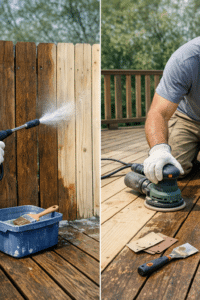
Pressure washing can help with deck cleaning and post-strip rinsing, but it should be used with caution. Too much pressure can fur the wood, gouge soft grain, or leave visible marks. On fences and decks, lower pressure and the right spray tip are usually best.
Tips for safer pressure washing include:
- Use the lowest pressure that gets the job done
- Keep the nozzle moving continuously
- Spray with the grain, not against it
- Maintain a consistent distance from the surface
- Test on an inconspicuous area first
Pressure washing works best as part of a larger process, not as a shortcut. It can remove loose stain and surface dirt, but it may not fully eliminate embedded pigment without a stripper.
3. Sand the Remaining Stain
After chemical stripping and rinsing, some stain often remains in corners, knots, or dense areas of wood. Sanding is useful for evening out these spots and smoothing rough fibers raised during cleaning. For deck boards, a random orbital sander usually offers good control. For fences, sanding sponges or detail sanders can help with vertical boards and narrow sections.
Sanding is especially helpful when:
- Only a small amount of stain remains
- The wood surface feels fuzzy after washing
- You need a smoother finish before restaining
- The existing stain was partially absorbed into the grain
Do not rely on sanding alone for large areas with thick stain buildup unless the project is small. It can be time-consuming and may create uneven surfaces if done too aggressively.
4. Apply a Wood Brightener After Stripping
One of the most overlooked steps in deck cleaning and fence stripping is brightening the wood afterward. Strippers and cleaners can darken wood temporarily or leave behind a high pH residue. A wood brightener, often made with oxalic acid, helps restore a more natural tone and improves stain absorption.
Benefits of using a brightener include:
- Neutralizing the wood after stripping
- Reducing tannin stains and discoloration
- Improving the final appearance of the new stain
- Helping the wood dry to a more even color
If you skip this step, the wood may look dull, uneven, or less receptive to fresh stain.
How to Remove Stain Step by Step
Step 1: Protect Surrounding Areas
Cover nearby plants, grass, siding, and furniture. Wet landscaping before and after using stripping products to reduce the chance of damage. Move outdoor décor, grills, and cushions away from the work zone.
Step 2: Clean the Surface
Start with basic deck cleaning or fence washing to remove dirt, debris, mildew, and loose material. A cleaner made for wood surfaces can help expose the true condition of the stain before stripping begins.
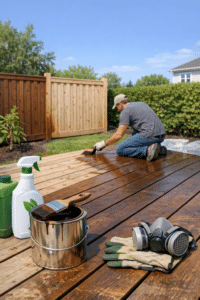
Step 3: Apply Stain Stripper
Work in manageable sections. Apply the stripper evenly and let it sit for the recommended dwell time. Avoid working in direct hot sun if possible, since that can dry the product too fast.
Step 4: Scrub and Rinse
Use a scrub brush on stubborn areas, then rinse thoroughly. For large decks, a low-pressure rinse may save time. For fences, rinsing from top to bottom helps prevent streaking.
Step 5: Brighten the Wood
Apply a brightener after rinsing off the stripper. This is a key part of professional-looking fence stripping and deck restoration.
Step 6: Let the Wood Dry Completely
Exterior wood must dry fully before staining again. Depending on the weather, this can take 24 to 72 hours or more. If moisture is trapped inside the wood, the new finish may fail.
Step 7: Sand if Needed
Once dry, lightly sand rough areas or spots with lingering stain. Sweep or blow off all dust before applying a new coating.
Common Mistakes to Avoid
Even good intentions can lead to poor results if the process is rushed. Avoid these common mistakes:
- Using too much pressure: This can scar deck boards and fence pickets.
- Skipping the test patch: Always test your chosen stain removal methods first.
- Letting stripper dry on the surface: Dried product can become harder to remove.
- Not neutralizing or brightening the wood: This can affect stain adhesion and color.
- Restaining too soon: Wet wood will not absorb stain properly.
- Ignoring damaged boards: Rotten or cracked wood should be repaired before refinishing.
Fence Stripping vs. Deck Cleaning: Is There a Difference?
Yes. While the products and general approach are similar, the working conditions are different. Fence stripping often involves vertical surfaces, which can create drips and require careful top-to-bottom application. Deck work, on the other hand, involves more foot traffic wear, ground-in dirt, and greater risk of gouging from pressure washing or sanding.
In short:
- Fences may require more attention to run marks, vegetation protection, and detailed edges.
- Decks usually need more intensive deck cleaning, especially between boards and in high-traffic zones.
Understanding these differences helps you tailor your process and get more even results.
Can You Remove Solid Stain Completely?
Solid stain is harder to remove than transparent or semi-transparent products because it sits more like a paint-like coating on the surface. In some cases, you can reduce it significantly with chemical stripping and sanding, but complete removal may be difficult if the product has penetrated old, porous wood unevenly.
If full removal proves impractical, another smart option is to clean the surface well, sand problem areas, and recoat with another solid stain. The best choice depends on the condition of the wood and your desired final look.
When to Call a Professional
DIY stain removal is possible for many homeowners, but larger projects or badly neglected wood may call for expert help. Consider professional service if:
- Your deck is large or multi-level
- The fence has extensive old stain buildup
- You are dealing with delicate or aged wood
- You want to avoid damage from incorrect pressure washing
- You need fast, consistent results before refinishing
Professionals often have access to better equipment, commercial-grade products, and proven stain removal methods that save time while protecting the wood.
Final Thoughts on Removing Stain from Wood
Removing stain from a wood fence or deck is sometimes the best way to restore beauty, improve stain absorption, and extend the life of the wood. The most successful projects combine thoughtful inspection, proper deck cleaning, careful fence stripping, and light sanding where needed. By choosing the right process for your surface, you can avoid damage and create a clean foundation for a fresh finish.
If your fence or deck is ready for a reset, do not rush the prep work. Take the time to use the right stain removal methods, and your next stain job will look better and last longer. Need help restoring your outdoor wood surfaces? Contact a trusted local wood care professional and get your project started the right way.