
The Role of Wood Conditioners in Fence and Deck Staining
When you want a fence or deck stain to look rich, even, and durable, the final color is only part of the story. The real difference often starts before the stain ever touches the wood. One of the most overlooked steps in exterior finishing is understanding how wood conditioners affect absorption, appearance, and longevity. For homeowners and contractors alike, knowing the wood conditioner purpose can help prevent blotchy color, uneven penetration, and disappointing results.
On outdoor surfaces like fences and decks, stain performance depends heavily on surface condition, wood species, and moisture content. That is why prepping wood for stain should never be rushed. A proper prep process can improve how stain bonds to the wood, how evenly it dries, and how well it stands up to sun, rain, and seasonal movement. In many cases, fence moisture prep and conditioning work together to create a more stable, professional-looking finish.
In this guide, we will break down what wood conditioners do, when they are most useful, how they fit into the prep process, and why they matter so much for fences and decks exposed to the elements.
What Is a Wood Conditioner?
A wood conditioner is a prep product designed to regulate how wood absorbs stain. It is most commonly used on softwoods or porous woods that tend to soak up stain unevenly. When applied correctly, a conditioner helps create a more consistent surface so the stain penetrates at a controlled rate rather than pooling in some areas and barely tinting others.
The wood conditioner purpose is not to replace stain or sealer. Instead, it works as a support step before staining. Think of it as a way to reduce surprises. Exterior wood often has natural variations in grain density, previous sun exposure, and moisture distribution. A conditioner helps balance these differences so the finished color looks smoother and more uniform.
For fences and decks, this matters because large visible surfaces make inconsistencies easy to spot. A blotchy patch on a small piece of furniture may be annoying, but a blotchy deck board or fence panel can affect the look of the entire property.
Why Stain Absorption Matters on Fences and Decks
Exterior wood is constantly exposed to weather, dirt, UV rays, and moisture swings. That exposure changes the surface over time. Even brand-new lumber can vary greatly from board to board. Some boards absorb stain quickly, while others resist it. Without proper preparation, you can end up with dark patches, light spots, lap marks, or a finish that wears unevenly.
One reason prepping wood for stain is so important is that stain does not simply sit on top of the surface. Semi-transparent and transparent stains are designed to penetrate. If the wood absorbs stain inconsistently, the appearance and protection will be inconsistent too.
Wood conditioners can help by:
- Reducing blotchiness in porous or uneven wood
- Creating more predictable stain penetration
- Improving color consistency across multiple boards
- Supporting a cleaner, more refined final appearance
- Helping the stain finish look more intentional and professional
On decks, even absorption can also affect maintenance. Boards that over-absorb may weather differently than boards with lighter penetration. On fences, inconsistent absorption can make entire sections look mismatched after drying.
The Wood Conditioner Purpose in Outdoor Projects
The wood conditioner purpose becomes especially important when working with wood species known for uneven stain behavior. Pine, spruce, fir, and some pressure-treated lumber can absorb stain irregularly due to differences in grain and density. Knots and fast-growth areas often take stain differently than tighter grain sections, which can create a patchy appearance if no conditioner is used.
For outdoor projects, the role of a conditioner can be summarized in three key functions:
1. It Helps Balance Porosity
Wood is naturally porous, but not uniformly so. Conditioners partially seal highly absorbent areas so stain does not rush in too quickly. This leads to better control over the final look.
2. It Supports a More Even Finish
Fences and decks are visual focal points outdoors. A consistent stain finish makes the whole structure look cleaner and better maintained. Conditioner helps reduce the sharp contrast between boards that would otherwise take stain differently.
3. It Improves Prep Quality
Good results come from a good process. While conditioner is only one step, it reinforces the larger goal of prepping wood for stain the right way. When used at the right time and on the right wood, it helps tie the prep process together.
Does Every Fence or Deck Need a Wood Conditioner?
Not always. Some hardwoods and some stain systems do not require a separate conditioner. In other cases, the stain manufacturer may recommend against it, especially if the product is formulated to penetrate deeply on its own. That is why it is important to match your prep method to the wood type and the stain you plan to use.
You are more likely to benefit from a wood conditioner when:
- The wood is softwood, especially pine or fir
- The surface has mixed grain density
- You are using a semi-transparent or lightly pigmented stain
- You want to minimize blotching on visible boards or fence sections
- The wood is new and absorbency varies from board to board
You may not need one when:
- The stain manufacturer specifically advises against it
- The wood type naturally accepts stain evenly
- You are using a solid-color stain that hides variation more effectively
- The product system includes a built-in pre-treatment step
In short, the wood conditioner purpose is situational but highly valuable when absorption control is a concern.
Why Fence Moisture Prep Matters Before Conditioning and Staining
No discussion of wood conditioners is complete without talking about moisture. In outdoor staining, fence moisture prep is one of the biggest factors in whether stain performs well. Wood that is too wet can resist stain penetration, dry unevenly, or trap moisture beneath the finish. That can shorten the life of the coating and lead to premature peeling, fading, or discoloration.
Moisture prep includes more than waiting for rainwater to dry. It means checking that the wood has reached a stain-ready moisture level, especially after washing, brightening, or recent installation. Pressure-treated lumber often needs additional drying time before it can be stained properly.
Effective fence moisture prep usually includes:
- Allowing wood to dry fully after cleaning
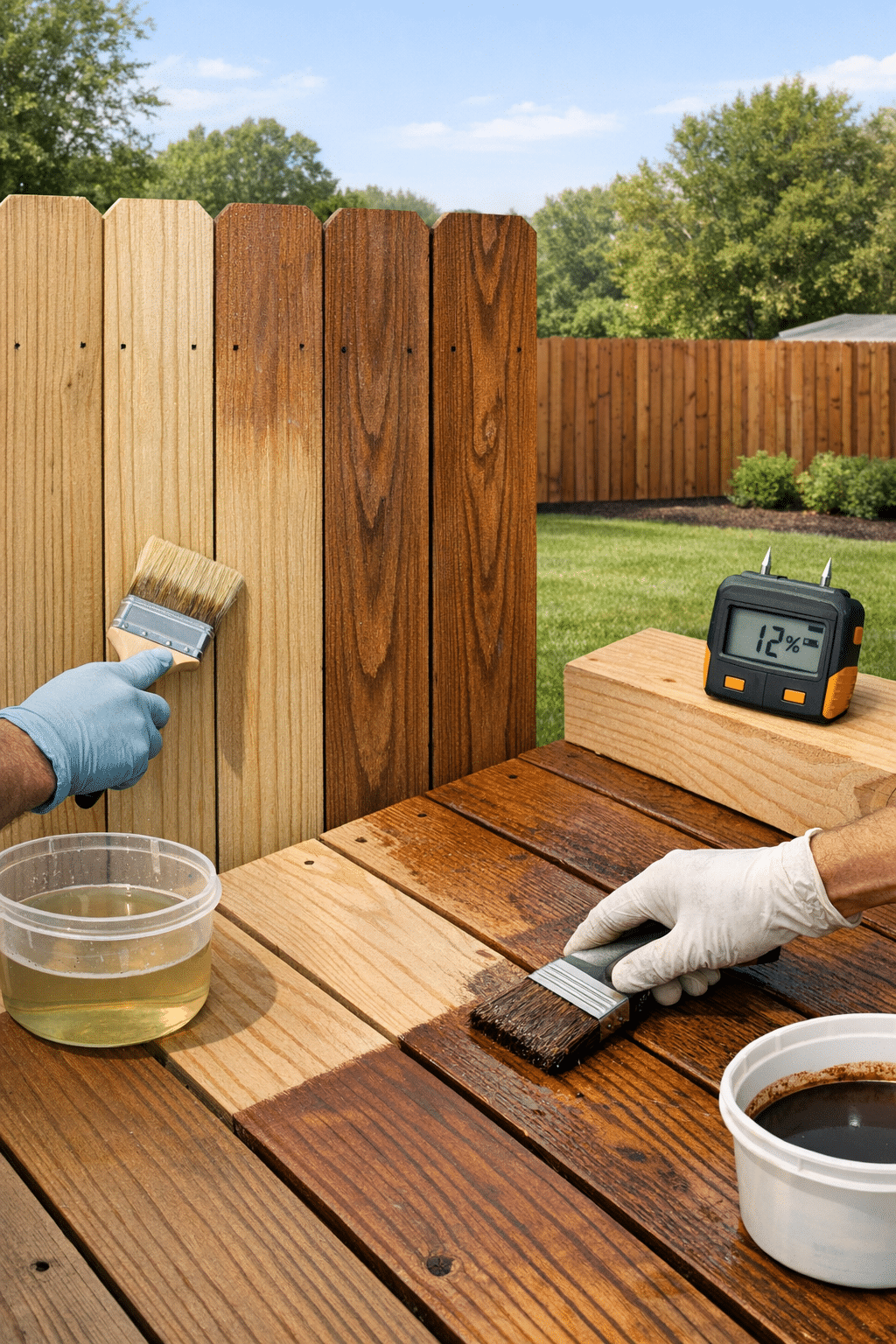
- Testing moisture content when possible
- Avoiding staining too soon after rainfall or irrigation exposure
- Watching shaded fence lines and deck areas that dry more slowly
- Following stain manufacturer guidelines for acceptable moisture levels
Conditioner cannot solve a moisture problem. If the wood is too damp, the stain system may still fail. That is why prepping wood for stain should always start with cleaning and drying before any conditioner or stain is applied.
How to Prepare Wood for Stain the Right Way
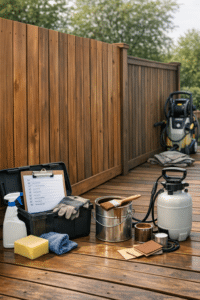
Proper prep creates the foundation for everything that follows. If you are serious about prepping wood for stain, think in terms of sequence rather than isolated steps. The best finish comes from a complete system.
Step 1: Inspect the Surface
Check for dirt, mildew, gray UV damage, old failed coatings, raised grain, and damaged boards. If you skip inspection, you may apply conditioner and stain over issues that reduce adhesion or ruin the final look.
Step 2: Clean Thoroughly
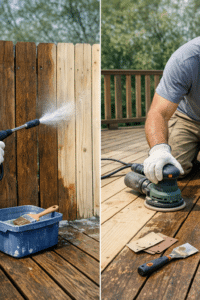
Use a wood cleaner appropriate for exterior surfaces. Remove grime, algae, mildew, and old residues. On decks, pay special attention to foot traffic zones. On fences, look for sprinklers, plant contact, and shaded sections where organic buildup is common.
Step 3: Brighten if Needed
A wood brightener can help restore a more natural appearance after cleaning and can improve stain acceptance. This is often a smart step when the wood looks dull, weathered, or uneven in tone.
Step 4: Complete Fence Moisture Prep
Let the wood dry completely. This stage is critical. Fence moisture prep is often the difference between a stain job that lasts and one that starts failing early. Moisture meters are especially helpful for large fencing projects or recently installed lumber.
Step 5: Sand Trouble Spots if Necessary
Light sanding can reduce raised grain or smooth rough areas. Do not over-polish the wood, though. An overly slick surface may limit penetration for some stains.
Step 6: Apply Wood Conditioner if Appropriate
Follow the product instructions closely. Most conditioners need to be stained within a certain time window after application. Applying too much or waiting too long can affect stain performance.
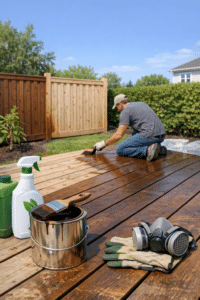
Step 7: Stain Evenly and Methodically
Work board by board where possible, maintain a wet edge, and avoid stopping in the middle of a visible section. Even with a conditioner, technique still matters.
Common Mistakes to Avoid
Even a quality stain can underperform if the prep process is rushed. Here are some of the most common issues that affect fences and decks:
Skipping Moisture Checks
The biggest error in fence moisture prep is assuming the wood is dry because it looks dry. Surface dryness is not the same as internal readiness.
Using Conditioner on the Wrong Product System
Always read the stain label. Some products are designed to work directly with the wood surface and may not perform as intended over a separate conditioner.
Inadequate Cleaning
Dust, mildew, and old residue can interfere with both conditioning and staining. Prepping wood for stain starts long before application day.
Applying Stain in Poor Weather
High humidity, direct hot sun, or imminent rain can all affect results. Outdoor staining needs the right temperature and drying conditions.
Expecting Conditioner to Fix Damaged Wood
The wood conditioner purpose is to improve stain absorption, not repair rot, severe weathering, or structural failure. Replace damaged boards before finishing.
How Wood Conditioners Affect Long-Term Appearance
While a wood conditioner is mainly used to improve initial stain absorption, that early advantage can influence long-term appearance too. A more even application often fades more evenly. Boards that begin with consistent penetration tend to age with fewer harsh contrast changes, which can make maintenance coats simpler later on.
For decks, where traffic and sun exposure vary by area, starting with a balanced stain application can help the surface wear in a more uniform way. For fences, where visibility is broad and continuous, a conditioned stain finish can keep the overall look cleaner from panel to panel.
That said, long-term success still depends on routine care. Regular cleaning, inspection, and timely reapplication are essential. Conditioner helps set the stage, but maintenance preserves the performance.
Choosing Between DIY and Professional Help
Many homeowners can handle basic staining, but larger or more visible projects may benefit from professional attention. If you are dealing with new pressure-treated lumber, challenging weather conditions, or a fence and deck combination that needs consistent color, a professional can help evaluate wood type, moisture level, and product compatibility.
A pro will also understand when the wood conditioner purpose aligns with the stain system and when it does not. That expertise can save time, money, and rework.
Final Thoughts on Wood Conditioners for Fences and Decks
Wood conditioners may seem like a small detail, but they can make a noticeable difference in stain quality, especially on porous or uneven outdoor wood. When combined with proper cleaning, drying, and fence moisture prep, they help support more even absorption and a better-looking finish. If you are serious about prepping wood for stain, understanding the wood conditioner purpose is a smart place to start.
Before your next staining project, take time to assess the wood, confirm moisture readiness, and choose a system designed for your specific fence or deck. A little extra preparation now can lead to a finish that looks better and lasts longer. Ready to upgrade your exterior wood results? Start with the right prep plan and give your stain every chance to succeed.