
How to Handle Weather Delays During Fence and Deck Staining Projects
Shifting forecasts can turn a straightforward stain job into a juggling act. With a little planning and the right techniques, you can adjust your staining plans when the weather changes unexpectedly, protect your work, and still deliver professional results. Below you’ll find practical weather delay solutions, smart rescheduling strategies, and proven stain application tips to keep your fence and deck projects on track in any season.
Why Weather Matters for Staining
Stain performance depends on a handful of environmental variables: temperature, humidity, wind, and surface moisture. Apply too soon after rain, or in the wrong temperature band, and you risk lap marks, poor penetration, wash-off, blotching, or premature failure. Most exterior wood stains specify an ambient and surface temperature range—commonly 50°F to 90°F—and dry, clean wood. High humidity slows drying. Direct sun can flash-dry the stain before it levels. Wind accelerates evaporation and can blow dust onto fresh coatings. Understanding these factors is the foundation for credible weather delay solutions and confident rescheduling when skies don’t cooperate.
Forecasting and Planning: Weather Delay Solutions That Work
Know Your Numbers
Use objective thresholds to decide whether to proceed or pause. Aim for:
Moisture content: Wood at or below 12–15% (check with a moisture meter). After heavy rain, decks and fences often need 24–72 hours to return to this range, depending on species, sun exposure, and airflow.
Temperature: Ideally 60–80°F. Below 50°F many stains won’t cure properly; above 90°F flash-off and lap marks are likely.
Humidity: Under 80% for predictable dry times.
Dew point spread: Keep surface temperature at least 5°F above the dew point to avoid condensation that can sabotage adhesion and gloss.
Use Reliable Forecasts and Radar
Check a detailed hourly forecast and live radar the evening before and the morning of the job. Pair a national source with a radar app to spot pop-up cells. Look for a clear window that covers application time plus the full recommended dry-to-rain interval (often 12–48 hours depending on product). This simple step eliminates many avoidable call-backs and eases rescheduling conversations with clients.
Build Slack Into Your Schedule
Block buffer days in your calendar during volatile seasons. Treat them as flex days for touch-ups, prep work, or carryover. A modest scheduling cushion is one of the most effective weather delay solutions and reduces pressure to push ahead in marginal conditions.
Communicate Early: Rescheduling Without Frustration
Set expectations in your proposal and reminders: weather rules the schedule. Provide a tentative date plus a 24–48 hour confirmation window based on updated forecasts. When changes are needed, explain the “why”—protecting the wood and the client’s investment—then offer the next-best options. Clear, proactive communication turns rescheduling into a value-add instead of a pain point.
Before You Start: Moisture, Prep, and Timing
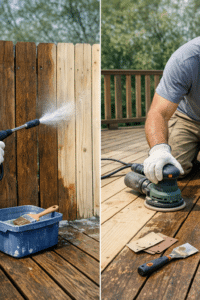
Weather-smart staining begins with a thorough, timing-conscious prep. Wash or strip as needed, rinse well, then allow adequate dry time. Don’t guess—verify with a moisture meter, especially on horizontal surfaces and end grain where water lingers. Plan your start for late morning after dew has burned off, and stop early enough that fresh stain won’t face fast-dropping evening temperatures or overnight dew. If a light shower is possible late day, it’s safer to postpone than risk wash-off and rework.
During Application: Stain Application Tips for Uncertain Skies
Even if the forecast looks favorable, the way you apply stain can create extra insurance. These stain application tips help you adapt on the fly:
Work in the shade whenever possible. Follow the shade line around a deck or fence to avoid hot surfaces and flash drying. On fences, stain the side facing away from the sun first.
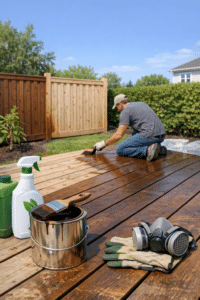
Keep a wet edge. Tackle manageable sections—1–3 deck boards the full length, or one to two fence bays at a time—and back-brush immediately. This minimizes lap marks if conditions change.
Go thin and even. Two light coats (if the product allows) beat one heavy coat, especially when humidity rises. Heavy films are more vulnerable to imprinting and wrinkling.
Spray, then back-brush. Sprayers speed coverage, but back-brushing drives stain into the grain and evens out overlap lines, buying time against sudden wind or sun bursts.
Stir, don’t shake. Shaking traps bubbles that can mar the finish in humid or cooling conditions. Box multiple gallons to maintain color consistency.
Edge cases matter. Treat railings, post tops, and end grain first; they dry faster and are most prone to flashing and water intrusion.
Oil vs. Water-Based in Variable Weather
Penetrating oil-based products generally want longer dry-to-rain windows (often 24–48 hours). They’re forgiving on lap marks if you maintain a wet edge but can spot if hit by rain too soon. Water-based acrylics often set faster (sometimes water-safe after 12–24 hours) but are less tolerant of high humidity and very cool temps. Always follow the product data sheet for minimum temperature, maximum humidity, and recoat timing, and adapt your rescheduling to these requirements.
Brush, Roll, or Spray?
Choose tools based on the day’s conditions. In wind, spraying can create overspray and inconsistent coverage; a pad or roller with immediate back-brushing is safer. In cool, calm conditions, spraying plus back-brushing helps maintain a wet edge. Whatever the method, these stain application tips apply: control section size, keep moving, and finish at clean breaks.
If Rain Interrupts: Triage and Recovery
Even the best weather delay solutions can’t stop the occasional pop-up shower. If rain arrives mid-project, take a breath and assess methodically:
Within 0–2 hours of application: The finish may wash off or spot. Once dry, test with a fingernail or tape: if color transfers easily, lightly clean the surface, allow it to dry to target moisture, then recoat the affected sections thinly, feathering into sound areas.
At 2–6 hours: You may see water spots or sheen changes without full wash-off. After drying, dry-brush or lightly abrade glossy patches, wipe clean, and apply a thin leveling coat.
After full cure: If minor spotting remains, a maintenance coat over the entire board run or fence bay evens appearance. Avoid “polka-dot” touch-ups that draw the eye.
If rain interrupts during prep (cleaning/brightening), re-rinse when weather clears to remove residues, then restart your drying clock. Never trap moisture under a finish; prioritize rescheduling over rushing.
Protecting the Site and Materials
Keep stain and tools in a temperature-stable, dry space. Avoid leaving open cans in direct sun or near cold concrete that can condense moisture under the lid. Cover surrounding landscaping and hardscapes with breathable drop cloths; avoid plastic sheeting on fresh horizontal surfaces, which can trap condensation and imprint the coating. If a brief sprinkle is possible, tent vertical fence bays with breathable tarps set off the surface to maintain airflow, but do not seal in moisture.
Common Weather Scenarios and What to Do
Hot and sunny (85–95°F): Start early, chase shade, and reduce section size. Consider a conditioner or extender if the product allows. Expect shorter open time and maintain aggressive back-brushing.
Cool and damp (50–60°F, high RH): Plan for longer dry times and avoid late-day application. Water-based products may haze if temperatures drop quickly—delay or switch to a warmer window.
Windy: Wind accelerates flash-off and carries debris. Shield the work area where safe, switch from spray to pad/brush, and reduce section width to keep a wet edge.
High humidity (80%+): Extend dry-time expectations and avoid heavy coats. Verify the dew point spread before starting late in the day.
Overnight dew: Stop early. Fresh coatings can blush or spot when dew forms. Resume once surfaces are fully dry and above the dew point the next morning.
Quality Checks That Guide Rescheduling
Simple tests prevent costly rework and support confident rescheduling decisions with homeowners:
Moisture meter: Confirm wood is at or below 12–15% before application and after rain events.
Absorption test: Sprinkle a few drops of water. If they soak in within a minute, the surface is ready; if they bead, it’s too wet or already sealed.
Tape or scratch test: After a rain-affected coat dries, check adhesion before deciding on a full recoat.
Client Communication, Contracts, and Rescheduling Policies
Put weather-related expectations in writing. A simple clause that prioritizes product guidelines over calendar dates protects everyone. Outline how rescheduling works, who initiates contact, and typical buffer windows. Share the dry-to-rain requirement for the chosen product so clients understand why a sunny morning doesn’t always mean you can start. This clarity turns potential frustration into trust—and supports your weather delay solutions when the forecast shifts.
Safety First
Wet decks are slippery. Pause foot traffic and post a friendly warning. In lightning or high winds, secure ladders and stop work. Keep cords and sprayers off wet ground to avoid shock risk. Safety-conscious pauses are easier to explain than injury-related delays.
Pro-Level Stain Application Tips Recap
To maximize success around uncertain weather, remember these core stain application tips: verify moisture content, plan around dew and sun, keep coats thin and even, maintain a wet edge with immediate back-brushing, and respect dry-to-rain windows. Pair these with clear rescheduling policies and your projects will look better and last longer.
FAQs: Weather, Stain, and Scheduling
How long after rain should I wait before staining a deck or fence?
Typically 24–72 hours depending on wood species, sun/wind exposure, and temperature. Verify with a moisture meter; target 12–15% or less.
How soon can stained wood get wet?
Water-based products may tolerate light moisture after 12–24 hours; oil-based often need 24–48 hours. Always follow the product’s dry-to-rain guidance.
Can I stain in direct sun?