
The Role of Sealers in Fence and Deck Staining Systems
When you invest in a beautiful wood fence or deck, you’re not just building an outdoor feature—you’re creating an experience you want to last. That’s why the smartest finishing systems go beyond color alone. Pairing sealers and stain creates a synergistic layer of beauty and defense that helps wood resist sun, rain, foot traffic, and time. Whether you’re finishing fence panels for curb appeal or targeting high-performance deck waterproofing, the right combination protects the wood you love and makes maintenance simpler for years to come.
Stain vs. Sealer: What’s the Difference?
Stains and sealers are often mentioned together, but they serve distinct roles in a comprehensive wood-care system.
What Stain Does
Stain adds color and character while providing UV protection to slow graying. Pigments in semi-transparent and semi-solid stains act like sunscreen, filtering sunlight that degrades lignin in wood fibers. Quality stains also include resins that lightly fortify the surface. However, most stains alone are not a complete moisture barrier—especially on horizontal surfaces like decks.
What Sealer Does
Sealers specialize in moisture control. They create hydrophobic protection that reduces water absorption, helping to prevent swelling, checking, and rot. Depending on the chemistry, a sealer can be penetrating (soaking into wood fibers and leaving little to no surface film) or film-forming (creating a thin, protective layer on top). When used together, sealers and stain deliver a balanced system: stain for color and UV defense, sealer for water repellency and durability.
Why Sealers and Stain Work Better Together
Think of stain as your color and sun shield, and sealer as your moisture and wear shield. Combining them offers:
Superior moisture resistance: Essential for deck waterproofing, a sealer blocks water intrusion—critical on flat boards that collect rain and snow.
Enhanced UV stability: Stain pigments slow fading; a compatible sealer locks in color longer by stabilizing the surface.
Dimensional stability: Reduced swelling and shrinking mean fewer cracks, cups, and warps over time.
Mildew and algae resistance: Many sealers include mildewcides and repel the moisture that fosters biological growth.
Extended service life: By managing sun and water in tandem, maintenance cycles are longer and easier, saving time and money.
Types of Sealers and How to Choose
Penetrating vs. Film-Forming
Penetrating sealers soak into the wood, leaving a natural, low-sheen look. They’re breathable, less prone to peeling, and ideal for high-traffic decks and finishing fence applications where you want a natural aesthetic. Film-forming sealers create a surface film for elevated abrasion resistance and sheen but can peel if misapplied or if moisture becomes trapped.
Oil-Based vs. Water-Based
Oil-based options typically penetrate deeply and enrich grain with a warm tone, but may have higher VOCs and longer dry times. Water-based sealers cure faster, have lower odor and VOCs, and maintain more neutral color, but may require more careful surface prep to ensure penetration.
Clear, Toner, and Two-in-One Formulas
Clear sealers prioritize water repellency but rely on stain for UV protection. Toner sealers add a hint of pigment for mild fade resistance. Many modern products combine sealers and stain in one step, simplifying application and improving intercoat adhesion. If you prefer a custom look, you can apply a dedicated stain followed by a compatible clear sealer.
Choosing the Right System for Your Wood and Climate
Wood species: Cedar and redwood accept penetrating systems beautifully and benefit from UV-rich stains. Pressure-treated pine needs thorough drying before finishing. Dense hardwoods like ipe and mahogany often perform best with penetrating oil systems; film-formers may struggle to adhere.
Climate: In rainy or snowy regions, prioritize aggressive deck waterproofing with a penetrating sealer and UV-forward stain. In hot, sunny zones, semi-transparent stains with strong pigments paired with a breathable sealer help resist rapid graying and checking. Coastal areas may demand extra mildew resistance and frequent rinsing.
Use and wear: Decks experience abrasion, furniture movement, and foot traffic; opt for penetrating systems that don’t peel and that make spot repairs easy. Vertical finishing fence projects face less wear but more sun; emphasize UV stability and water repellency to prevent warping and color fade.
Aesthetics and sheen: For a natural, matte look, choose penetrating products. For a slightly richer sheen on railings or trim, a light film-forming topcoat can be used—just ensure the system remains breathable enough for your climate and wood species.
Compliance and environment: Check local VOC regulations and disposal guidelines. Water-based technology has come a long way and can rival oil performance in many settings while reducing odors and emissions.
Surface Preparation: The Make-or-Break Step
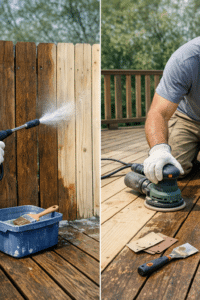
Great results begin with meticulous prep. Skipping steps here is the number-one reason coatings fail early.
Clean: Remove dirt, pollen, and organic growth with a wood-safe cleaner. Use oxygenated bleach (not household chlorine bleach) for mildew, then rinse thoroughly.
Restore and brighten: If the wood is gray or has tannin stains, use a wood brightener to restore color and normalize pH—critical for even stain absorption.
Dry to the core: Let the wood dry to roughly 12–15% moisture content. Trapped moisture undermines adhesion and compromises deck waterproofing. A simple moisture meter is an inexpensive insurance policy.
Sand smartly: Lightly sand rough or fuzzy fibers (80–120 grit). Avoid over-sanding to a polished surface that resists absorption.
Test absorption: Sprinkle water; if it beads strongly, the wood may still be sealed or too wet. If it darkens and absorbs, you’re ready.
Application: Building a Durable System
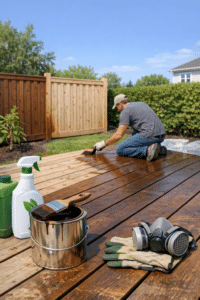
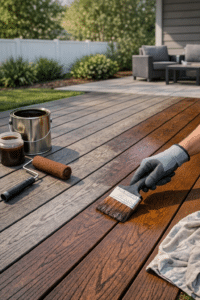
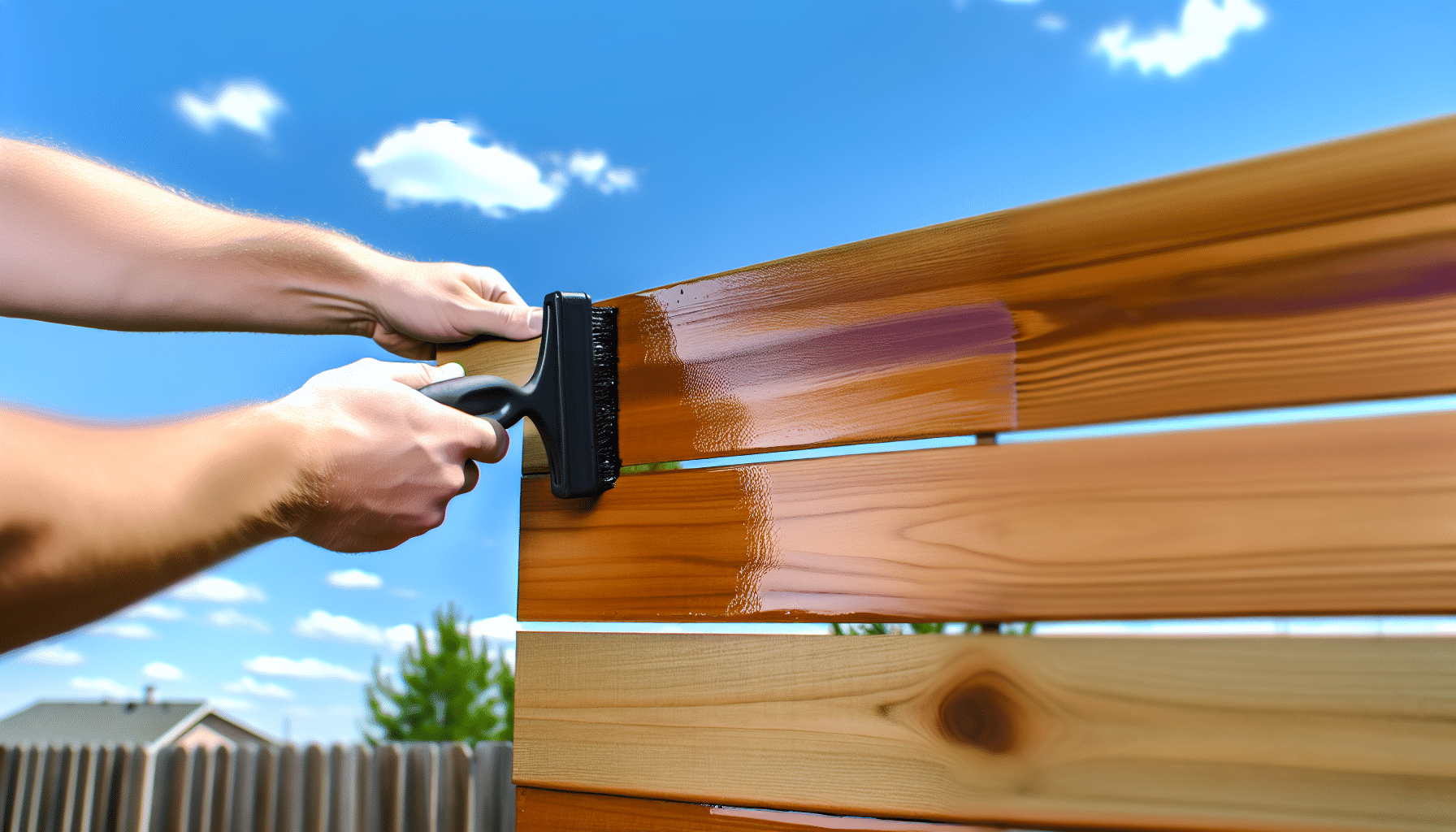
Sequence: If using separate products, apply stain first, allow proper cure per manufacturer guidance, then apply the compatible sealer. If using a two-in-one, apply in thin, even coats and back-brush to work the product into the grain.
Weather window: Aim for 50–90°F with moderate humidity. Avoid direct midday sun, high winds, or imminent rain. Keep the surface dry for 24–48 hours after application, especially for finishing fence posts near sprinklers.
Thin to win: Over-application can cause stickiness or sheen irregularities, particularly with film-formers. Two light coats are typically better than one heavy coat.
End-grain focus: Seal the cut ends of boards and post tops—these areas drink water and are the first to fail if ignored.
Undersides matter: When feasible, pre-finish deck boards on all sides before installation. This dramatically improves deck waterproofing by reducing moisture intake from below.
Maintenance: Keeping the System Performing
No exterior finish is “set it and forget it.” Proactive care extends life and reduces total cost.
Inspection: Twice a year, check for water beading, color fade, and high-wear zones on steps and traffic paths.
Cleaning: Rinse seasonally to remove pollen and contaminants that feed mildew. Use gentle cleaners and soft brushes to avoid scuffing.
Recoat intervals: Decks often need touch-ups every 12–24 months depending on exposure and traffic. Fences may go 24–36 months or longer. Penetrating systems allow easy spot maintenance without stripping the whole surface.
Quick fixes: Address scratches, hail marks, or pet wear promptly. Small repairs prevent larger failures and keep the finish looking fresh.
Common Mistakes to Avoid
Sealing too soon: Applying over damp wood traps moisture and leads to blushing, poor adhesion, and premature failure.
Over-sanding: Polishing surfaces to a high grit closes the grain and reduces stain and sealer absorption.
Heavy coats: Thick applications of film-formers can peel; penetrating products can turn tacky. Always follow spread rates and back-brush.
Skipping end-grain and fastener penetrations: Water wicks in at cuts, cracks, screw holes, and post tops—seal these diligently for true deck waterproofing.
Wrong chemistry for the wood: Dense or oily hardwoods may reject certain film-formers. Choose penetrating oils specifically formulated for exotics.
Cost, Value, and Long-Term Payoff
A quality system of sealers and stain is an investment that pays back in fewer board replacements, better safety (less cupping and splinters), improved aesthetics, and higher property value. While premium products and careful prep require time and budget, the lifecycle cost is typically lower than frequent reapplications or remediation after premature failure.
FAQs About Sealers and Stain for Fences and Decks
Can I use a two-in-one product?
Yes. Many high-performance formulas combine stain pigments with water repellents, simplifying application. Ensure the product suits your wood species and local climate.
Do I need a separate sealer if my stain says “water-repellent”?
Sometimes. Some stains offer adequate repellency for vertical finishing fence projects but may still benefit from an additional clear topcoat on high-exposure decks. Follow manufacturer guidance and test water beading after cure.
How soon can I walk on a sealed deck?
Light foot traffic is often safe after 24–48 hours, but full cure can take several days. Always check product instructions and weather conditions.
What if my deck is already gray?
Use a cleaner and brightener to restore color, then apply stain and sealer. Severely weathered boards may need sanding or selective replacement for best results.
Bring Out the Best in Your Wood with the Right System
Color alone is not protection, and water repellency alone is not enough. The most durable, beautiful results come from a thoughtful pairing of sealers and stain tailored to your wood species, climate, and goals—whether you’re finishing fence runs for lasting curb appeal or maximizing deck waterproofing for a busy outdoor living space. Ready to preserve the beauty you’ve built? Contact our team for personalized product recommendations and a step-by-step plan to protect your fence or deck for years to come.