
Environmental Considerations When Choosing a Fence or Deck Stain
Choosing the right stain for your fence or deck isn’t just about color and durability—it’s about making a smarter choice for your home and the planet. Today’s homeowners are weighing the environmental impact of coatings more than ever, seeking sustainable stains that perform well and comply with evolving VOC regulations. From what’s in the can to how long it lasts and how you clean up afterward, every step influences your project’s footprint. Here’s how to select a stain that looks great, protects your wood, and aligns with eco-conscious values.
Why the Environmental Impact of Stains Matters
Wood stains protect against moisture, UV damage, and wear—but the chemistry that makes them perform can affect air and water quality. Traditional solvent-heavy formulations release volatile organic compounds (VOCs) into the air, which contribute to smog formation and can impact indoor and outdoor air quality. Stain runoff, improper disposal, and the use of persistent additives may also pose risks to soil and aquatic life. By choosing products designed to minimize their environmental impact, you help reduce emissions, protect local ecosystems, and create a safer space for your family and pets.
Understanding VOC Regulations and Compliance
VOC regulations set limits on how many grams of VOCs per liter (g/L) a product can contain. These rules improve air quality and vary by region. While manufacturers increasingly engineer lower-VOC options, responsibility also falls on buyers to select products that meet the strictest applicable rules in their area.
How to Read VOC Numbers on the Can
Look for a clearly listed VOC number (e.g., “VOC: 50 g/L”). Lower is better. Many regions classify low-VOC stains at or below about 100 g/L for semi-transparent products, with more stringent limits for interior coatings. Zero-VOC typically indicates less than 5 g/L before colorants, but added tints may raise the final number—ask your retailer for the full VOC content after tinting.
Regional Differences You Should Know
In the U.S., areas guided by CARB and SCAQMD commonly enforce the toughest limits for architectural coatings. Canada and the European Union also have robust emissions rules (e.g., EU Directive 2004/42/EC). If you buy online, note that some high-VOC stains aren’t shipped into certain regions. When in doubt, choose a product that meets the most stringent VOC regulations you might encounter, especially if you plan to move or resell your property.
Types of Sustainable Stains
Modern chemistry delivers a range of sustainable stains that balance performance and lower emissions. The best fit depends on your wood species, exposure, and desired look.
Water-Based Acrylic and Waterborne Alkyd Stains
Water-based stains typically have lower VOCs and less odor than traditional oil-based options. Advances like waterborne alkyds (oil-modified, but dispersed in water) offer robust penetration and flexible, scuff-resistant films with improved drying times. These options can be excellent where environmental impact and fast re-occupancy are priorities.
Plant-Based and Bio-Based Oils
Some stains use renewable binders derived from linseed, tung, or sunflower oils. Premium bio-based systems can penetrate deeply and move with the wood, reducing cracking. Look for formulations that clearly disclose bio-based content and avoid harsh solvents. Keep in mind that some natural oils still use mildewcides and driers; choose options that document safer additives and lower aquatic toxicity.
Semi-Transparent vs. Solid-Color
More pigmentation typically means better UV resistance but a more “paint-like” look. Semi-transparent stains highlight wood grain and may require more frequent maintenance than solid-color stains, which can last longer outdoors. Longer life often reduces environmental impact by spacing out recoats and lowering total material consumption.
Low-Odor, Low-VOC, and Zero-VOC Claims Explained
Low-odor is not the same as low-VOC, and zero-VOC doesn’t automatically mean zero emissions after tinting. Always confirm the final VOC content (base plus colorants) and look for third-party certifications to validate marketing claims.
Ingredients to Look For—and Those to Avoid
Labels and technical data sheets (TDS) reveal a lot about a stain’s footprint.
Prefer:
- Water as the primary solvent (for reduced emissions and easier cleanup)
- Waterborne alkyds or acrylics with proven exterior durability
- Iron oxide pigments for stable, long-lasting color and UV defense
- Modern, lower-toxicity mildewcides with documented aquatic profiles
- Additives free from APEOs (alkylphenol ethoxylates) and formaldehyde donors
- Clear disclosure of ingredients and recyclability guidance
Avoid or question:
- High levels of petroleum solvents or “aromatic” hydrocarbons
- Unspecified “biocides” without safety documentation
- Heavy metal pigments beyond trace levels (e.g., lead, chromium)
- Fluorinated water repellents (PFAS) where alternatives exist
- Excessive fragrances and unnecessary additives that raise VOCs
Durability and Maintenance: The Hidden Environmental Lever
Often, the greenest stain is the one that lasts. If a product extends maintenance cycles from every 1–2 years to every 3–5 years, you’ll use fewer gallons over time, make fewer trips to the store, and generate less waste. Durability depends on the stain type, climate, sun exposure, wood species, and preparation quality. Investing in a tougher, lower-VOC coating and meticulous prep can reduce the overall environmental impact far more than switching brands every season.
Smart Preparation and Application to Reduce Impact
How you apply a stain can be as important as what you apply.
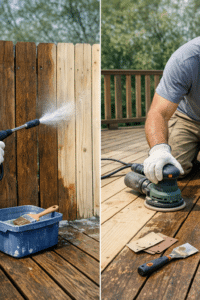
- Prep efficiently: Use low-dust sanding methods and capture debris. Clean with biodegradable cleaners designed for decks and fences.
- Mind the weather: Avoid windy days and impending rain. This reduces overspray, runoff, and rework.
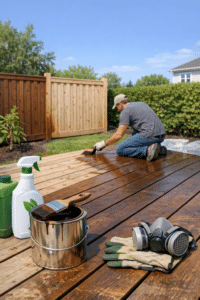
- Protect soil and water: Lay drop cloths. Keep products away from storm drains. Contain wash water in a bucket rather than rinsing over landscaping.
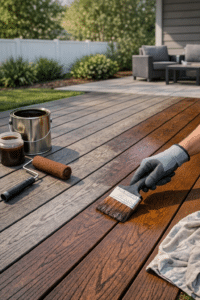
- Apply with control: Brushes and pads minimize mist. If spraying, use shields and back-brush to improve penetration and reduce waste.
- Measure what you need: Estimate coverage to avoid leftovers you’ll never use. Two thin coats often outperform one heavy coat.
- Ventilate and cure properly: Even low-VOC coatings need airflow to cure efficiently, shortening the time emissions occur.
Cleanup and Disposal: Small Steps, Big Difference
Responsible cleanup prevents pollution. For water-based stains, wipe excess from tools, then wash in a bucket; allow solids to settle and dispose of the clear water per local guidance. Never pour leftover stain or solvent into sinks or storm drains. Many communities accept leftover coatings at household hazardous waste facilities. Oily rags can self-heat—dry them flat outdoors before disposal as directed on the label. These habits keep your project safe and aligned with VOC regulations and local environmental rules.
Packaging, Sourcing, and End-of-Life
The sustainability conversation goes beyond the formula:
- Recyclable containers: Choose brands with metal or widely recyclable plastic cans and clear end-of-life instructions.
- Right-size purchases: Buying only what you need reduces leftovers and waste.
- Concentrates and refills: Where available, these reduce shipping weight and packaging.
- Local sourcing: Purchasing regionally made products can lower transport-related emissions.
Certifications and Labels to Trust
Third-party certifications help validate eco claims and document reduced environmental impact:
- Green Seal (GS-11): Covers paints, coatings, stains, and sealers; evaluates VOCs, performance, and health criteria.
- GREENGUARD Gold: Focuses on low chemical emissions, useful for covered porches and semi-enclosed spaces.
- EPA Safer Choice: Seen more often on cleaners but can apply to certain coatings and prep products.
- EU Ecolabel / Nordic Swan: For products sold in European markets, indicating lower emissions and safer chemistry.
- Cradle to Cradle Certified: Highlights material health, circularity, and responsible production.
While certifications are helpful, they’re not the whole story. Always review the TDS and Safety Data Sheet (SDS) and verify the VOC regulations your region enforces.
Climate and Wood-Specific Considerations
Your microclimate and wood species influence sustainability choices:
- Hot, sunny climates: UV exposure is intense; consider semi-solid or solid-color stains with robust UV blockers to extend life.
- Humid or shaded areas: Prioritize mildew resistance and proper spacing between boards for airflow; clean annually to prevent biofilm.
- Hardwoods vs. softwoods: Dense hardwoods may benefit from penetrating, oil-modified systems; softwoods often accept waterborne formulations readily.
Matching the product to the site boosts longevity—reducing material use and the project’s long-term environmental impact.
Quick Checklist for Choosing a Greener Fence or Deck Stain
- Confirm low or zero VOC content (base plus colorants) and compliance with local VOC regulations.
- Favor sustainable stains (water-based or verified bio-based) with transparent ingredient disclosure.
- Choose a durability profile suited to your climate and traffic to extend maintenance cycles.
- Look for third-party certifications such as Green Seal or GREENGUARD Gold.
- Avoid PFAS-based repellents, high-aromatic solvents, and undisclosed biocide blends.
- Plan precise quantities, apply in ideal weather, and contain runoff and overspray.
- Dispose of leftovers and wash water responsibly; never pour into drains or soil.
Cost, Value, and Total Footprint
Eco-forward stains can cost slightly more upfront, but they often deliver better coverage, faster re-occupancy, and longer maintenance intervals—saving money and reducing waste over time. When you factor in fewer recoats, lower odor, easier cleanup, and healthier air, the total value—and reduced environmental impact—