
DIY Fence and Deck Staining Safety Tips: Protect Yourself, Your Home, and Your Yard
Staining a fence or deck can transform your outdoor space, but success starts with safety. A thoughtful plan, the right protective gear, and smart stain handling practices will protect you, your family, and your property from avoidable risks. Below, you’ll find practical, step-by-step safety precautions that keep your project on track and help you finish with confidence.
Understand the Risks Before You Start
Not all wood stains are the same. Some are water-based with lower odors and easier cleanup, while others are oil-based for deeper penetration and longer protection. Each comes with specific hazards:
- Fumes and VOCs: Many stains release volatile organic compounds that can irritate eyes and lungs without proper ventilation and protective gear.
- Flammability: Oil-based products and their vapors are flammable. Rags soaked with oil-based stain can ignite spontaneously if piled up.
- Skin and eye irritation: Splashes can cause irritation or injury without gloves and goggles.
- Slip hazards: Freshly stained surfaces are slick; combine that with tools, hoses, and ladders, and you have a recipe for falls.
Review the product label and Safety Data Sheet (SDS) before you open a can. This is the foundation of smart stain handling and sets the tone for safer work from start to finish.
Plan the Project with Safety in Mind
Good planning reduces mistakes and helps you avoid time pressure that can lead to shortcuts. Consider these safety precautions as you plan:
- Pick the right day: Choose mild weather (50–85°F/10–29°C), low humidity, and little wind. Avoid blazing sun that can overheat you and flash-dry stain.
- Ventilation: For partially enclosed decks or under-porch areas, add fans to move fresh air through the space.
- Clear the workspace: Remove furniture, grills, planters, toys, and tripping hazards. Secure pets and keep children out of the area.
- Power and ignition sources: Turn off nearby pilot lights, and do not smoke. Keep extension cords out of puddles and traffic paths.
- Neighbor and landscaping protection: Alert neighbors if you’ll be spraying. Shield plants and grass with breathable covers; water soil beforehand to limit absorption from accidental drips.
Pre-Project Safety Checklist
- Read the label and SDS for product-specific stain handling instructions.
- Confirm weather window for application and drying.
- Stage a first-aid kit, fire extinguisher (Class B), and spill kit (absorbent, rags, trash bags).
- Set up barriers or caution tape to block traffic across the deck.
- Lay drop cloths, rosin paper, or plastic sheeting where needed.
Suit Up: The Protective Gear You Need
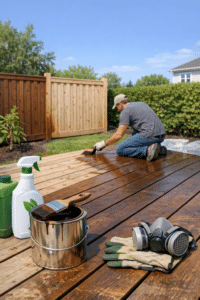
Right-sized protective gear isn’t optional—it’s your first line of defense. At minimum, wear:
- Gloves: Nitrile or chemical-resistant gloves to prevent skin contact with stain and cleaners.
- Eye protection: Sealed safety goggles or splash-rated glasses.
- Respiratory protection: For oil-based stains and spraying, use a NIOSH-approved respirator with organic vapor cartridges and, if sanding, P100 prefilters. Ensure a proper seal; facial hair can interfere.
- Clothing: Long sleeves, long pants, and a brimmed hat. Consider disposable coveralls if you’re spraying.
- Footwear: Closed-toe, non-slip shoes or boots. Avoid sandals or smooth soles that slide on wet stain.
- Hearing protection: If using power sanders or airless sprayers for extended periods.
Inspect and replace worn gear as needed. Clean respirator cartridges per manufacturer guidance and discard when breathing resistance increases or odors are detectable.
Smart Surface Prep and Site Containment
Preparation is where many accidents happen. Keep it organized and deliberate:
- Repair first: Replace broken boards and protruding fasteners. Loose rails and wobbly steps are fall hazards.
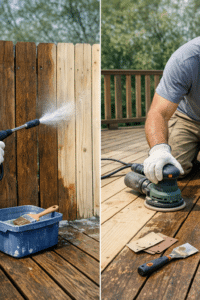
- Clean thoroughly: Sweep debris; wash mildew and grime with a deck cleaner. Allow to dry completely to reduce slip risks and improve adhesion.
- Sand safely: Wear a dust mask or respirator when sanding. Vacuum dust and wipe surfaces with a tack cloth.
- Mask and cover: Use painter’s tape on hardware and house siding. Protect soil and hardscapes with drop cloths. Keep pathways open and dry for safe exits.
Stain Handling and Storage: Do It the Right Way
Careful stain handling prevents spills, waste, and fires:
- Open and mix safely: Open cans on a stable surface over a drop cloth. Stir thoroughly from the bottom; avoid excessive shaking that can introduce bubbles.
- Pour with control: Decant only what you need into a working container or tray. Wipe drips from rims and keep lids loosely placed between coats to limit vapors.
- Never return used product: Don’t pour contaminated stain back into the original can. Seal leftovers tightly, label the date and color, and store upright.
- Mind compatibility: Use metal or solvent-rated plastic containers for oil-based products. Keep away from heat, sparks, and direct sun.
- Rag safety: Oily rags can combust. Lay them flat outdoors to dry fully on a noncombustible surface, or submerge in water and seal in a metal container before disposal according to local rules.
Application Safety Precautions That Reduce Risk
Whether you’re brushing, rolling, or spraying, technique affects safety as much as appearance.
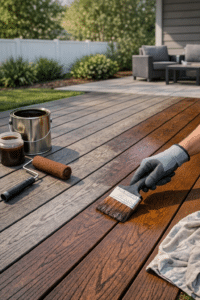
- Brush and roll method: Work in manageable sections with the grain. Keep one dry “escape path” so you don’t trap yourself on a wet deck.
- Spraying tips: Mask thoroughly to prevent overspray. Use the lowest pressure that gives even coverage. Always use a tip guard on airless sprayers, and never place fingers near the spray tip—high-pressure injection injuries require immediate medical attention.
- Ladder safety: Set ladders on level, stable ground with a 4:1 angle. Maintain three points of contact, don’t overreach, and never stand on the top rung.
- Avoid slips and trips: Wipe drips as they happen. Manage hoses and cords with hooks or reels. Keep a clean, dry staging area for tools and cans.
- Pace yourself: Take breaks in shade, hydrate, and reapply sunscreen. Heat stress leads to mistakes.
Protecting Landscaping, Hardscapes, and Nearby Structures
Part of smart stain handling is protecting everything around your work area:
- Contain drips: Place cans in shallow trays or on cardboard to catch spills. Keep a designated “wet tools” bin.
- Shield and ventilate: Drape breathable fabric over plants; avoid sealing them under plastic for long periods. Use directed airflow to push fumes away from doors and windows.
- Mind water management: Never rinse brushes or rollers into storm drains. Collect wash water and dispose of it according to local guidelines.
First Aid and Emergency Preparedness
Know what to do before something happens:
- Eye exposure: Flush with clean water for at least 15 minutes. Remove contacts if easy. Seek medical care if irritation persists.
- Skin contact: Wash with soap and water. Replace contaminated clothing.
- Inhalation: Move to fresh air. If breathing issues continue, get medical attention.
- Ingestion: Do not induce vomiting. Contact Poison Control (in the U.S., 1-800-222-1222) or local emergency services immediately.
- Fire readiness: Keep a Class B fire extinguisher nearby. Eliminate ignition sources and ventilate well.
Keep emergency numbers handy and your phone charged. If using power tools, a small, well-stocked first-aid kit should be within arm’s reach.
Cleanup, Curing, and Reopening the Area
Finishing strong is part of your overall safety precautions plan:
- Tool cleanup: For water-based stains, wash with warm, soapy water and collect the rinse. For oil-based, use mineral spirits in a container and dispose of the solvent responsibly.
- Waste disposal: Follow local hazardous waste rules for solvents, leftover stain, and dried rags. Seal all containers before transport.
- Cure times: Respect label guidance. Many products need 24–48 hours before light foot traffic and longer before replacing furniture or planters.
- Post-project inspection: Remove tripping hazards, store ladders, coil hoses, and confirm barriers remain in place until the surface