
Pest and Insect Prevention with Quality Fence and Deck Stains
If you’re trying to keep wood fencing and decking looking great while discouraging termites, ants, and other critters, the right stain can make a real difference. High-quality finishes do more than add color—they seal out moisture, harden vulnerable surfaces, and, in many cases, include insect-repellent ingredients to support smarter pest prevention. Pairing the correct product with good maintenance practices delivers long-lasting wood protection and fewer pest problems around your outdoor spaces.
Why Fences and Decks Attract Pests
Outdoor wood is constantly exposed to the elements. Sun and rain expand and contract fibers, opening up micro-cracks where insects can hide and nest. Moisture wicks into end grain, posts near soil, and fastener holes—creating conditions attractive to termites, carpenter ants, and wood-boring beetles. Food sources, shelter, and nearby landscaping make decks and fences prime real estate for pests unless you take steps to protect the wood and reduce access.
How Stains Support Pest Prevention
They seal, shed water, and limit entry points
Penetrating deck and fence stains soak into the wood to reduce porosity and help repel water. When wood stays drier, it resists swelling and cracking, which limits the crevices pests use to move in. Lower moisture also discourages fungi that soften wood—a common precursor to insect damage. This foundational wood protection is the first pillar of effective pest prevention.
Insect-repellent stains add targeted deterrence
Some premium products are marketed as insect-repellent stains. These finishes incorporate deterrent ingredients—sometimes plant-derived oils (like cedar or thyme) or coatings compatible with separate borate pre-treatments. Others may be formulated to work alongside EPA-registered insecticide systems designed for structural wood. Always read and follow label instructions, and verify that any repellent or preservative is appropriate for residential outdoor use. While no finish is a magic shield, stains designed with repellency in mind can make wood less attractive to pests and complement other controls.
UV protection keeps wood sound
Sunlight degrades lignin at the surface, leading to fiber breakdown and raised grain. Quality stains add UV blockers and pigments that protect the surface, keeping it smoother and denser. Smoother, intact surfaces are harder for wasps to anchor nests and for carpenter bees to chew. This synergy—UV defense plus moisture control—enhances durability and supports pest prevention long term.
Choosing the Right Stain for Wood Protection and Pest Defense
Oil-based vs. water-based
Oil-based penetrating stains typically offer deep penetration and strong water repellency, which helps with wood protection. Modern water-based formulas cure quickly, resist mildew, and have lower odors and VOCs. Either can support pest prevention if they deliver good sealing and durability. Prioritize products that emphasize hydrophobic performance, UV resistance, and compatibility with repellents or preservatives.
Transparency and film type
– Clear and semi-transparent stains let grain show through but provide less UV masking; they generally require more frequent maintenance.
– Semi-solid and solid stains offer stronger UV defense and a tougher surface that some pests find harder to chew or grip. For areas prone to carpenter bee activity, a semi-solid or solid finish may be advantageous.
Features to look for in insect-repellent stains
– Language on the label indicating repellent properties or compatibility with borate pre-treatments (applied before staining).
– Built-in mildewcides and water repellents that keep surfaces dryer.
– Proven abrasion resistance—important on handrails and steps where wear exposes raw wood.
– Adequate dry-time and recoat windows to ensure a proper build that seals end grain and micro-checks.
Color and heat considerations
Darker colors absorb more heat, which speeds drying after rain—a plus for pest prevention—but can elevate surface temperatures and accelerate weathering in hot climates. Mid-tone semi-solids often strike a balance between UV shielding and thermal load.
Compatibility with existing coatings
Penetrating stains perform best on bare or previously stained (not painted) wood. If your fence or deck has an old film-forming coating that’s peeling, strip and sand to ensure the new finish penetrates and seals effectively. Compatibility is crucial to maintain the moisture barrier that underpins wood protection.
Step-by-Step: Preparing and Staining for Maximum Pest Prevention
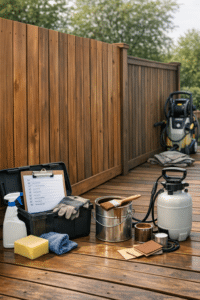
1) Inspect, repair, and clean
– Replace decayed boards, tighten fasteners, and address any structural issues.
– Treat active infestations with appropriate measures before finishing.
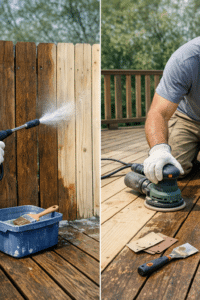
– Wash with a deck cleaner or oxygenated bleach to remove grime, mildew, and gray oxidation. Rinse thoroughly and allow to dry.
2) Consider a borate pre-treatment
Borate solutions are widely used for interior and protected wood; some can be applied to exterior components that will be top-coated and kept as dry as practical. If compatible with your stain system, a borate pre-treatment can add another layer of insect deterrence. Follow manufacturer guidance carefully and allow proper drying before staining.
3) Sand and open the grain
Lightly sand to remove raised fibers and improve penetration. Focus on rail tops, stair treads, and other high-wear zones that pests and moisture exploit.
4) Seal end grain and vulnerable edges
Brush extra stain into cut ends, notches, and around fasteners. End grain acts like a bundle of straws that wicks water and invites pests; saturating it is critical for wood protection and pest prevention.
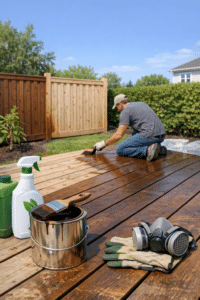
5) Apply the stain correctly
– Work in the shade on a mild, dry day—typically 50–90°F (10–32°C)—and avoid windy conditions that cause uneven drying.
– Use a brush and pad for best penetration; back-brush to even out coverage and prevent puddling.
– Respect wet-on-wet or dry-recoat directions, depending on the product. Overapplication can lead to sticky surfaces and reduced durability.
6) Let it cure and maintain it
Observe full cure times before heavy use or rain exposure. Then institute a maintenance routine to preserve the barrier that supports pest prevention.
Maintenance Schedule and Seasonal Checklist
– Spring: Inspect for peeling, checks, or soft spots. Clean pollen and debris, recoat high-wear areas, and re-seal any exposed end grain.
– Summer: Trim vegetation 6–12 inches away from fences and deck perimeters to improve airflow and reduce pest bridges.
– Fall: Clear leaves from gaps, check flashing and post bases, and touch up nicks before winter moisture sets in.
– Every 1–3 years (product dependent): Light clean and recoat. Insect-repellent stains and water repellents diminish over time; timely refreshes sustain wood protection and performance.
Integrated Pest Management Around Fences and Decks
Stains are one component of a comprehensive plan. Combine them with smart site practices for superior results:
– Grade and drainage: Keep soil and mulch pulled back from wood. Use gravel at post bases and ensure positive drainage away from structures.
– Hardware choices: Use corrosion-resistant fasteners; rust creates gaps and moisture traps that attract pests.
– Screens and barriers: Install under-deck screening or hardware cloth to deter nesting animals and reduce debris buildup.
– Lighting: Swap bright white bulbs for warm/yellow “bug” bulbs to reduce flying insect attraction near decks.
– Sanitation: Promptly remove food debris and secure trash to discourage ants and wasps.
Common Pests and How Stains Help Deter Them
Termites and carpenter ants
Neither insect is likely to be stopped by finishes alone, but dry, sealed wood presents fewer entry points and reduces conditions they favor. When combined with proper clearances, borate-compatible treatments, and professional perimeter control where needed, quality stains play a meaningful role in pest prevention.
Carpenter bees
These bees prefer weathered, unprotected wood for nesting. A robust semi-solid or solid stain produces a harder, less appealing surface. Filling old holes and maintaining a smooth, sealed finish can reduce recurring activity. In high-pressure areas, consider trim boards of alternative materials at rail ends.
Powderpost beetles
Sealing reduces access to egg-laying sites and helps wood stay dry—both critical in managing these beetles. If an active infestation is suspected, address it before finishing and follow up with diligent wood protection maintenance.
Wasps and spiders
Smoother, sealed surfaces make attachment more difficult and ease nest removal. Keep corners and joists clean; a maintained finish plus routine sweeping goes a long way toward pest prevention.
Eco and Safety Considerations
– VOCs and odor: Low-VOC, water-based stains offer easier cleanup and lower odor while still delivering effective wood protection.
– Label adherence: Only use repellents and preservatives as directed for exterior residential use; follow safety and disposal instructions.
– Waterways and landscaping: Prevent runoff into ponds and gardens. Mask plants and avoid staining before rain.
– Pets and kids: Keep off surfaces until fully dry and cured.
FAQs
Do insect-repellent stains kill insects?
Most insect-repellent stains are intended to deter or discourage pests rather than kill them. They’re a preventative tool and should be part of a broader strategy that includes moisture control, sanitation, and, where appropriate, professional treatments.
How long do repellent properties last?
Performance varies by formula, exposure, and wear. Plan on inspections every season and maintenance coats every 1–3 years to keep repellency and sealing at their best.
Can I apply stain over paint?
Penetrating stains need to soak in, so they won’t perform well over paint. Strip failing films and sand to bare or previously stained wood for optimal results.
What’s the ROI of quality stains for pest prevention?
By limiting moisture ingress and deterring pests, premium finishes can reduce repairs, extend service life, and lower the likelihood of expensive structural damage—delivering strong value over the long term.
Protect Your Wood and Deter Pests—Starting Now
When you combine insect-repellent stains with smart preparation, careful application, and routine maintenance, you get a durable finish that works hard at pest prevention and long-term wood protection. Choose a high-quality product suited to your climate and wood species, follow the steps above, and keep up with seasonal care. Ready to defend your fence and deck and enjoy a cleaner, longer-lasting outdoor space? Start your staining project today or consult a trusted local pro for a tailored plan.