
The Best Fence and Deck Stains for Harsh Sun and Heat
If your outdoor wood is baked by relentless sunshine and high temperatures, a regular stain won’t cut it. You need a system built for extremes—formulas that defend against UV exposure, resist surface temperatures that can sear bare feet, and stop fading before it starts. This guide breaks down the best fence and deck stains for hot, sun-drenched climates, explaining what to buy, why it works, and how to apply it for long-lasting sun damage prevention, reliable heat protection, and beautiful results.
Why Sun and Heat Destroy Exterior Wood
Harsh sunlight and heat are a one-two punch. UV radiation breaks down lignin—the “glue” that holds wood fibers together—causing graying, fiber erosion, and rapid color fade. Heat amplifies this damage by driving off natural oils, accelerating moisture cycling, and stressing finishes. On decks and fences in arid or high-altitude regions, surface temperatures can exceed 140°F, which can soften film-forming coatings, lead to blisters and peeling, and make boards more prone to checking.
The right stain combats both mechanisms. UV resistant stains use pigments and UV absorbers to block radiation. High-quality binders, penetrating oils, and heat-stable resins add heat protection, keeping the finish flexible and intact as temperatures spike.
What to Look For in a Sun- and Heat-Proof Stain
1) Robust UV packages
Top-performing UV resistant stains combine three defenses:
- Pigments (iron oxides, trans-oxide pigments) that physically block UV and give color. More pigment generally equals stronger sun damage prevention.
- UV absorbers that “soak up” UV energy before it reaches the wood.
- HALS (hindered amine light stabilizers) that neutralize free radicals formed by UV exposure, slowing degradation.
2) Penetrating over thick films (especially for decks)
In extreme heat, thick film-forming coatings can soften and peel. Penetrating stains soak into the wood, moving with seasonal expansion and contraction while resisting blistering. For heat protection on high-traffic decks, choose a penetrating semi-transparent or semi-solid rather than a heavy film.
3) Right base: oil, water, or hybrid
- Oil-based penetrating stains excel at wetting wood fibers, adding rich color and water repellency. Many include oils that replenish wood and resist drying out under heat.
- Water-based acrylic or alkyd-modified stains can pack advanced UV packages (including nano-oxide pigments) and maintain color vibrancy with minimal yellowing. They’re often more breathable and faster drying in hot climates.
- Hybrids blend benefits—oil penetration with waterborne durability—offering balanced sun damage prevention and weathering resistance.
4) Color and pigment load
Darker colors house more pigment and therefore provide stronger UV blocking, but they can also absorb more heat. For scorching climates, mid-tones to medium-dark semi-solids strike a smart balance between UV resistance and surface temperature management. Some advanced lines offer “cool color” technology to reflect infrared heat even in deeper hues.
5) Breathability and flexibility
Heat plus sun can drive moisture movement. Breathable, flexible stains let vapor escape while holding color, reducing the risk of peeling. Look for finishes labeled as “breathable,” “penetrating,” or “low-film build,” particularly for horizontal surfaces.
6) Durability and maintenance cycle
In high UV zones, plan for maintenance. The best systems make upkeep simple: clean, lightly brighten, and recoat without stripping. Semi-transparent and semi-solid penetrating formulas usually allow easy refreshes—key for long-term sun damage prevention.
Best Stain Types for Fences vs. Decks
Fences (vertical surfaces)
- Semi-transparent or semi-solid penetrating stains: Ideal blend of natural wood look with strong UV blocking.
- Solid-color acrylic stains: Maximum pigment and excellent UV resistance; fantastic for older or uneven wood. On vertical surfaces, quality solids hold up well in heat since they shed water and get less direct abrasion.
- Maintenance: Expect 2–4 years between recoats in hot, sunny climates—often longer with solid-color systems.
Decks (horizontal surfaces)
- Penetrating semi-transparent or semi-solid stains: Top choice for hot decks. They resist peeling under foot traffic and thermal cycling while delivering UV protection.
- Avoid thick films: Heavy acrylic films and paints can blister on baking deck boards. If you need a solid look, choose flexible, deck-rated products and keep film build low.
- Maintenance: Plan on 12–24 months between light maintenance coats in extreme-sun regions, depending on exposure and color depth.
Standout Formulations and Ingredients to Seek
Rather than chasing a single “best brand,” shop by chemistry and feature set that matches your climate and wood type:
- Oil-based penetrators with trans-oxide pigments: Excellent for decks and fences needing rich color, deep penetration, and resilient UV resistance. Often include conditioning oils for heat protection.
- Water-based acrylics with nano-oxide UV blockers: Great color retention and fade resistance. Look for HALS and breathable films—especially for fences where solids excel.
- Alkyd-modified waterborne hybrids: Combine oil-like penetration with waterborne durability. Good compromise for homeowners balancing green regulations with performance.
- Cool-color/IR-reflective technologies: Help reduce surface heating on darker colors—ideal for sun-exposed decks seeking extra heat protection.
Well-regarded product families to explore include penetrating oils and hybrids from specialty deck brands and pro paint stores, as well as solid-color fence stains from reputable manufacturers. Always verify local VOC rules, warranty terms for horizontal vs. vertical use, and recommended maintenance schedules for sun damage prevention.
Color and Finish Choices for Hot Climates
- More pigment = more UV blocking. Semi-solid and solid colors offer the strongest fade resistance.
- Lighter colors run cooler. If bare feet matter, choose lighter or IR-reflective mid-tones for better heat protection.
- Matte or low-sheen finishes tend to look more natural, hide dust, and minimize glare in bright light.
- Color families that last: Earthy browns and grays typically weather more gracefully than vibrant reds or deep charcoals under intense sun.
Prep and Application: How to Maximize Longevity
1) Start clean, sound, and neutral
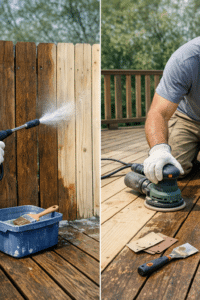
- Strip or clean old finishes with the correct remover or oxygenated cleaner. Rinse thoroughly.
- Brighten with an oxalic or citric acid brightener to restore color and pH after cleaning—this boosts penetration and adhesion for stronger sun damage prevention.
- Dry time: Let wood dry to below ~15% moisture content before staining.
2) Time your work
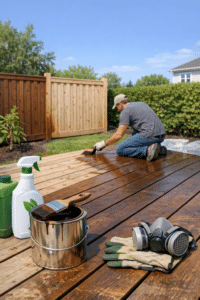
- Avoid direct midday sun. Apply early morning, late afternoon, or on overcast days to prevent flash-drying, lap marks, and poor penetration.
- Temperature window: Follow label, but many stains prefer 50–90°F surface temps. In extreme heat, shade sections or work in smaller areas.
3) Apply correctly
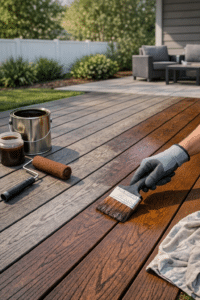
- Thin, even coats. Over-application leads to sticky surfaces and dirt pickup in hot weather.
- Back-brush to drive stain into grain and even out color.
- Seal end grain and cut ends thoroughly—these are moisture highways.
- Respect recoat/dry times precisely, as heat accelerates solvents and can tempt rushed steps.
4) Maintain proactively
- Annual wash with a gentle deck wash extends life and keeps pigment looking fresh.
- Test water repellency: When water stops beading or color looks chalky, schedule a maintenance coat—no stripping required for penetrating systems.
Deck and Fence Wood Species: Tailored Advice
- Cedar/Redwood: Naturally rot-resistant but UV-sensitive. Semi-transparent or semi-solid penetrating stains with strong pigment deliver excellent sun damage prevention without masking grain.
- Pressure-treated pine: Can be thirsty; allow proper dry-down after install. Semi-solid stains help even out color and bolster UV resistance.
- Hardwoods (ipe, cumaru, mahogany): Very dense; choose specialized penetrating oils with fine pigments. Expect more frequent light maintenance in intense sun to prevent quick fade.
Common Mistakes That Shorten Stain Life
- Over-application: Excess stain can gum up and fail faster in heat.
- Skipping the brightener after cleaning, which reduces penetration and bond.
- Applying in direct sun, causing flash-dry and lap marks.
- Ignoring end grain, which invites moisture and premature wear.
- Using film-heavy products on hot decks, leading to blisters and peeling.
Quick Picks by Scenario
- Hottest, sunniest decks: Penetrating semi-solid or semi-transparent oils/hybrids with robust UV packages for superior sun damage prevention and heat protection.
- Older or uneven fences: Solid-color, breathable acrylic stains for maximum fade resistance and uniform color.
- Dark color preference: Seek IR-reflective “cool color” technology to reduce heat build-up without sacrificing UV resistance.
- Eco or low-VOC needs: Water-based acrylic/alkyd-modified lines with nano-oxide UV blockers and HALS.
FAQ: Stains for Sun and Heat
Do lighter colors really keep decks cooler?
Yes. Light and mid-tone colors reflect more infrared energy, lowering board temperatures and improving perceived comfort while supporting heat protection. Pair with a high-pigment formula for robust sun damage prevention.
How often should I recoat in extreme sun?
For decks, plan on 12–24 months depending on exposure, color depth, and traffic. Fences can often go 2–4 years. With penetrating systems, maintenance is