
How to Care for Stained Fences and Decks in Coastal Areas
Life by the ocean is hard to beat, but the same sea breeze that feels so refreshing can be tough on exterior wood. Salt spray, intense sun, and constant humidity accelerate wear, fade color, and push finishes to their limits. If you want your fences and decks to look great and last, you need a plan tailored to the shore. This guide delivers practical saltwater fence care, proven coastal deck staining tips, and smarter weatherproofing strategies so your outdoor spaces stay beautiful season after season.
Why Coastal Conditions Are Different
Coastal microclimates bombard wood with a unique mix of challenges: airborne salt crystals attract moisture and can form a sticky film that degrades coatings; wind-driven sand acts like sandpaper; and high UV exposure rapidly breaks down pigments and binders. Add frequent fog or sudden squalls, and you’ve got a recipe for premature fading, peeling, and mildew growth. Hardware suffers too—non-marine-grade fasteners corrode fast, causing black streaks and compromising structural integrity.
Recognizing these stressors is the foundation of effective weatherproofing. The products you pick, how you prepare, and the maintenance rhythm you follow should all reflect the coast’s extra wear and tear.
Prep That Pays Off: Clean and Inspect Before You Recoat
Rinse Away Salt and Sand
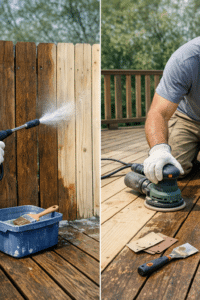
Before any cleaning or staining, give fences and decks a thorough fresh-water rinse to remove salt and grit. A garden hose with a fan nozzle is usually safer than a pressure washer; if you do use pressure, keep it low (under 1,200 PSI) and maintain distance to avoid furring the wood. This simple step improves adhesion and reduces the chance of sealing salt into the surface.
Deep-Clean the Right Way
Use a wood-safe, oxygen-based cleaner (sodium percarbonate) to lift grime, mildew, and old sunscreen or barbecue residue. Work in small sections and keep surfaces wet so cleaners don’t dry. Rinse well. If the wood looks dark or has black iron/tannin stains, follow with a brightener (oxalic or citric acid) to restore color and balance pH. Neutralizing after alkaline cleaners helps new stain penetrate evenly—a key coastal deck staining tip that prevents blotchy results.
Inspect Boards and Hardware
Look for cupping, cracks, loose fasteners, and soft spots. Replace corroded hardware with 316 stainless steel or hot-dipped galvanized to prevent rust streaks and galvanic reactions. Seal end grain and any fresh cuts—these are moisture highways that undermine weatherproofing. Ensure proper ventilation under decks and maintain a soil gap at the base of fences to minimize splash-back and rot.
Choose the Right Finish for Coastal Weatherproofing
Coastal success starts with finishes built for tough exposure. In most seaside settings, penetrating, oil-modified or waterborne stains with high UV blockers and mildewcides outperform thick film-forming coatings that can peel under salt and moisture stress. Here’s how to decide:
Transparency: Semi-transparent stains showcase grain while providing UV protection—ideal for decks. Semi-solids or solids add more color coverage and UV defense for fences that take heavy sun. Darker tints typically last longer, but very dark colors can get hot underfoot.
Base and additives: Look for marine-grade or “coastal” formulations with premium pigments, UV absorbers, and mildew resistance. For decks, consider adding a fine-grit anti-slip additive. Ensure the product meets local VOC rules and is compatible with previous coatings.
Wood species matters: Cedar, redwood, ipe, and other dense hardwoods benefit from high-quality penetrating finishes. Pressure-treated pine often needs thorough drying and a first coat designed for higher moisture content.
When in doubt, test swatches in sun and shade. Your coastal deck staining tips should always include spot-testing for color, sheen, and absorption.
Application Best Practices in Humid, Salty Climates
Watch the Weather Window
Apply stain when temps are roughly 50–90°F with low to moderate humidity. Aim for a surface temperature at least 5°F above the dew point and avoid direct midday sun. Plan for 24–48 rain-free hours. Coastal fog can extend dry times—be patient and verify tack-free status before a second coat.
Technique That Sticks
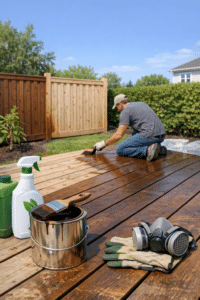
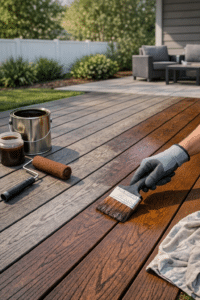
Work in manageable sections and keep a wet edge. Spraying is fine for fences, but always back-brush to drive stain into the grain and avoid lap marks. On decks, brush or roll boards end-to-end, one or two at a time. Apply thin, even coats—over-application is a leading cause of sticky surfaces and early failure. Seal end grain, rail tops, and horizontal fence caps meticulously; they take the most sun and water.
Mind the Cure
Even if a coating is dry to the touch, curing continues for days. Minimize heavy traffic and furniture placement during this period. Salt exposure on a fresh finish can haze the surface, so rinse gently if sea spray rolls in before full cure.
Maintenance Schedule That Matches the Coast
Good saltwater fence care and deck upkeep are less about big, occasional projects and more about steady, light-touch habits:
Weekly to biweekly: Quick fresh-water rinse to remove salt film—especially after windy days or storms.
Monthly: Visual check for mildew, sap drips, and sand accumulation; spot-clean with a mild, wood-safe wash.
Seasonally (spring/fall): Deep-clean and brighten as needed, tighten hardware, touch up high-wear zones like stair treads and rail caps.
Annually: Assess color fade and water beading. Recoat traffic lanes or sun-blasted fence runs. Full deck recoats are common every 12–24 months; fences often last 24–36 months depending on exposure and product.
After major storms, rinse off salt and debris promptly. Early intervention is one of the simplest yet most powerful coastal deck staining tips.
Design and Landscaping Tips That Extend Finish Life
Small construction and yard choices can supercharge weatherproofing results:
Keep clearance: Maintain 2–3 inches between the bottom of fence pickets and soil or hardscape. Don’t block deck airflow with stored items.
Top caps and drip edges: Horizontal fence rails and caps should shed water, not hold it. Slight bevels help.
Avoid constant wetting: Redirect sprinklers away from wood. Lift planters and outdoor rugs on risers to prevent trapped moisture.
Protect corners and traffic zones: Use furniture pads and rotate seating to distribute wear.
Common Coastal Problems and How to Fix Them
Salt haze or sticky film: Rinse with fresh water and a splash of white vinegar, then wash with a wood-safe cleaner. Avoid sealing in salt during recoats.
Mildew spots: Treat with an oxygen-based cleaner and ensure your next coat contains a mildewcide. Improve airflow and sun exposure where possible.
Black streaks near fasteners: That’s often iron reacting with tannins. Clean with an oxalic-acid brightener and upgrade to 316 stainless hardware.
Premature peeling or gloss failure: Usually from over-application or film-forming products in harsh exposure. Strip or sand failing areas, brighten, and switch to a penetrating finish.
Rapid graying on rail tops: Sand lightly, brighten, and apply a UV-rich semi-solid. Rail caps take more sun and may need annual touch-ups.
Eco-Friendly Practices Near Shorelines
Protect the waters you love. Choose biodegradable cleaners, capture runoff where practical, and never discharge wash water into storm drains. Mask plantings and rinse them before and after cleaning. Follow local regulations on pressure washing and product disposal. These small steps keep your saltwater fence care routine responsible and effective.
Tools and Materials Checklist
Cleaning: Garden hose, soft brush, oxygen-based cleaner, brightener, buckets, and tarps for runoff control.
Prep: Sanding pads (80–120 grit), scraper, replacement boards, 316 stainless or hot-dipped galvanized fasteners.
Finishing: High-quality penetrating stain/sealer with UV blockers, mildewcide, anti-slip additive (for decks), brushes/rollers/sprayer, and end-grain sealer.
Safety: Gloves, eye protection, mask/respirator when sanding or spraying.
FAQs: Quick Coastal Deck Staining Tips
How often should I recoat a coastal deck or fence?
Expect 12–24 months for decks and 24–36 months for fences, adjusted for sun, wind, and foot traffic. Touch up high-wear areas sooner.
What’s the best way to remove salt before staining?
Rinse thoroughly with fresh water, allow to dry, then deep-clean with an oxygen-based cleaner. Brighten and neutralize before applying stain.
Can I use the same product for fences and decks?
Yes, if it’s a premium penetrating exterior stain with UV and mildew protection. You may choose different opacities: semi-transparent for decks, semi-solid or solid for fences.
Which fasteners prevent coastal corrosion?
Use 316 stainless steel wherever possible.