
Benefits of Clear Wood Sealers on Your Fence and Deck
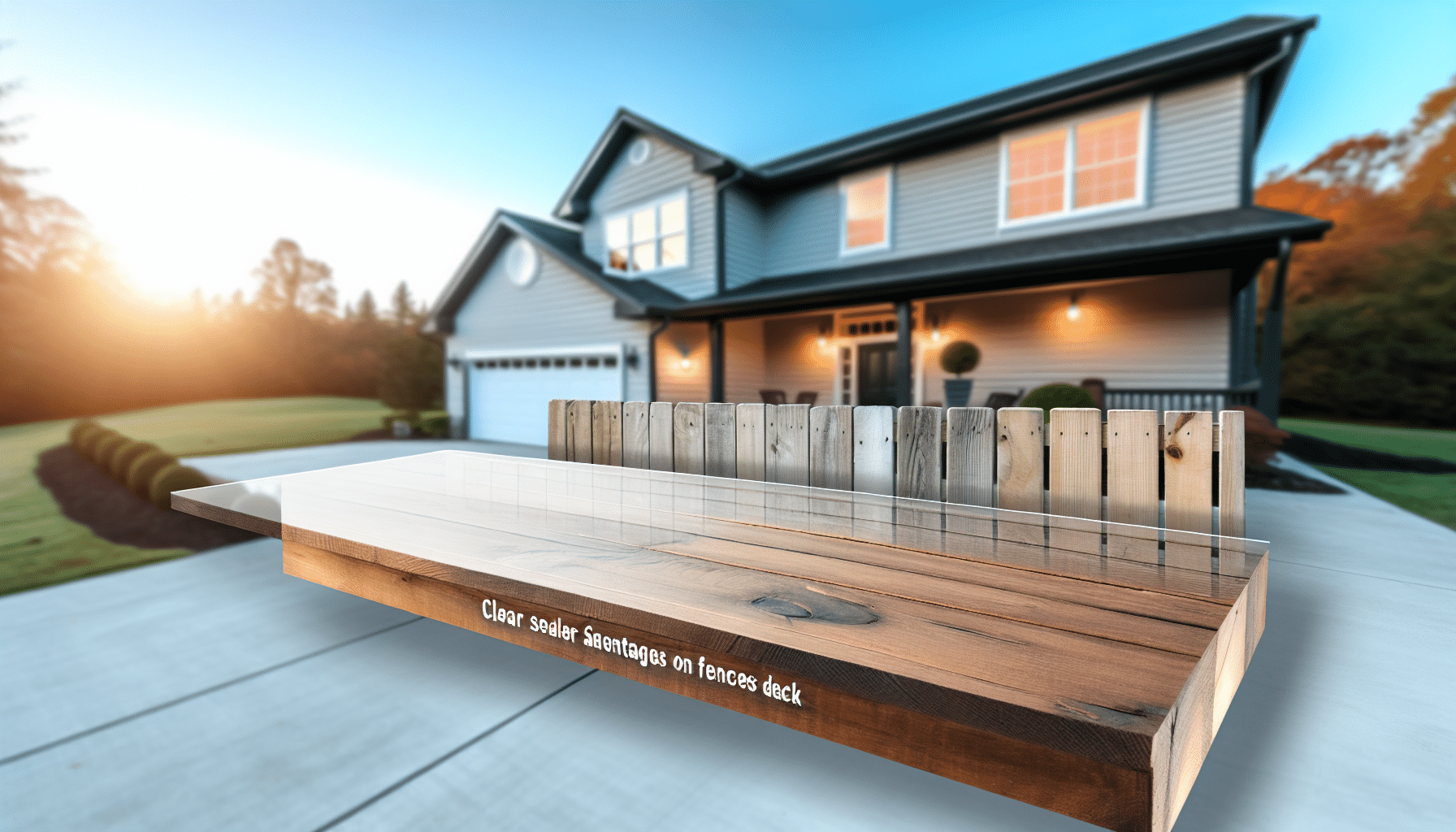
If you love the natural character of your fence or deck, a clear wood sealer can be the ideal finish. While stains add color and some protection, clear sealers prioritize the authenticity of the grain, offering reliable wood protection without masking the wood’s warm tones. In this guide, you’ll learn the key clear sealer advantages, how they compare to stains, and exactly when a clear sealer is the better choice—especially if you want long-lasting performance with a fresh, natural look.
What Is a Clear Wood Sealer?
A clear wood sealer is a transparent finish designed to shield exterior wood from moisture, surface grime, and sun exposure while showcasing the wood’s true color and grain. Most modern clear sealers are either penetrating (soaking into the fibers for deep wood protection) or lightly film-forming (creating a thin barrier on top). Many also include mildewcides and UV absorbers to slow down weathering and graying.
Unlike pigmented stains that alter color and opacity, clear sealers keep things natural. You can use them on new and weathered lumber, and on both vertical (fences) and horizontal (decks) surfaces—provided the product is rated for the specific application.
Clear Sealer Advantages for Fences and Decks
1) Preserves Natural Beauty and Grain
Clear sealers let the species and grade of your wood shine through. If you’ve invested in cedar, redwood, or select-grade pine, a clear finish celebrates the knots, cathedrals, and color variation you paid for. That “just-built” appearance is one of the most sought-after clear sealer advantages.
2) Reliable Moisture Defense and Wood Protection
Water is the enemy of exterior wood. A quality clear sealer delivers strong wood protection by repelling rain and snow, reducing swelling, cupping, and splitting. Penetrating formulations also help stabilize end grain and fastener holes, where moisture intrusion is most common.
3) UV Resistance Without Hiding the Wood
While pigmented stains offer the strongest UV block, many clear sealers include UV absorbers that slow graying and surface degradation. You keep the natural look, but with smarter sun defense. Note: in full, harsh sun, plan on more frequent maintenance than with a darker stain.
4) Easier Maintenance and Recoating
One of the most practical clear sealer advantages is low-hassle upkeep. Because there’s no heavy film or strong pigment, recoating typically doesn’t require sanding or stripping. A thorough clean and a fresh coat are often enough—saving you time, money, and mess.
5) Fast Application With Fewer Lap Marks
Most clear sealers apply quickly by brush, pad, or sprayer with minimal risk of lap marks or blotchiness. This is especially helpful on large fences and expansive decks where consistent color can be tricky with stain.
6) Stain Enhancement When Used as a Compatible Top Coat
When you want richer color from a stain but added durability, some clear penetrating sealers can be used over a fully cured, compatible stain to provide stain enhancement—deepening grain contrast and adding water beading without clouding the finish. Always follow manufacturer guidance for compatibility and cure times.
Clear Sealer vs. Stain: When to Choose Each
Both finishes have a place. Use this quick framework to decide:
Choose a Clear Sealer When:
– You want the most natural, “bare wood” look.
– You’re finishing high-quality lumber (cedar, redwood, tropical hardwoods).
– You prefer simpler maintenance cycles without stripping.
– The project is shaded or partially shaded, reducing UV intensity.
– You plan a compatible clear top coat over a light stain for subtle stain enhancement and added wood protection.
Choose a Stain When:
– You need stronger UV resistance (full sun decks).
– You want to correct color irregularities or hide imperfections.
– You prefer a specific color tone to match siding or trim.
Remember: you can combine approaches. A light, semi-transparent stain can set the tone, followed by a compatible clear sealer to lock in appearance and boost water repellency. Always verify the system is designed to work together.
Fence vs. Deck: How Application Differs
Fences (Vertical Surfaces)
Vertical orientations shed water faster and receive less standing UV exposure than horizontal surfaces. Clear sealers perform exceptionally well on fences, often lasting longer between maintenance cycles. Focus on saturating end grain at picket tops and bottoms, where moisture wicks in.
Decks (Horizontal Surfaces)
Deck boards bear foot traffic, standing water, and direct sun. A clear sealer is still a great option for homeowners who want natural color, but plan for more frequent maintenance than on fences—especially in sunny or coastal environments. Prioritize penetrating, breathable products to avoid slickness and peeling.
Potential Drawbacks of Clear Sealers (and How to Solve Them)
Less UV Block Than Pigmented Stains
Clear sealers can slow, not stop, UV graying. Mitigate this by choosing a sealer with UV inhibitors, reapplying on schedule, and keeping the surface clean. In extreme sun, a light semi-transparent stain under a clear top coat offers a balanced solution and subtle stain enhancement.
More Frequent Recoats in Harsh Conditions
Expect shorter intervals in full sun, high heat, or heavy rain climates. The upside: recoating a clear sealer is typically quick—no stripping, just cleaning and a fresh application.
Compatibility Over Existing Finishes
Not all clear products play well over every stain or prior coating. Check the label for “top-coat compatible,” match water- or oil-based chemistry when possible, and spot test a hidden area first.
How to Apply a Clear Wood Sealer: Step-by-Step
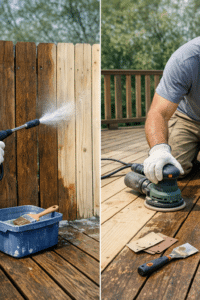
1) Evaluate and Prepare the Surface
– Clean: Remove dirt, pollen, and mildew with a wood cleaner and gentle scrub. Rinse thoroughly.
– Strip (if needed): If there’s a failing film or incompatible finish, use a stripper and brightener to reset the surface.
– Dry: Aim for wood moisture content under 15%. Let the surface dry 24–48 hours after washing, weather permitting.
– Smooth: Light sanding (80–120 grit) can knock down raised grain or fuzzing, especially on decks.
– Test Absorption: Sprinkle water. If it beads strongly on bare wood, wait longer or sand lightly to open the pores.
2) Choose the Right Product
– Penetrating vs. Film-Forming: For decks, penetrating sealers are typically preferred for better traction and fewer peeling risks. Fences can use either, but breathable systems are easier to maintain.
– Oil- vs. Water-Based: Oil-based products often penetrate deeply and enrich grain; water-based options dry fast, have lower odor, and offer easier cleanup.
– Additives: Look for UV inhibitors and mildewcides for extended wood protection.
– Compliance: Check VOC regulations in your area.
3) Mind the Weather Window
Apply between 50°F and 90°F, avoiding direct midday sun and windy conditions. Target a stretch with no rain for at least 24–48 hours. Shade and stable temperatures improve leveling and absorption.
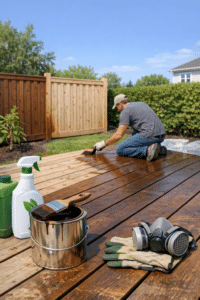
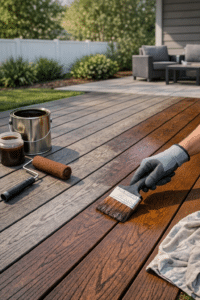
4) Apply Thin, Even Coats
– Tools: Use a high-quality brush, stain pad, or low-pressure sprayer with back-brushing.
– Technique: Work 2–3 boards at a time on decks; for fences, move panel-by-panel to maintain a wet edge.
– Coverage: Typical rates range from 150–300 sq. ft. per gallon per coat, depending on wood porosity.
– Coats: Most clear sealers call for one to two thin coats. Avoid heavy build-up to prevent tackiness or gloss spots.
5) Dry and Cure Properly
Dry-to-touch can be 1–6 hours; light foot traffic may be acceptable after 24 hours; full cure can take 3–7 days. Always follow the manufacturer’s instructions for your specific product and conditions.
6) Maintain on a Schedule
– Water Bead Test: Sprinkle water every few months. If it soaks in quickly, it’s time to recoat.
– Routine Cleaning: Gentle washing prolongs life and reduces organic growth.
– Touch-Ups: Because clear sealers don’t dramatically change color, spot touch-ups blend easily.
Common Mistakes to Avoid
Applying Over Damp Wood
Sealer on wet wood struggles to penetrate and can haze or fail prematurely. Confirm dryness, especially after pressure washing.
Over-Application
More is not better. Thick coats can become tacky, glossy, or attract dust. Apply thin, even coats and wipe off excess from dense species.
Skipping Compatibility Checks for Stain Enhancement
If you’re using a clear sealer for stain enhancement over a previously stained surface, make sure the products are designed to work together. Mismatched chemistry can lead to poor adhesion or clouding.
Ignoring Safety and Surroundings
Protect plants, siding, and hardscapes with plastic sheeting. Wear gloves and eye protection. Keep rags used with oil-based products in a sealed metal container to prevent spontaneous combustion.
FAQs About Clear Wood Sealers
Will a clear sealer prevent my deck from turning gray?
It will slow graying with UV inhibitors, but won’t stop it entirely. Regular maintenance and cleaning extend the natural look.
Can I use a clear sealer over an existing stain?
Yes—if the stain is fully cured and the products are compatible. Penetrating sealers are generally the best choice for breathable, durable results.
How often should I reapply?
Fences: typically every 18–36 months. Decks: every 12–24 months, depending on sun, traffic, and climate.
Is a clear sealer slippery?
Penetrating sealers maintain the wood’s texture and are generally