
Why Fence and Deck Staining is a Smart Investment
Your outdoor wood structures work hard year-round—sheltering gatherings, framing gardens, and defining your home’s character. Staining your fence and deck isn’t just about a fresh look; it’s a strategic move that protects your wood, streamlines maintenance, and helps your home present at its best. When done right, a stain investment delivers lasting wood protection, stronger curb appeal, and measurable support for property value.
Whether you’re planning to sell soon or simply want to safeguard your biggest asset, understanding how stain performs—and how to choose and apply it—can pay off for years to come.
What Makes Fence and Deck Staining a Smart Stain Investment?
Unfinished or weathered wood is vulnerable. Sunlight breaks down lignin (the natural “glue” in wood), causing graying and surface erosion. Moisture swells fibers, leading to warping, cracking, and mildew. Freeze–thaw cycles amplify damage, and foot traffic scuffs away any natural resistance. A quality stain forms a protective barrier that resists UV, sheds water, and enhances durability—all while enriching color and grain.
In short, a stain investment transforms exposed boards from “aging fast” to “aging gracefully,” extending usability and helping you avoid premature repair or replacement costs. That translates to predictable upkeep and stronger long-term performance—two traits that matter to homeowners and buyers alike.
How Staining Protects Wood and Saves Money Over Time
UV defense: Pigments in stain absorb and deflect sunlight, reducing graying, checking, and surface breakdown. This kind of wood protection keeps boards structurally sound and visually consistent.
Moisture control: Modern stains repel water so rain, snow, and morning dew don’t soak in. By limiting water absorption, you slow swelling, shrinkage, and board cupping—common reasons decks and fences fail early.
Rot and mildew resistance: Many exterior stains contain mildewcides that help prevent fungal growth on the surface, preserving both longevity and appearance.
Lower life-cycle cost: Regular staining is less expensive than full board replacement. A modest, scheduled re-coat protects your initial investment and reduces the risk of major repairs. Over a decade, that consistency often beats the costs of letting wood deteriorate, then paying for extensive fixes.
Boost Curb Appeal and Property Value
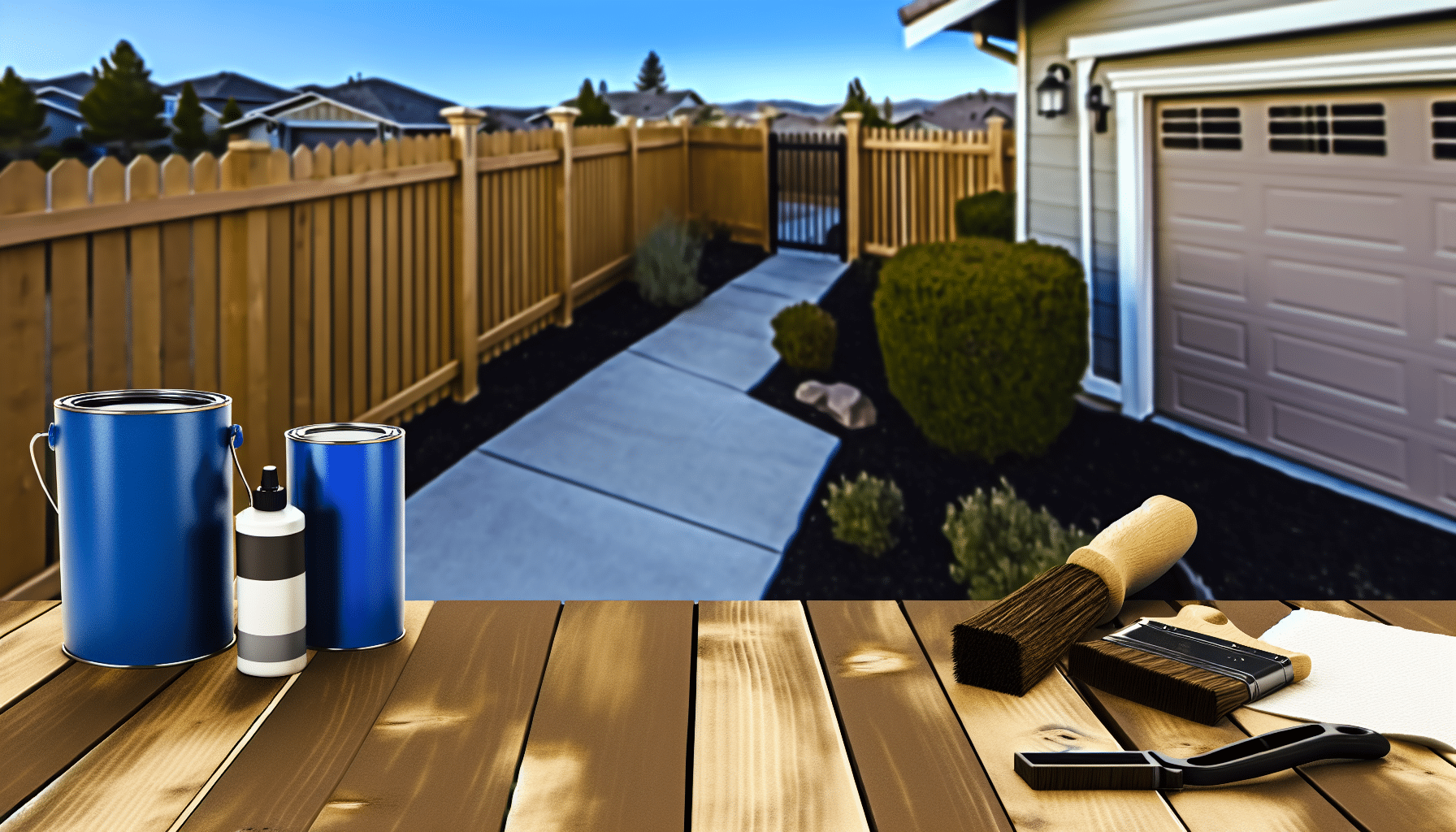
First impressions carry real weight. Freshly stained wood reads as cared-for, cohesive, and high quality—the trio of traits that elevate curb appeal. Whether you prefer a natural cedar tone or a sophisticated, deeper hue, stain unifies the look of your deck and fence with surrounding trim, siding, and landscaping.
For property value, it’s not just beauty; it’s condition. Appraisers and buyers factor maintenance and expected lifespan into what they’re willing to pay. A well-executed stain investment signals reduced near-term expenses, which can support stronger offers and smoother inspections.
Real-World Advantages During Resale
When your outdoor spaces appear move-in ready, buyers see less work and more weekend enjoyment. A crisp fence line and inviting deck can anchor listing photos, draw attention at showings, and help your home stand out in competitive markets—all through smart wood protection and design-forward color choices.
Choosing the Right Stain for Maximum Results
To get the best return on your stain investment, match your product to your goals and wood species.
Base type: Oil-based stains penetrate deeply, enhancing grain and water resistance; they’re favored for older or more porous wood. Water-based stains dry faster, have lower odor, offer excellent color retention, and make re-coating easy; they’re great where quicker turnaround and lower VOCs are priorities.
Opacity: Clear and transparent stains show the most grain but offer the least UV protection. Semi-transparent adds pigment for stronger UV defense while showcasing texture. Solid-color stains deliver the most UV shielding and uniform color, ideal for older boards with visual inconsistencies.
Color strategy: Choose a tone that complements your roof, trim, and landscape. Mid to darker tones can make greenery pop and help hide minor surface flaws. Lighter neutrals keep spaces airy and cooler in sun. A harmonious palette elevates curb appeal and reinforces perceived quality—important for property value.
Proper Prep and Application: Steps That Matter
Even the best stain can underperform if prep is rushed. The right process locks in durability and appearance, maximizing your wood protection.
Surface Preparation
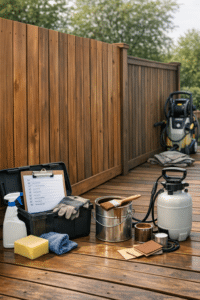
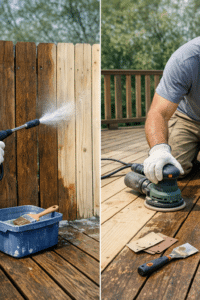
Clean: Remove dirt, mildew, pollen, and old loose coatings with a deck/fence cleaner. Rinse thoroughly and allow time to dry. For flaking finishes, gentle sanding or scraping is essential to ensure adhesion.
Repair: Replace severely split or rotted boards and set protruding fasteners. Smooth sharp edges and splinters for safety and even absorption.
Moisture check: Wood should be dry (commonly below 15% moisture content) before staining. Trapped moisture can lead to peeling and blotchy color.
Application Essentials
Weather window: Aim for mild temperatures and low humidity. Avoid direct midday sun, high winds, and imminent rain. Morning or late afternoon often yields the best results.
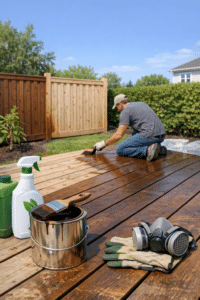
Tools and technique: Use a brush for edges and end grains, and a pad or sprayer with back-brushing for larger surfaces. Apply thin, even coats and follow manufacturer recoat times. Over-application can create sticky spots or sheen inconsistency.
Maintenance Timeline: How Often Should You Re-Stain?
Frequency depends on product, exposure, and foot traffic. As a guideline, decks typically benefit from maintenance every 2–3 years for semi-transparent stains and 3–5 years for solid-color; fences can stretch slightly longer because they see less wear. Perform an annual water-bead test—if water doesn’t bead on contact, it’s time to refresh. Consistent upkeep preserves wood protection and keeps curb appeal high, reinforcing property value.
DIY vs. Professional: Which Route Fits Your Goals?
DIY: Ideal if you have time, patience, and the right tools. You’ll save on labor, learn your wood’s needs, and can stage work around your schedule. Just be realistic about prep and weather windows, and test colors on inconspicuous areas first.
Professional: Pros bring efficiency, surface diagnostics, high-grade products, and application expertise—especially valuable for large or complex projects, or when past coatings need correction. A professional finish often maximizes the life of your stain investment and may come with a workmanship warranty.
Common Mistakes to Avoid
Skipping prep: Staining over dirt, mildew, or glossy old coatings undermines adhesion and appearance.
Rushing dry times: Staining damp wood traps moisture and can cause peeling or cloudiness.
Heavy coats: More isn’t better. Thick application leads to tackiness and uneven curing.
Ignoring end grains: Seal cut ends thoroughly; they absorb the most water and are a prime failure point.
Eco and Health Considerations
If indoor air quality or environmental impact is a priority, look for low-VOC, water-based options or oil-modified formulas with improved emissions profiles. Responsible cleanup and proper disposal of rags reduce fire risk and keep your stain investment sustainable.
Smart Timing: When to Schedule Your Stain Investment
Plan staining for spring or fall in most climates—temperatures are moderate and humidity is manageable. If summer is your only option, work in shaded windows and track the forecast closely. New pressure-treated lumber should dry adequately before staining; kiln-dried or pre-dried boards can be finished sooner. Timing your project well protects color uniformity and the integrity of your wood protection.
The Bottom Line: Lasting Protection, Everyday Beauty
Staining your fence and deck is more than a facelift—it’s a strategic stain investment that safeguards your wood, elevates daily enjoyment, and supports property value through stronger curb appeal and proven wood protection. With the right product, prep, and maintenance plan, you’ll spend less time worrying about weather and wear, and more time enjoying a beautiful, durable outdoor space.
Ready to protect and refresh your outdoor wood? Schedule a staining consultation, choose a color that complements your home, and put a long-term plan in place. Your deck and fence—and your bottom line—will thank you.