
Why Proper Drying Time Is Crucial After Staining
When you stain a deck, fence, or outdoor furniture, the urge to enjoy the refreshed look right away is strong. But patience pays off. Allowing adequate stain drying time—and understanding the difference between drying and curing—is what ensures the finish bonds properly, resists wear, and truly protects the wood. Rushing the process can lead to tackiness, uneven color, premature peeling, and expensive do-overs. This guide breaks down how drying works, what affects timelines, and practical steps for smarter deck curing and long-lasting fence maintenance.
Drying vs. Curing: What’s the Difference?
Although the terms are often used interchangeably, they’re not the same:
- Drying is the initial stage when solvents or water evaporate and the surface becomes dry to the touch. This is when the stain stops transferring onto your fingers.
- Curing is the deeper chemical process that hardens and fully bonds the coating to the wood. Curing takes longer and is critical for durability, especially on high-traffic surfaces like decks.
You might be able to walk lightly on a deck once it’s dry, but full deck curing ensures the surface won’t scuff, imprint, or peel under furniture, grills, and regular foot traffic.
What Determines Stain Drying Time?
Several variables interact to influence how quickly your stain dries and cures. Understanding them helps you plan the work—and avoid setbacks.
- Temperature: Most stains dry best between 50°F and 90°F (10°C–32°C). Too cold slows evaporation and curing; too hot can cause lap marks and flashing.
- Humidity: High humidity slows drying, especially for water-based products. Aim for under 60% relative humidity when possible.
- Airflow: Gentle airflow helps carry off solvents or water. Still air extends drying times.
- Wood Moisture Content: Damp wood traps solvents. Stain bare wood when its moisture content is generally under 15%.
- Wood Species & Density: Dense or oily woods (e.g., ipe, cedar) can slow absorption and drying; softwoods (e.g., pine) often absorb more quickly.
- Previous Coatings: Old finishes can inhibit penetration and extend stain drying time. Proper prep is essential.
- Stain Type: Water-based typically dries faster; oil-based often cures harder but slower. Penetrating stains dry faster than film-forming products.
- Application Thickness: Heavy coats take much longer. Two thin coats usually outperform one thick coat.
- Sun Exposure: Full sun speeds surface drying but can create lap marks or skinning if you can’t maintain a wet edge.
Typical Drying and Curing Timelines by Stain Type
Always check the manufacturer’s label for exact guidance, but here are realistic ranges in good conditions (around 70°F/21°C, 50% RH, light breeze).
Water-Based Penetrating Stains
- Dry to the touch: 1–3 hours
- Recoat window: 2–4 hours (if needed)
- Light foot traffic: 12–24 hours
- Full cure: 3–7 days
Water-based products are popular when time is tight, but they still need proper deck curing before heavy use.
Oil-Based Penetrating Stains
- Dry to the touch: 6–12 hours
- Recoat window: 12–24 hours (if allowed by product)
- Light foot traffic: 24–48 hours
- Full cure: 5–14 days
Oil-based stains often deliver rich color and excellent water resistance, but they require longer stain drying time and patience during cure.
Film-Forming or Solid-Color Stains
- Dry to the touch: 2–6 hours (water-based) or 8–24 hours (oil-based)
- Recoat window: 4–12 hours (water-based) or 24 hours (oil-based)
- Light foot traffic: 24–48 hours
- Full cure: 7–30 days
These create a more paint-like film and are less forgiving if rushed. Give them extra time, especially in shaded or humid areas.
How to Tell If Your Stain Is Actually Dry
Don’t guess—test. Use these checks before stepping on the deck or applying a second coat:
- Touch Test: Gently press a fingertip in an inconspicuous spot. It should feel dry, not tacky or cool.
- Rub Test: Lightly wipe with a clean white cloth. If color transfers, wait longer.
- Smell Test: Persistent solvent odor indicates ongoing evaporation—give it more time.
- Blue Tape Test: Apply and remove painter’s tape. If the finish lifts or feels gummy, it’s not ready.
What Happens If You Rush Stain Drying Time?
Moving too soon can create problems that are hard to fix:
- Tackiness and Dirt Pickup: Dust and pollen embed in soft finishes.
- Footprints and Imprints: Shoes and furniture feet leave permanent marks before deck curing completes.
- Uneven Color and Lap Marks: Especially in sun or with thick application.
- Peeling and Flaking: Poor adhesion when recoating or exposing to moisture too soon.
- Mildew and Blushing: Trapped moisture, dew, or rain can cloud the finish.
Plan Around Weather: Your Drying “Window”
Good planning is the easiest way to protect your project and your time.
- Aim for 48 rain-free hours after application, minimum. For slow-curing products, 72 hours is safer.
- Ideal conditions: 60–80°F (15–27°C), moderate humidity, and light breeze.
- Timing: Start in late morning once dew has evaporated, or mid-afternoon to avoid harsh midday sun.
- Avoid night dew: Finish coats early enough that the surface is dry before evening moisture sets in.
- Shade management: Work in sections to maintain a wet edge; avoid direct, intense sun that can flash-dry the surface.
Deck Curing: When Can You Walk, Replace Furniture, and Grill?
For decks, patience prevents costly damage:
- Light foot traffic: 24–48 hours, depending on product and weather.
- Replace furniture: 72 hours to 1 week; use felt or rubber pads to reduce pressure marks.
- Outdoor rugs and mats: Wait 2–4 weeks. Trapped moisture can stain or cause imprinting.
- Grills and planters: 1–2 weeks minimum; ensure good airflow beneath.
Full deck curing is your best defense against scuffs, telegraphing of wood grain irregularities, and premature wear in traffic lanes.
Fence Maintenance: Drying Tips for Vertical Surfaces
Fences dry differently than decks, and smart fence maintenance extends the life of your stain:
- Vertical surfaces dry faster because gravity prevents pooling, but shaded sections may lag behind.
- Fresh pressure-treated lumber needs time to dry out before staining—often 3–6 months depending on climate. Always confirm with a moisture meter.
- Back-brush after spraying to work stain into grain and avoid drips that extend stain drying time.
- Edges and end grain absorb more; apply thin, even coats and wipe excess to prevent runs and tackiness.
- Sprinklers and irrigation can spot or streak fresh stain. Turn them off for a few days.
- Gates and hardware areas catch oils and fingerprints; allow extra drying before reattaching hardware.
Surface Prep and Application Tips That Speed Drying (the Right Way)
There’s no shortcut for solvent or water evaporation, but good technique helps:
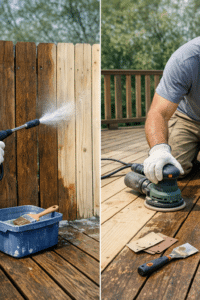
- Clean first: Remove dirt, mildew, and old residue with a deck cleaner; rinse thoroughly.
- Brighten if needed: Oxalic-based brighteners neutralize cleaners and restore pH for better adhesion.
- Let wood dry: After washing, allow 24–72 hours (weather dependent) before staining.
- Use thin coats: Over-application is the top cause of tacky finishes and extended stain drying time.
- Back-brush: Even out the film and push stain into the grain for uniform drying.
- Stir, don’t shake: Shaking introduces bubbles that can mar the finish.
- Ventilation and fans: Gentle airflow helps; avoid blasting heaters that skin the surface.
Frequently Asked Questions
Can I stain if rain is in the forecast?
It’s risky. Even a light shower can spot or wash out fresh stain. Choose a 48–72 hour dry window to protect your work and ensure proper stain drying time.
Why is my stain still tacky after 48 hours?
Likely causes include high humidity, low temperatures, thick application, or staining damp wood. Increase airflow, wait longer, and avoid adding another coat until the first is truly dry.
How long should I wait between coats?
Follow the can: many water-based stains allow recoating after 2–4 hours; oil-based often recommend 12–24 hours. If the first coat feels even slightly tacky, wait.
Will fans or heaters speed up drying?
Fans help by moving air. Use heaters cautiously; too much heat can skin the surface and trap solvents underneath, delaying cure and causing defects.
Morning dew hit my deck—what now?
Allow the surface to dry fully, then reassess. If whitening or blotching occurred, light abrasion and a maintenance coat may be needed once conditions improve.
Key Takeaways
- Drying makes stain touch-dry; curing makes it durable.
- Temperature, humidity, airflow, wood moisture, and product type all affect stain drying time.
- Plan for a rain-free window and avoid dew for best results.
- Give decks extra time for full deck curing before heavy use.
- Dial in techniques for better fence maintenance and longer-lasting protection.
Conclusion
Proper drying and curing aren’t just waiting games—they’re critical steps that determine how well your stain protects and how long it lasts. By respecting stain drying time, planning for full deck curing, and applying smart fence maintenance practices, you’ll get a beautiful