
Fence and Deck Staining Tips for Homeowners in Humid Climates
Staining a fence or deck in a damp, rainy region isn’t the same as staining in an arid climate. High humidity, frequent showers, and lingering dew all slow drying, invite mildew, and shorten the life of your finish. The good news: with the right prep, products, and timing, you can achieve a rich, even finish that resists moisture and holds up season after season. Use this homeowner-friendly guide to master humid climate staining, tackle common moisture issues, and maximize stain durability on your outdoor wood.
How Humidity Affects Wood, Color, and Coatings
Moisture issues 101
Wood is hygroscopic—it absorbs and releases water with changes in humidity. In a humid climate, your fence and deck boards tend to swell, pores stay damp longer, and surface moisture can keep stain from penetrating evenly. Trapped water beneath a stain layer can cause blotching, peeling, and mildew growth. Nighttime dew is another culprit: it re-wets surfaces just hours after you apply a coat, halting or reversing the cure.
Why stain durability suffers in wet environments
Even a quality product can fail early when humidity stays high. Constant wet/dry cycling stresses coatings, UV light breaks down binders, and organic growth feeds on surface nutrients. If you want long-term stain durability, focus on penetration, breathability, UV protection, and consistent maintenance rather than a thick, impermeable film that can trap moisture.
Choose the Right Product for Humid Climate Staining
Oil-based vs. water-based: which lasts longer here?
Oil-based penetrating stains typically excel at water resistance and deep penetration, which can improve performance in humidity. They also back-brush well and are easier to refresh without heavy stripping. However, they may dry more slowly in damp air. High-quality water-based stains can offer fast recoat times, excellent color retention, and low VOCs; look for formulas designed for high-moisture regions with proven mold/mildew inhibitors.
In general, for fences and decks exposed to frequent rain, a penetrating, breathable stain—rather than a thick film-forming finish—tends to manage moisture issues better and preserve stain durability.
Transparency level matters
– Transparent and semi-transparent stains highlight grain and penetrate well, making them great for humid climates, though they’ll need more frequent refreshes.
– Semi-solid products provide more pigment and UV shielding while remaining breathable.
– Solid color stains offer maximum UV protection but can behave more like paint; in humidity, careful prep and application are critical to avoid trapping moisture under the film.
Look for mildew resistance and UV protection
Choose a stain with built-in mildewcides and UV absorbers. These additives help keep surfaces cleaner and colors truer, improving stain durability when humidity stays high. If local regulations limit VOCs, select a compliant product specifically labeled for humid climate staining.
Prep Steps That Prevent Problems
Clean, kill, brighten, and neutralize
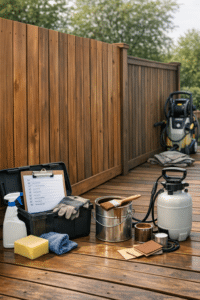
Proper prep is non-negotiable where moisture issues are common:
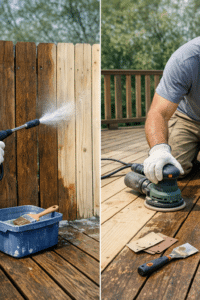
– Wash with a specialized wood cleaner to remove dirt, old deck grime, and sunscreen/oils. Keep pressure under 1,200 PSI and use a fan tip to avoid furring the wood.
– Treat mildew and algae using a cleaner containing sodium percarbonate or a diluted bleach solution per manufacturer guidance. Rinse thoroughly.
– Brighten/neutralize with an oxalic acid brightener if you used a high-pH cleaner or bleach. This restores color, opens pores, and balances pH so stain bonds properly.
Check dryness and wood moisture content
In a humid climate, surface dryness isn’t enough. Use a wood moisture meter and aim for 12–15% moisture content before staining. Schedule work after 24–48 hours of dry weather and when the forecast shows no rain for at least 24–48 hours after application. Remember: evening dew counts as moisture—avoid finishing late in the day if temperatures will drop quickly.
Fix fasteners, sand, and seal end grain
Set protruding nails and screws, tighten loose boards, and lightly sand raised grain or old lap marks (80–120 grit). Pay special attention to end grain—it drinks up water. Seal it thoroughly during application to reduce wicking and extend stain durability.
Timing and Weather Windows for Humid Climate Staining
Choose the right time of day
Let morning dew evaporate fully. Mid-morning to early afternoon is often best, provided the surface is shaded or just warm to the touch. Avoid the last few hours before sunset when dew will soon return. Optimal air and surface temperatures typically fall between 50–90°F (10–32°C). On breezy, humid days, allow extra time between coats.
Work in manageable sections
Apply stain from top to bottom on fences and two to three deck boards at a time from end to end. This helps maintain a wet edge and prevents lap marks, which are more likely when humidity slows drying.
Application Techniques That Beat Moisture Issues
Thin, even coats with back-brushing
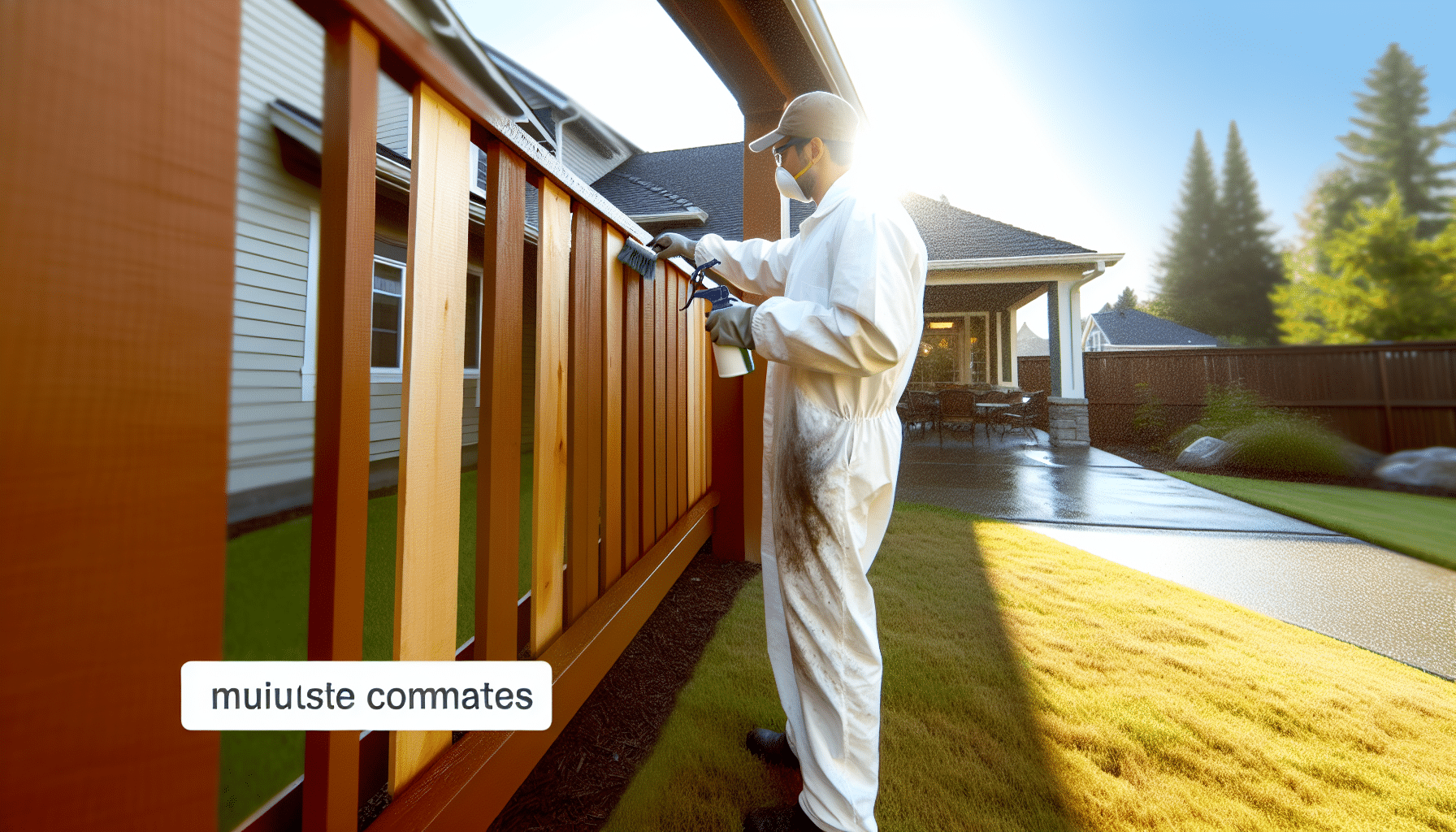
Over-application is the number one cause of sticky, slow-to-cure surfaces in humidity. Spray or roll to place the material, then back-brush into the grain to drive penetration and even out the film. Wipe away puddles, drips, and shiny spots before they skin over.
Wet-on-wet vs. second-day coats
Extremely porous or weathered wood may benefit from a wet-on-wet second pass: apply the second coat 15–45 minutes after the first, before it fully soaks in, to improve uniformity without creating a thick film. Otherwise, wait until the first coat is fully dry (often 24–48+ hours in humid weather) before recoating. Always follow the product’s data sheet.
Tools that help in damp climates
– Stain pads and quality natural-bristle or polyester brushes keep coats thin and controlled.
– Airless sprayers speed coverage on fences and railings; always back-brush to improve penetration and prevent lap marks.
– Keep clean rags handy to remove excess from knots and end grain, which can bleed resin and hold more moisture.
Drying, Curing, and Foot Traffic
Be realistic about extended dry times
Even “fast-dry” products slow down when humidity soars. A surface that’s dry to the touch isn’t necessarily cured. Use the knuckle test (press and twist lightly; it should not feel tacky) and check the manufacturer’s recommended cure times. In many humid regions, plan for 24–72 hours before heavy use—longer for shaded decks and dense hardwoods.
Protect from dew and rain
Cover with a breathable canopy or wait for a stable forecast. Never trap moisture under plastic sheeting. If surprise rain hits within a few hours of application, let everything dry fully, then assess for blush, streaks, or water spots and touch up as needed.
Wood Species Notes for Humid Regions
– Pressure-treated pine: Very common and prone to moisture absorption; allow ample dry time after installation. Semi-transparent penetrating stains perform well.
– Cedar and redwood: Naturally rot-resistant but can gray quickly; choose UV-strong semi-transparent or semi-solid formulas to balance color and breathability.
– Tropical hardwoods (ipe, cumaru): Dense and oily; use specialty penetrating oils formulated for hardwoods. Expect more frequent light maintenance coats to maintain stain durability and color.
Color and Sheen Choices That Help Stain Durability
Darker colors offer better UV shielding but can run hotter in sun and show water spots more readily. Mid-tone, earthy hues often hide dirt while controlling heat buildup, which can reduce coating stress. Stick with matte to low-sheen finishes outdoors; high gloss tends to highlight moisture issues and uneven absorption.
Maintenance Plan for Long-Term Results
Annual clean-and-check
Once or twice per year, gently wash with a deck cleaner to remove pollen, salt, and grime that feed mildew. Trim vegetation for airflow. Inspect high-wear zones (stairs, traffic lanes, fence tops) for fading or dry look.
Spot refresh vs. full recoat
One advantage of penetrating stains is easy spot maintenance. If water no longer beads or color looks dull in patches, clean the area, let it dry, then apply a thin refresher coat. Plan for a light overall maintenance coat every 12–36 months depending on sun exposure, rainfall, and product type.
When to strip
If a previous solid stain or paint is peeling or if layers have become too thick, a full strip and sand may be necessary to reset the surface. Starting fresh restores breathability and improves stain durability in damp environments.
Common Mistakes to Avoid
– Staining damp wood: Traps water, causing blotches and early failure.
– Over-applying: Thick coats stay tacky in humidity and show footprints and debris.
– Ignoring dew: Late-day applications can be ruined by overnight moisture.
– Skipping brightener: After bleach or strong cleaners, unbalanced pH can block adhesion.
– Using high pressure: Overzealous washing furs the wood and drinks stain unevenly.
– Neglecting end grain and cut edges: These are moisture highways—seal them.
Quick FAQs for Humid Climate Staining
How long should I wait after rain to stain?
Wait until wood moisture content reads 12–15% and the surface feels dry on a sunny, breezy day. That often takes 24–72 hours after rain in humid regions.
What type of stain lasts longest in humidity?
High-quality penetrating semi-transparent or semi-solid stains with mildewcides and UV blockers are reliable choices for strong stain durability, as they manage moisture exchange better than thick films.
Can I stain new pressure-treated lumber right away?
Usually no. New PT lumber often arrives very wet. Let it dry to target moisture levels or choose a product specifically labeled for new or damp wood.
Is a slip-resistant additive worth it on decks?
Yes—especially in rainy, coastal, or shaded areas. Mix-in traction additives improve safety without hurting performance when used as directed.
Safety and Environmental Tips
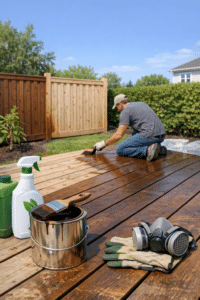
– Wear gloves, eye protection, and a respirator if recommended. Maintain ventilation even outdoors.
– Protect plants and soil with breathable drop cloths. Rinse foliage if cleaner or stain contacts leaves.
– Follow local VOC regulations. Dispose of oily rags safely in a sealed, water-filled metal container to prevent spontaneous combustion.