
How to Choose the Right Fence Stain Color for Your Home
Choosing the right fence stain color can completely change the look of your yard. A fence is not just a boundary line; it is a major part of your home’s exterior design. The color you choose can make your outdoor space feel warm, modern, rustic, bright, or timeless. It can also help your fence blend beautifully with your home, deck, landscaping, and other outdoor features.
If you have been searching for practical fence stain color ideas, the best approach is to think beyond the fence itself. The right stain should connect with your home’s siding, trim, roofing, patio furniture, and even the natural tones in your yard. If you also have a deck, looking at current deck stain color trends can help you create a more cohesive outdoor space.
In this guide, we will walk through how to choose a fence stain color that fits your home’s personality and improves curb appeal without feeling overwhelming.
Why Fence Stain Color Matters
Fence stain does more than add color. It protects wood from moisture, sun damage, and wear over time. But from a design standpoint, stain color has a huge impact on how your property looks from both the street and the backyard.
A well-chosen stain can:
Enhance curb appeal: The right tone can make your home look more polished and intentional.
Support your overall exterior design: Fence color helps tie together siding, trim, hardscaping, and landscaping.
Create visual balance: A fence that is too dark, too orange, or too cool can clash with the rest of your home.
Influence mood: Deep browns feel grounded and traditional, while lighter natural stains feel airy and casual.
Because a fence covers a large visual area, even a subtle change in undertone can dramatically affect the final result.
Start with Your Home’s Exterior Style
One of the easiest ways to narrow down fence stain color ideas is to look at your home’s architectural style. Your stain color should feel like a natural extension of the house rather than an afterthought.
Traditional Homes
Colonial, farmhouse, and classic suburban homes often look best with rich, natural wood tones. Walnut, cedar, chestnut, and medium brown stains work well because they feel timeless and warm. These shades complement brick, cream siding, white trim, and black shutters.
Modern Homes
For modern or contemporary homes, cleaner and more muted tones usually work best. Think cool brown, weathered gray, espresso, or semi-transparent charcoal-tinted stains. These shades align well with sleek lines, black accents, metal railings, and minimalist landscaping.
Rustic or Cottage-Style Homes
Rustic homes pair beautifully with stains that highlight natural grain and texture. Honey brown, cedar red, and warm earth tones can help the fence feel organic and inviting. These are strong fence stain color ideas if you want a relaxed, natural look.
Coastal or Light Exterior Homes
If your home has pale blue, white, beige, or sandy tones, a driftwood or light brown stain can create an easy, breezy look. Lighter stains often fit coastal-inspired exterior design especially well.
Match the Undertones of Your Home
The most important color rule is not the exact shade but the undertone. Many homeowners choose a stain that looks nice on its own, only to realize it clashes with the house because the undertones compete.
Pay attention to whether your home’s exterior materials lean:
Warm: yellow, tan, cream, beige, red brick, warm gray
Cool: blue-gray, crisp white, charcoal, slate, black, cool stone
If your siding, roof, or trim has warm undertones, choose a stain with warm brown, amber, or reddish notes. If your home has cool undertones, go for weathered gray-brown, dark walnut, or cooler espresso shades.
This single step can make your fence feel coordinated instead of disconnected. It is one of the easiest ways to improve overall exterior design without making major renovations.
Consider Your Landscaping and Outdoor Features
Your fence does not exist in isolation. Trees, plants, stone paths, patios, pergolas, and outdoor furniture all influence which stain colors will look best.
If your yard has a lot of greenery, medium and dark brown stains can create beautiful contrast while still feeling natural. If your yard has light stone, concrete, or gravel, gray-toned stains may feel more balanced. In gardens with colorful flowers, a neutral stain often works best so the landscaping remains the focal point.
When reviewing fence stain color ideas, take photos of your yard in morning and evening light. Sunlight can make warm stains appear more orange and cool stains appear flatter. Testing in real outdoor conditions is essential.
Think About Your Deck Too
If you have a deck, fence color should be chosen with that surface in mind. You do not always need a perfect match, but the two should look intentional together. This is where paying attention to deck stain color trends can be especially helpful.
Right now, many homeowners are moving away from overly red stains and choosing more natural, muted tones. Popular deck stain color trends include warm walnut, deep brown, smoky taupe, natural cedar, and weathered wood finishes. These shades are versatile and pair well with a wide range of home exteriors.
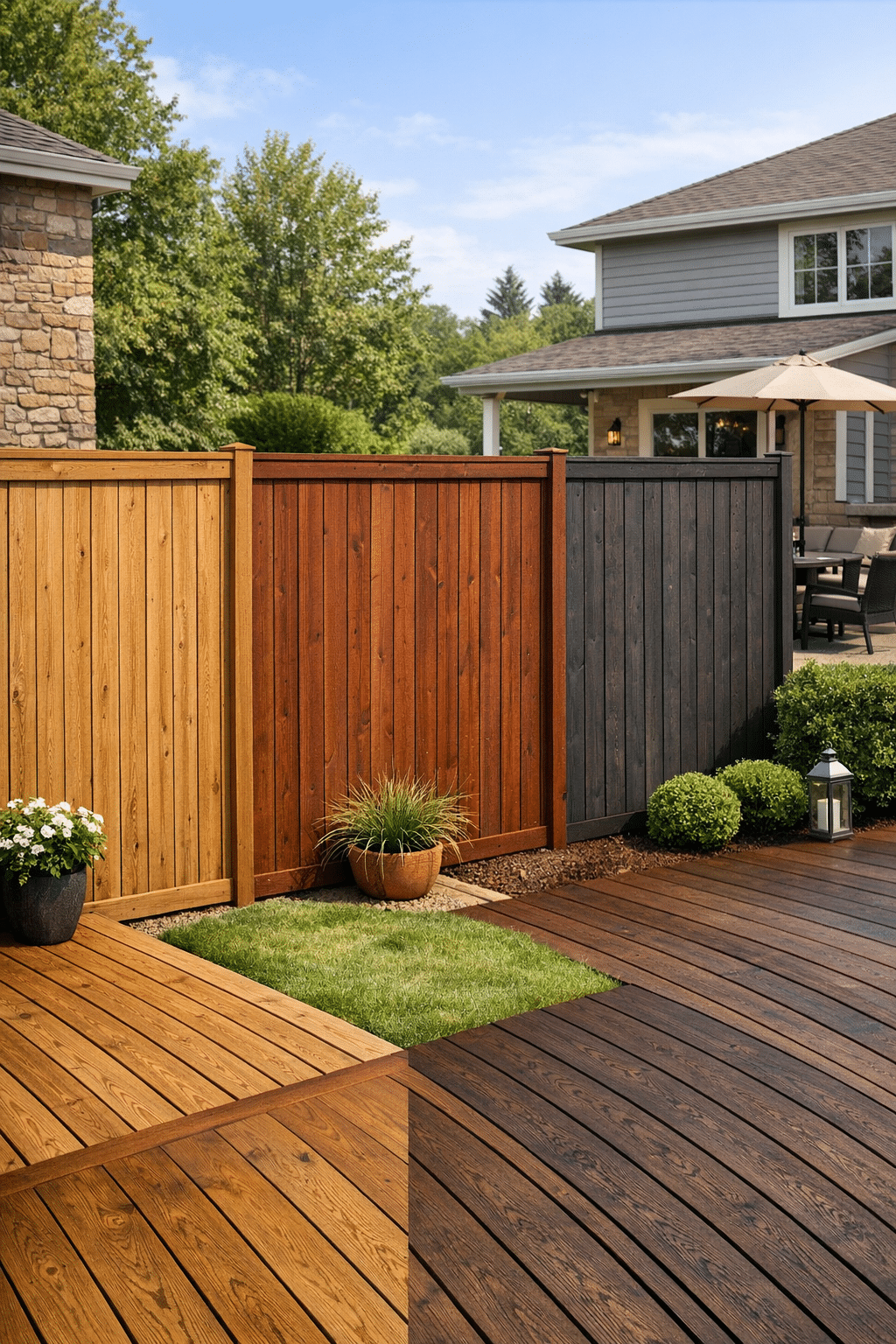
There are a few ways to coordinate a fence and deck:
Match closely: This creates a seamless, unified look and works well in smaller yards.
Use the same color family: A medium brown deck with a slightly darker brown fence often feels balanced.
Contrast with intention: A light natural fence and dark deck can work beautifully if both share similar undertones.
Following deck stain color trends does not mean chasing fads. It means using modern, versatile tones that help your outdoor space feel updated and cohesive.
Popular Fence Stain Color Ideas for Different Looks
Natural Cedar
This is one of the most popular fence stain color ideas because it brings out the warmth of the wood without feeling too heavy. It suits traditional, cottage, and casual outdoor spaces.
Walnut Brown
Walnut is rich, classic, and flexible. It complements many siding colors and works beautifully in both backyards and front-facing fences. It also coordinates well with current deck stain color trends.
Weathered Gray
A gray-toned stain can give a fence a more contemporary or coastal feel. It is especially effective with white houses, black trim, or cool-toned stone features. For modern exterior design, this is a strong option.
Espresso
Espresso creates a bold, upscale appearance. It works well when you want contrast and drama, especially against lighter siding or landscaping with lots of greenery. Keep in mind that very dark stains may show dust more easily in dry climates.
Honey or Golden Brown
These tones feel welcoming and bright, though they work best when your home has warm exterior elements. Used carefully, they can make a yard feel sunny and inviting.
Transparent or Semi-Transparent Neutral
If you love the natural beauty of wood, a transparent or lightly pigmented stain can preserve the grain and create a softer appearance. This works especially well in rustic or nature-focused exterior design.
Choose the Right Opacity
Color is only part of the decision. Opacity affects both the appearance and the longevity of your fence finish.
Transparent stains show the most wood grain and look natural, but they usually need more frequent maintenance.
Semi-transparent stains provide color while still allowing some grain to show through. This is often the best balance between beauty and durability.
Solid stains offer the most coverage and can create a painted look while still protecting the wood. They are useful for older fences or when you want a more uniform finish.
If you are comparing fence stain color ideas, remember that the same color can look very different in transparent versus solid formulas.
Mistakes to Avoid When Choosing Fence Stain Color
Ignoring Fixed Elements
Your roof, siding, stonework, and deck are not easy to change. Always choose a stain that works with those permanent features.
Choosing from a Tiny Sample Indoors
Stain colors look different outside. Always test samples directly on the fence in several spots.
Following Trends Without Considering Your Home
While deck stain color trends can provide inspiration, not every popular tone fits every property. Trendy colors should support your existing exterior design, not fight against it.
Going Too Red or Too Orange
Highly saturated warm stains can overwhelm a yard and quickly look dated. In many cases, softer and more muted tones are easier to live with long term.
Forgetting Maintenance
Lighter and more transparent stains may weather differently than darker or more opaque finishes. Think about how much upkeep you are willing to do before making a final choice.
Test Before You Commit
The best way to make a confident decision is to sample your top stain choices on the actual wood. Apply them to a few boards or small fence sections and view them at different times of day. Check how the stain looks next to your siding, trim, deck, stonework, and plants.
This step often reveals surprises. A color that seemed perfect on a brochure may look too orange in direct sunlight or too dark against your landscaping. Testing helps you move from abstract fence stain color ideas to a choice that truly fits your home.
Final Thoughts
The right fence stain color should do more than protect your wood. It should enhance your home, support your landscaping, and strengthen your overall exterior design. By considering your home’s style, undertones, outdoor features, and even current deck stain color trends, you can choose a finish that feels polished and lasting.
Use these fence stain color ideas as a starting point, then test your favorites in natural light before making the final call. A thoughtful stain choice can transform your yard and make your entire home look more complete.
Ready to refresh your outdoor space? Start sampling stain colors now and create a fence and deck combination that brings out the very best in your home.