
How to Handle Staining Challenges in Wet Climates
Staining exterior wood can be tricky in any environment, but rainy, humid, and coastal regions create a unique set of problems. If you have ever tried to stain a fence, deck, pergola, or other outdoor wood surface only to end up with tacky boards, uneven color, or mildew spots, you have already seen how serious wet climate staining issues can be. In damp conditions, wood absorbs moisture more easily, finishes take longer to cure, and poor timing can lead to costly rework.
The good news is that successful staining in a wet climate is absolutely possible with the right preparation, timing, and product choices. Whether you are maintaining a backyard deck or protecting a newly installed fence, understanding how moisture affects the process is the first step. With smart planning, proper mildew prevention, and practical stain drying tips, you can get durable, attractive results that stand up to the weather.
Why Wet Climates Make Staining More Difficult
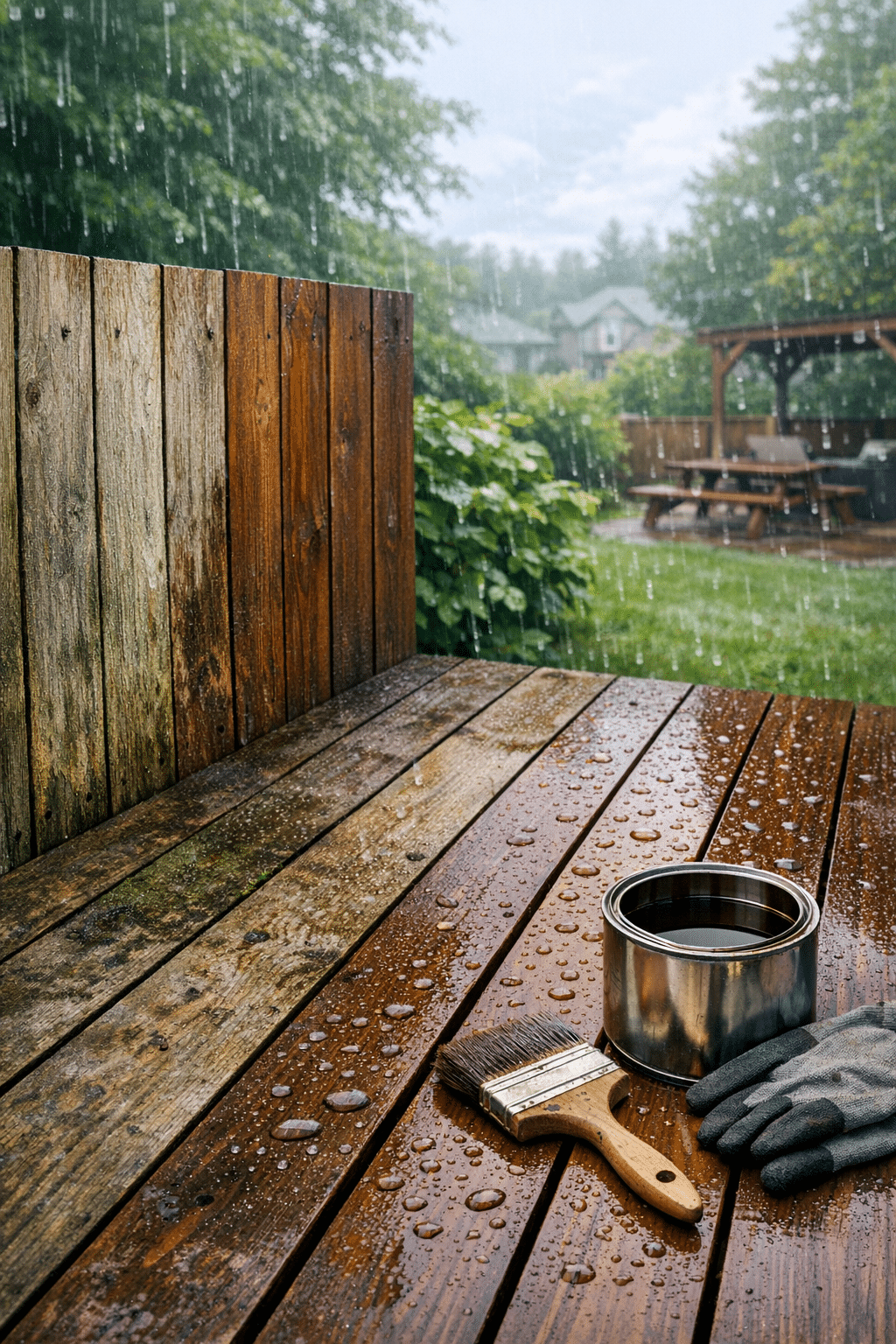
Wood stain is designed to penetrate and protect the surface, but excessive moisture interferes with that process. In wet or humid areas, wood often stays damp longer after rain, morning dew may linger for hours, and the air itself can slow evaporation. These conditions increase the chances of blotchy absorption, sticky finishes, and premature failure.
One of the biggest wet climate staining issues is applying stain when the wood still contains too much moisture. If water is trapped inside the boards, the stain may not soak in evenly. Instead, it can sit on the surface, creating a shiny or tacky appearance that takes much longer to dry. In some cases, it may even peel or wear away faster than expected.
Humidity also impacts curing time. Even if the stain appears dry to the touch, it may still be vulnerable underneath. That means rain, foot traffic, or furniture placement too soon after application can damage the finish. Add in the higher risk of mold and mildew growth, and it becomes clear why staining in damp regions requires a more careful approach.
Choose the Right Time to Stain
Timing matters more in wet climates than almost anywhere else. The best staining results usually come during a stretch of mild, dry weather with low wind and moderate temperatures. Ideally, you want several rain-free days before staining so the wood has time to dry out, plus at least 24 to 48 hours after application for the finish to set properly.
Check the Forecast Carefully
Do not rely on a quick glance at the weather app. Look for a dependable forecast that includes humidity levels, overnight moisture, and the chance of scattered showers. In many humid regions, even a small amount of unexpected rain can affect curing.
Aim for:
Temperatures between 50°F and 85°F, unless the stain manufacturer says otherwise.
Humidity on the lower side for your area, since lower humidity improves drying.
No rain expected for at least 24 to 48 hours after staining.
Watch Out for Morning Dew
Many homeowners make the mistake of starting too early in the day. In damp climates, morning dew can leave surfaces wet even after sunrise. Wait until the wood is fully dry before you begin. In some cases, late morning or early afternoon is the safest window.
Prepare the Wood Surface Properly
Preparation is critical in any staining project, but it becomes even more important when addressing wet climate staining issues. A clean, dry, sound surface gives the stain the best chance to penetrate and perform well.
Clean Away Dirt, Algae, and Old Residue
Exterior wood in humid environments often develops grime, algae, and mildew more quickly. If these contaminants are not removed, the stain may not bond evenly. Use a wood cleaner or deck wash appropriate for your surface, and follow the manufacturer’s instructions closely.
If there is old failing stain or sealer on the surface, strip or sand it as needed. Staining over peeling, flaky, or uneven material usually leads to disappointing results.
Test the Moisture Level
One of the smartest tools you can use is a moisture meter. Many stain manufacturers recommend wood moisture content below a certain percentage, often around 15% or less, before application. This helps reduce the risk of poor penetration and slow drying.
If you do not have a moisture meter, allow extra drying time after rainfall or washing. In a wet climate, that may mean waiting several days instead of just one.
Sand Where Needed
Rough, weathered, or splintered wood may benefit from light sanding. This can improve appearance and help the stain absorb more evenly. Be careful not to over-sand exterior wood to a slick finish, since that can reduce absorption with some stains.
Select a Stain Designed for Moisture Exposure
Not all stains perform the same way in humid or rainy regions. If you live in an area where damp conditions are common, choose a high-quality exterior product formulated for strong water resistance and UV protection.
Penetrating semi-transparent and solid stains are often popular choices for decks and fences in challenging climates. The right option depends on the condition of the wood, the appearance you want, and the amount of maintenance you are willing to do.
What to Look For
When comparing products, prioritize:
Mildew-resistant formulas to support long-term mildew prevention.
Water-repellent protection to reduce moisture absorption.
Good breathability so trapped moisture can escape more easily.
Proven durability in high-humidity or rainy environments.
Always read the label for application requirements. Some stains tolerate slightly cooler or more humid conditions better than others, but even the best product cannot overcome poor prep or wet wood.
Best Application Practices for Wet Climates
Applying stain correctly is just as important as choosing the right day. In humid environments, less is often more. A thin, even coat usually performs better than a heavy coat that struggles to dry.
Do Not Overapply
One of the most common wet climate staining issues is applying too much stain in hopes of getting better protection. Excess stain can remain on the surface instead of penetrating, leaving a sticky finish that attracts dirt and may fail unevenly.
Follow the manufacturer’s coverage rate and wipe or back-brush areas where the stain starts to pool. With some products, a second coat may be recommended, but only after the proper waiting period.
Use the Right Tools
Brushes, stain pads, rollers, and sprayers can all work, depending on the project. In many cases, brushing or back-brushing helps push the stain into the wood grain and create a more even finish. This is especially helpful in variable conditions where some boards may absorb faster than others.
Work in Manageable Sections
Stain a few boards or panels at a time to keep a wet edge and avoid lap marks. This approach also makes it easier to catch drips, puddles, or shiny areas before they become drying problems.
Stain Drying Tips for Humid and Rainy Conditions
Drying and curing can take much longer in damp weather, so patience is essential. These practical stain drying tips can help protect your finish and improve the final result.
Allow Extra Dry Time
If the label says the stain dries in 24 hours, assume it may take longer in a humid climate. Surfaces might feel dry on top while remaining soft underneath. When in doubt, wait longer before walking on a deck, replacing furniture, or exposing the surface to heavy use.
Improve Airflow
Good air circulation helps stain dry more effectively. Trim back overgrown plants around fences and decks, and avoid covering freshly stained surfaces with tarps unless absolutely necessary. Trapped humidity can slow curing even more.
Avoid Nighttime Moisture
If possible, start early enough that the stain has several hours of drying time before evening. In wet climates, nighttime humidity and dew can settle onto the surface and interfere with curing.
Protect from Unexpected Rain
If there is any uncertainty in the forecast, postpone the project. Trying to rush staining before a possible shower often creates more work than waiting for a better weather window.
Mildew Prevention After Staining
In damp regions, staining is not just about color and appearance. It is also about protecting the wood from biological growth. Mildew prevention should be part of both the preparation stage and the long-term maintenance plan.
Start with a Clean Surface
Mildew spores can remain on dirty wood, old finishes, or nearby organic debris. Cleaning thoroughly before staining helps reduce the chance of new growth being sealed beneath or around the finish.
Choose Products with Mildew Resistance
Many exterior stains contain additives that help resist mildew on the coating surface. While these products do not make wood maintenance-free, they can slow down growth in humid environments.
Reduce Moisture Around the Structure
Keep sprinklers from hitting fences and decks, improve drainage around posts and footings, and sweep away leaves or debris that trap moisture. Sunlight and airflow both support mildew prevention, so trimming dense vegetation can make a big difference.
Common Wet Climate Staining Mistakes to Avoid
Even good products can fail when the process is rushed. Here are some of the most common mistakes behind persistent wet climate staining issues:
Staining too soon after rain or washing, before the wood is dry enough.
Ignoring humidity levels and focusing only on temperature.
Applying thick coats that cannot dry properly.
Starting late in the day and leaving fresh stain exposed to evening dew.
Skipping surface cleaning, especially in areas with mildew or algae.
Using the wrong product for the local climate and exposure level.
Avoiding these errors will save time, protect your investment, and lead to a more attractive finish.
How to Maintain a Stained Fence or Deck in a Wet Climate
Once the staining is done, ongoing maintenance helps extend the life of the finish. Inspect your wood surfaces at least once or twice a year for fading, water absorption, mildew spots, and wear in high-traffic areas.
Clean the surface regularly to remove dirt, pollen, and organic buildup. If water stops beading and the wood starts absorbing moisture quickly, it may be time for a maintenance coat. Keeping up with small touch-ups is much easier than waiting until the finish has completely failed.
Maintenance schedules vary by product and exposure, but decks in rainy or humid regions typically need attention more often than those in drier climates. Fences may last longer, especially if they are not shaded by heavy vegetation.
Final Thoughts
Staining wood in a rainy or humid region requires more planning, but it does not have to be frustrating. By understanding wet climate staining issues, prioritizing mildew prevention, and following smart stain drying tips, you can achieve a finish that looks great and holds up over time. The keys are simple: clean thoroughly, confirm the wood is dry, choose the right stain, and give it the time it needs to cure.
If your fence or deck is due for a fresh coat, do not leave the results to chance. Plan your project around the weather, use quality materials, and give your wood the protection it needs. For the best long-term performance, consult a staining professional or choose products made specifically for wet-climate conditions.