
Staining Vs. Painting: Which is Better for Your Fence and Deck?
Choosing the right finish for outdoor wood can have a major impact on how your property looks, how much maintenance it needs, and how well it stands up to the elements over time. When homeowners compare staining vs painting, the decision often comes down to more than color alone. Your fence and deck are exposed to sun, rain, humidity, foot traffic, and seasonal temperature changes, so the finish you choose needs to balance beauty with performance.
If you are weighing different fence finish options or looking for the best deck surface protection, understanding the pros and cons of each method is the best place to start. Both stain and paint can improve the appearance of outdoor wood, but they behave very differently. One highlights the natural grain, while the other creates a more solid, polished look. One tends to be easier to maintain, while the other offers broader design flexibility.
In this guide, we will break down the key differences between staining and painting for fences and decks, including durability, maintenance, cost, appearance, and weather resistance, so you can choose the finish that works best for your home.
Understanding the Difference Between Stain and Paint
Before deciding between staining vs painting, it helps to understand how each product works on wood.
What Wood Stain Does
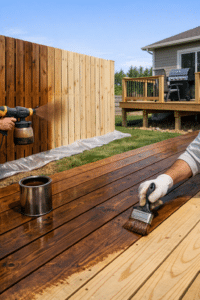
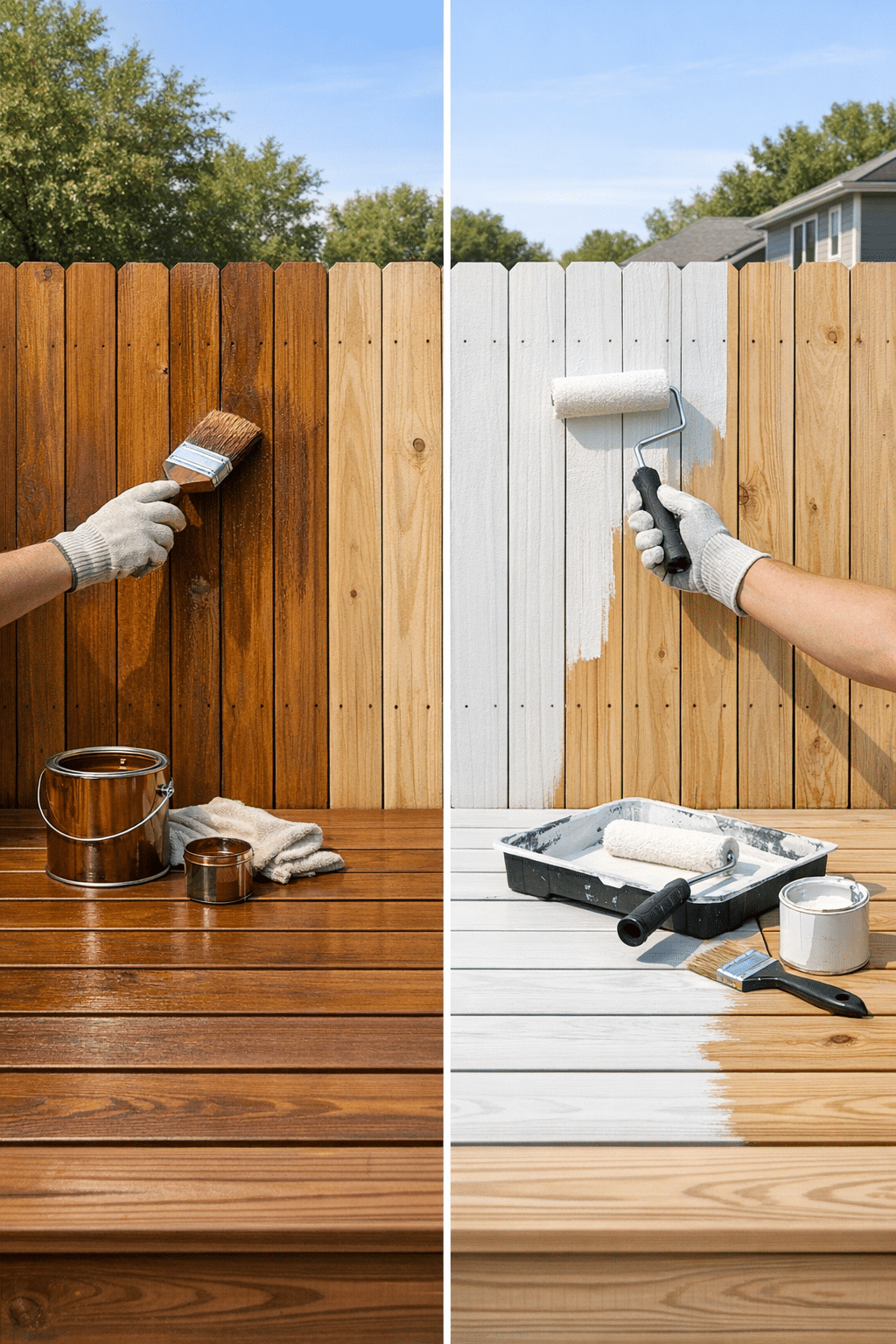
Stain is designed to penetrate the wood rather than sit heavily on top of it. It enhances the natural texture and grain while adding color and a level of moisture and UV resistance. Stains are available in transparent, semi-transparent, and solid varieties, allowing homeowners to choose how much of the wood’s natural character they want to show through.
For many homeowners, stain is one of the most attractive fence finish options because it delivers a warm, natural appearance. It is also a common choice for decks because it can provide dependable deck surface protection without creating a thick coating that may peel.
What Paint Does
Paint forms a protective film on the surface of the wood. Instead of soaking in, it covers the material with a solid color layer. This can create a crisp, uniform finish and gives you nearly unlimited color choices. Paint is often preferred when homeowners want a bold design statement or need to hide imperfections in older wood.
However, because paint sits on the surface, it can be more vulnerable to cracking, blistering, or peeling over time, especially on outdoor structures that expand and contract with changing weather.
Appearance: Natural Look vs Bold Color
One of the biggest factors in the staining vs painting debate is appearance.
Why Homeowners Choose Stain
Stain is ideal if you want to preserve the natural beauty of wood. Cedar, redwood, and pressure-treated lumber often have attractive grain patterns that stain can highlight rather than hide. A well-stained fence or deck can blend beautifully with landscaping, trees, gardens, and other outdoor features.
This natural finish is one reason stain remains one of the most popular fence finish options. It can make a backyard feel warm, organic, and timeless without looking overly formal.
Why Homeowners Choose Paint
Paint is best for homeowners who want a cleaner, more customized look. If you are matching trim, siding, or other exterior features, paint gives you greater control over color. It can also help older wood look refreshed by concealing discoloration, patchwork repairs, and visual inconsistencies.
That said, paint completely covers the wood grain. If you love the look of real wood, painting may feel too artificial compared to staining.
Durability and Weather Resistance
Outdoor wood takes a beating year-round, so performance matters just as much as style. When comparing staining vs painting, durability depends on the location, exposure, and condition of the wood.
How Stain Performs Outdoors
Because stain penetrates into the wood, it tends to wear away more gradually rather than peeling off in visible sheets. This can be a major advantage on fences and decks exposed to intense sun or frequent rain. As the finish ages, it usually fades instead of cracking, which makes touch-ups easier and less noticeable.
For decks in particular, stain is often the better choice for deck surface protection. Deck boards are walked on daily and are exposed to standing water, dirt, and shifting temperatures. A penetrating stain can handle these conditions well without creating a brittle top layer that may chip under foot traffic.
How Paint Performs Outdoors
Paint can provide a thick barrier against moisture and UV exposure when properly applied to clean, dry, prepared wood. In some cases, a high-quality exterior paint system can offer strong protection. However, once paint begins to fail, maintenance becomes more demanding. Peeling, flaking, and blistering are common issues, especially in climates with high humidity or strong seasonal changes.
On fences, paint can last reasonably well if the surface is well maintained. On decks, though, paint is often less practical because heavy foot traffic and weather can wear the surface quickly. This is why many professionals recommend stain over paint for long-term deck surface protection.
Maintenance Requirements
Maintenance is where the choice between staining vs painting becomes especially important.
Stain Maintenance
Stained wood generally requires more frequent reapplication than paint, but the process is usually simpler. Because stain fades rather than peels, you often do not need to strip the surface completely before recoating. Cleaning and light prep work are typically enough if the wood is still in good condition.
This easier upkeep makes stain appealing to homeowners who want manageable maintenance without major scraping or sanding projects every few years.
Paint Maintenance
Paint may last longer before it needs attention, but when it does fail, repairs can be more labor-intensive. Peeling paint often requires scraping, sanding, priming, and repainting. If moisture gets trapped underneath the paint film, the problem can spread and lead to more extensive refinishing.
That is why paint is sometimes seen as a higher-commitment option among common fence finish options. It may look great initially, but it often demands more involved maintenance later.
Cost Considerations
Budget is another major factor when comparing staining vs painting. The total cost depends on product quality, labor, surface preparation, and how often refinishing is needed.
Initial Cost
In many cases, stain can be slightly less expensive than paint because it may require fewer products, especially if no primer is needed. It can also be quicker to apply, which may reduce labor costs.
Paint projects often involve more preparation and multiple layers, including primer and finish coats. This can increase both material and labor expenses.
Long-Term Cost
Long-term value depends on maintenance. Stain may need to be refreshed more often, but upkeep is typically simpler and less costly. Paint may go longer between full applications, but when it starts peeling, restoration can be time-consuming and expensive.
For many homeowners, stain offers a more predictable and practical long-term investment, especially for decks where durable deck surface protection is essential.
Best Finish for a Fence
So what is the better choice among fence finish options?
If your fence is newer, made of attractive wood, and you want a natural outdoor look, stain is often the better fit. It enhances the wood’s character, ages gracefully, and is easier to maintain over time.
If your fence is older, visually inconsistent, or you want a very specific color to match your home, paint may be worth considering. It provides stronger visual coverage and can create a more finished, decorative style.
In general, stain is ideal for homeowners who want lower-maintenance performance and a natural appearance, while paint is better for those prioritizing solid color and design flexibility.
Best Finish for a Deck
When it comes to decks, the answer is usually more clear. In most cases, stain is the preferred option for deck surface protection.
Decks endure constant wear from walking, furniture, grills, weather, and moisture. A penetrating stain is better suited to this kind of exposure because it does not create a thick film that is likely to peel under stress. It also allows the wood to breathe more naturally, which can help reduce moisture-related problems.
Paint can sometimes be used on decks, particularly on older surfaces where appearance matters more than natural wood grain. But for most homeowners, the maintenance demands and risk of peeling make it a less practical solution.
When to Choose Stain
Stain is often the right choice if:
You want to highlight natural wood grain.
You prefer easier long-term maintenance.
Your deck needs reliable surface protection against weather and foot traffic.
You want one of the most practical fence finish options for outdoor durability.
You like a more organic, classic outdoor appearance.
When to Choose Paint
Paint may be the better option if:
You want a wide range of color choices.
You need to hide flaws, patchwork, or uneven wood tones.
You want your fence to coordinate closely with your home’s exterior design.
You are prepared for more extensive prep and maintenance when refinishing is needed.
Final Thoughts on Staining Vs. Painting
There is no one-size-fits-all answer to staining vs painting, but there is a best answer for your specific project. If you want a natural look, easier maintenance, and strong performance under outdoor conditions, stain is usually the smarter choice for both fences and decks. If your priority is a bold, uniform color and maximum visual coverage, paint may be the better fit, especially for fences.
For most homeowners, the biggest distinction is this: stain tends to be better for preserving and protecting wood, while paint is better for transforming its appearance. When comparing fence finish options and deciding on the best deck surface protection, think about your climate, maintenance expectations, and the look you want to achieve.
Ready to upgrade your outdoor space? Choose the finish that matches your style and maintenance goals, and give your fence or deck the protection it needs to look great for years to come.