
How to Choose the Best Fence and Deck Stain Brand
Choosing the right stain for your outdoor wood can make the difference between a surface that looks beautiful for years and one that fades, peels, or weathers too quickly. With so many products on the market, homeowners often feel overwhelmed when trying to compare performance, durability, color selection, and ease of application. If you are searching for the best stain brands for your next project, it helps to understand what separates a reliable product from one that simply looks good on the label.
This guide will walk you through how to evaluate stain options for both fences and decks, what features matter most, and how to approach a smart fence stain review or deck stain comparison. Whether you are refreshing an aging backyard fence or protecting a newly built deck, choosing the right brand starts with knowing your wood, your climate, and your maintenance expectations.
Why the Right Stain Brand Matters
Fence and deck stains do more than add color. A quality stain helps protect wood from moisture, UV rays, mildew, cracking, and premature aging. Outdoor structures are constantly exposed to sun, rain, temperature swings, and foot traffic, so the product you choose needs to provide more than surface-level appeal.
The best stain brands typically offer a strong balance of:
Protection: Resistance to water penetration, mildew growth, and sun damage.
Appearance: Even color, attractive finish, and options that enhance natural wood grain.
Durability: Long-lasting performance without excessive peeling or patchiness.
Ease of maintenance: Simpler reapplication and less demanding prep work over time.
Application quality: Smooth brushing, rolling, or spraying with clear coverage expectations.
Because fences and decks face different types of wear, the ideal brand for one project may not be the best match for another. That is why a thoughtful deck stain comparison should always consider how the product will actually be used.
Fence Stain vs. Deck Stain: Is There a Difference?
While some products work well on both fences and decks, the surfaces experience different stresses. Fences deal primarily with weather exposure, while decks face weather and regular foot traffic, furniture movement, and spills. As a result, deck stains often need stronger abrasion resistance and better penetration.
What Fences Need
For fences, homeowners usually prioritize:
UV protection to reduce fading
Water repellency to prevent warping and rot
Good vertical adhesion or penetration
Consistent color over large visible areas
What Decks Need
For decks, the main concerns are often:
Resistance to wear in high-traffic areas
Protection against standing moisture
Reduced risk of peeling on horizontal surfaces
Easier spot maintenance and recoating
When doing a fence stain review, you may focus more on color retention and weatherproofing. In a deck stain comparison, durability under use becomes even more important.
Key Factors to Consider When Choosing a Stain Brand
1. Type of Stain
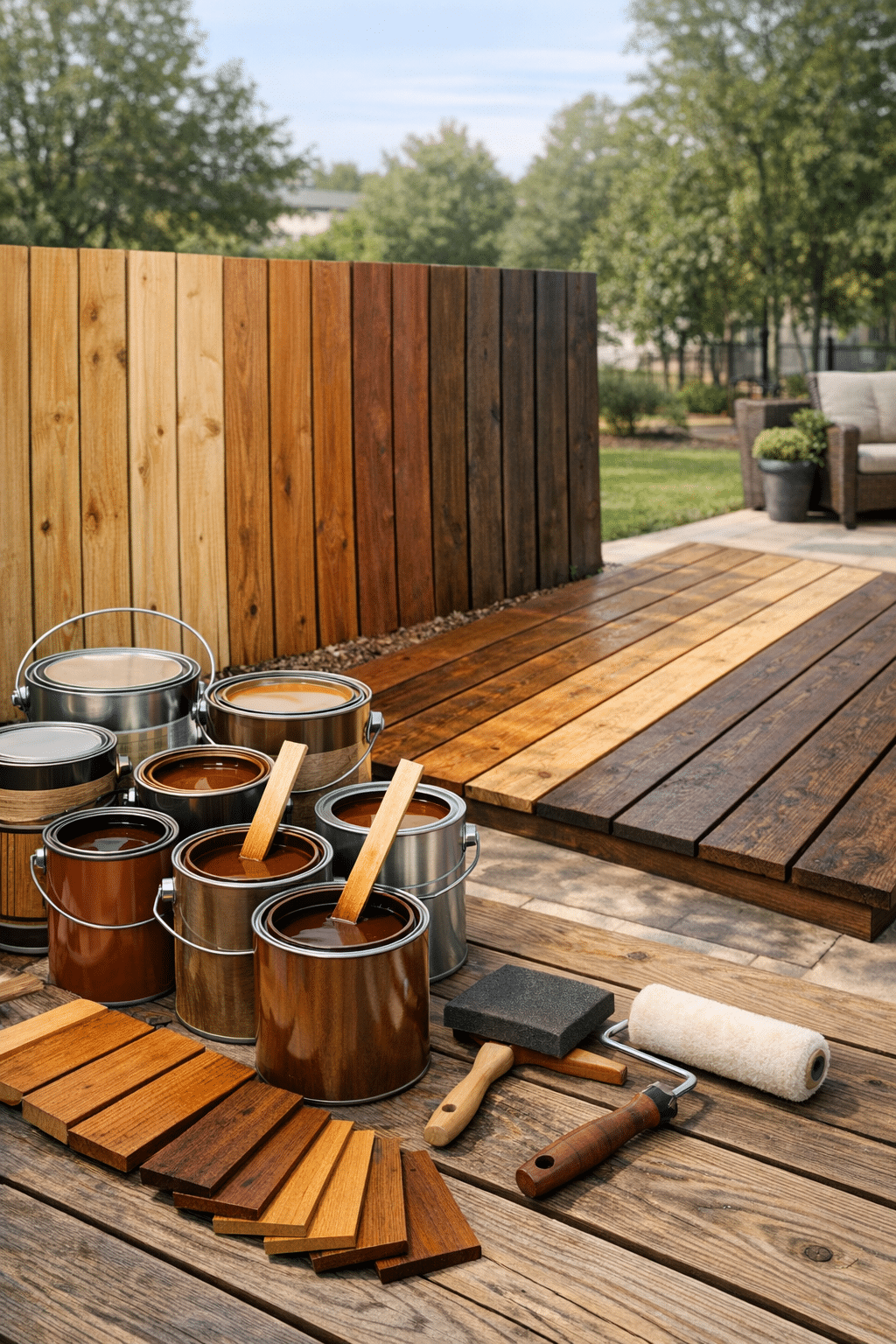
Most stain brands offer several opacity levels, and each serves a different purpose.
Clear stains provide minimal color and let natural wood remain visible, but they generally offer less UV protection.
Toner or transparent stains add a light tint while preserving grain detail.
Semi-transparent stains are a popular middle ground, offering stronger protection while still showing wood texture.
Semi-solid and solid stains provide richer color and more UV blocking, but they cover more of the wood grain.
If you want a natural look, many of the best stain brands offer high-performing semi-transparent options. If your wood is older or has uneven coloration, a solid stain may create a more uniform finish.
2. Oil-Based vs. Water-Based Formulas
This is one of the biggest points in any deck stain comparison.
Oil-based stains are known for deep penetration and a natural appearance. They are often favored for older wood and can be easier to maintain in some outdoor conditions. However, dry times may be longer, and cleanup usually requires solvents.
Water-based stains often dry faster, have lower odor, and offer easier soap-and-water cleanup. Many modern water-based formulas also provide excellent color retention and mildew resistance.
There is no universal winner. The best choice depends on your climate, wood condition, and personal preference for application and maintenance.
3. Climate Performance
Your local weather should heavily influence your decision. In humid areas, mildew resistance is especially important. In hot, sunny climates, UV resistance becomes critical. In regions with frequent rain or snow, water repellency and freeze-thaw durability matter more.
When reading product labels or conducting a fence stain review, pay close attention to whether the brand is known for handling your specific environmental conditions.
4. Wood Type and Age
New pressure-treated lumber, cedar, redwood, pine, and older weathered boards all absorb stain differently. Some products are designed specifically for new wood, while others perform better on seasoned or previously stained surfaces.
Before choosing among the best stain brands, make sure the product is compatible with your substrate and prep condition.
5. Maintenance Expectations
Some stains look excellent on day one but become difficult to maintain later. Film-forming products may peel if moisture gets trapped, while penetrating stains often fade more gradually and can be easier to recoat.
If you want lower long-term upkeep, choose a brand with a reputation for simple maintenance coats rather than complete stripping and refinishing.
Leading Stain Brands to Compare
A strong deck stain comparison should include performance, value, finish options, and real-world reputation. Below are several brands commonly considered by homeowners and professionals.
Ready Seal
Ready Seal is often praised for user-friendly application and a forgiving finish that minimizes lap marks. It is especially popular among DIY users who want an oil-based look with simpler application. It tends to perform well on fences and can be a solid choice for decks in the right conditions.
Best for: Easy application, natural appearance, DIY projects
Watch for: Color may deepen significantly when first applied, so testing is important
DEFY
DEFY is well known for water-based wood stains with strong UV resistance and environmentally conscious appeal. Many homeowners include it in a fence stain review because of its ability to preserve wood color while protecting against sun damage.
Best for: UV protection, water-based performance, easy cleanup
Watch for: Proper prep is essential for best results
TWP (Total Wood Preservative)
TWP is frequently mentioned among the best stain brands for long-term protection and penetrating performance. It is often used by those looking for a premium-quality stain that balances appearance with durability.
Best for: Long-lasting penetration, natural wood enhancement, premium protection
Watch for: Availability may vary by area, and following application instructions closely matters
Cabot
Cabot has been a familiar name for years and offers a broad range of stain types and colors. For homeowners looking for accessibility and variety, Cabot is often included in any practical deck stain comparison.
Best for: Wide product selection, color options, mainstream availability
Watch for: Performance can vary by specific formula, so review the exact product rather than the brand name alone
Behr
Behr is widely available and appeals to homeowners seeking convenience and a broad palette of finishes. Its products are commonly considered for fence and deck projects, especially when matching other exterior colors is important.
Best for: Color variety, local availability, big-box convenience
Watch for: Surface prep and product selection are key, especially for horizontal surfaces
Olympic and Thompson’s WaterSeal
These brands are often considered by homeowners looking for accessible, budget-friendly protection. Depending on the exact formula, they may offer a reasonable solution for basic protection and appearance.
Best for: Budget-conscious projects, common retail availability
Watch for: Compare durability claims carefully, especially for heavily used decks
How to Read a Fence Stain Review the Right Way
Online reviews can be helpful, but they need context. A five-star result on a shaded cedar fence in a dry climate may not translate to a sunny, high-traffic deck in a humid region.
When evaluating a fence stain review, look for these details:
The type of wood used
Whether the wood was new, weathered, or previously coated
Climate and weather exposure
Application method, such as brush, roller, or sprayer
How long the stain has been on the wood
Whether the reviewer mentions prep work and maintenance
The most useful reviews are those written after a season or two of exposure, not just immediately after application. Long-term feedback gives a better picture of fading, water repellency, and wear.
How to Do a Smart Deck Stain Comparison
A useful deck stain comparison should go beyond price. The least expensive product may cost more in the long run if it needs frequent recoating or fails early.
Compare These Categories
Coverage rate: How many square feet does the stain cover per gallon?
Expected lifespan: How often will maintenance coats be needed?
Traffic durability: Is the stain designed for horizontal surfaces?
Appearance: Does it dry evenly and enhance the wood attractively?
Prep requirements: Will you need stripping, brightening, or sanding?
Recoat process: Can you clean and reapply, or must you fully remove old layers?
By comparing total ownership rather than just shelf price, you can identify which of the best stain brands truly delivers value.
Common Mistakes to Avoid
Choosing Based Only on Color
Color matters, but performance matters more. A beautiful finish that fails quickly is not a good investment.
Ignoring Prep Work
Even the best product can underperform on dirty, damp, mildewed, or poorly prepared wood. Always follow the manufacturer’s prep instructions.
Using the Wrong Opacity
A transparent stain on heavily weathered wood may look uneven, while a solid stain may hide the wood character you wanted to preserve.
Applying Too Much Product
Over-application can cause tackiness, uneven drying, or premature wear. More stain is not always better.
Not Testing First
Always test a small area. Wood species, age, and moisture content can all change the final appearance.
Which Stain Brand Is Best for You?
The answer depends on your priorities. If ease of use is your top concern, you may lean toward a brand known for simple application. If maximum UV resistance matters most, a high-performing water-based formula may stand out. If you want premium penetration and easier future maintenance, a respected oil-based or hybrid product may be the best fit.
In general, the best stain brands are the ones that match your wood type, climate, desired look, and willingness to maintain the finish over time. A great fence stain review or deck stain comparison should always bring those factors together rather than focusing on one feature alone.
Final Thoughts
Choosing the best fence and deck stain brand is not just about buying a popular name. It is about finding a product that offers the right combination of protection, beauty, and long-term value for your specific outdoor space. By comparing stain type, formula, climate performance, maintenance needs, and real-world reviews, you can make a far more confident decision.
Ready to protect your wood the right way? Start by narrowing down your top options, testing a sample, and selecting a stain brand that fits your project goals for both appearance and durability.