
How to Stain Composite Decking
Composite decking is popular for a reason: it offers the look of wood with lower maintenance and strong long-term performance. Still, many homeowners eventually ask the same question: can you stain composite decking? The answer is sometimes. Some older or uncapped boards may accept a composite decking stain, while many newer capped products are designed to resist absorption and should not be stained at all.
If your deck has faded, looks uneven, or no longer matches the rest of your outdoor space, a new finish may seem like the best solution. However, staining composite is different from staining timber. The right process starts with identifying the type of decking you have, choosing an appropriate deck coating, and preparing the surface carefully. Done correctly, you can refresh the appearance of the deck and potentially extend its service life. Done incorrectly, you can end up with peeling, poor adhesion, or a voided manufacturer warranty.
This guide explains how to stain composite decking safely and effectively, when staining is worth considering, and what alternatives may be better for your particular deck.
Can You Stain Composite Decking?
Before buying any product, it is important to understand that composite decking is not all the same. In general, there are two broad categories:
1. Uncapped or First-Generation Composite Decking
Older composite boards often have a more porous surface made from a wood-fiber and plastic blend. Over time, these boards may fade, chalk, or absorb surface contamination. In some cases, they can accept a specially selected composite decking stain or refinishing product.
2. Capped Composite Decking
Most modern composite boards have a protective outer shell. This cap is designed to resist moisture, stains, and UV damage. Because the surface is engineered to repel penetration, traditional stains typically do not bond well. Applying stain to capped composite can lead to streaking, flaking, or peeling.
Bottom line: Always check the manufacturer’s recommendations first. If your deck is capped, staining may not be advised. If it is older, weathered, and uncapped, a stain or deck coating may be a practical restoration option.
When Staining Composite Decking Makes Sense
Staining or recoating composite decking can be worth considering if:
• The deck is older and visibly faded.
• The original finish has worn unevenly.
• The boards are uncapped and can hold a coating.
• The manufacturer allows refinishing.
• You want to update the color without a full replacement.
On the other hand, staining may not be the best choice if the boards are structurally damaged, heavily warped, or still protected by a valid warranty that prohibits aftermarket coatings.
Check the Warranty and Manufacturer Guidance First
This step should never be skipped. Many decking brands clearly state whether painting, sealing, or staining is permitted. Even if a product looks weathered enough to absorb a finish, applying the wrong coating can create bigger issues later.
Look for:
• Product care instructions
• Warranty exclusions
• Approved coatings or restoration systems
• Cleaning recommendations before refinishing
If you are unsure of the brand, inspect the hidden edge of a board, consult installation paperwork, or ask a decking professional to help identify the product.
Choose the Right Product
If your decking can be refinished, selecting the right material matters just as much as the prep work. A standard wood stain is often not enough. Composite surfaces usually need a product designed for adhesion, flexibility, and exterior durability.
Best Options for Composite Decking
Composite-specific stain or resurfacer: These products are formulated to adhere better to older composite materials.
Acrylic-based deck coating: A quality deck coating can provide color renewal, UV resistance, and a more uniform finish. It may also help hide minor cosmetic wear.
Exterior solid-color coatings: In some cases, a solid stain or coating approved for composite surfaces may be suitable if applied exactly as directed.
Avoid oil-heavy stains unless the manufacturer specifically recommends them. Many composite surfaces do not absorb oil-based products properly, resulting in tackiness or failure.
How to Prepare Composite Decking for Staining
Preparation is the most important part of the job. Even the best composite decking stain will fail if dirt, mildew, grease, or oxidation is left on the surface.
Step 1: Clear the Deck
Remove all furniture, planters, grills, and rugs. Sweep away loose dirt, leaves, and debris. Pay special attention to gaps between the boards, where trapped debris can hold moisture.
Step 2: Clean Thoroughly
Use a composite deck cleaner or a mild detergent solution approved for your decking type. Scrub the surface with a soft to medium bristle brush. If mildew is present, use a cleaner designed to treat organic growth safely.
Avoid overly harsh chemicals, especially chlorine-heavy products, unless the manufacturer confirms they are safe. Some cleaners can discolor composite or leave a residue that interferes with adhesion.
Step 3: Rinse Well
Rinse thoroughly so no soap film remains. If using a pressure washer, keep pressure low and follow the decking maker’s guidance. Excessive pressure can scar the surface or force water into the material.
Step 4: Let It Dry Completely
Drying time is essential. Most coatings require the surface to be fully dry before application. Depending on weather conditions, this may take 24 to 48 hours.
Step 5: Test a Small Area
Before coating the entire deck, test a hidden section. This helps you confirm adhesion, color, sheen, and drying behavior. A small test patch can save you from a large and expensive mistake.
How to Stain Composite Decking Step by Step
Once the deck is clean, dry, and ready, you can begin the application process.
1. Check the Weather
Pick a period of mild, dry weather. Most products perform best in moderate temperatures with no rain expected for at least 24 hours. Direct, intense sun can also make application harder by drying the product too quickly.
2. Stir the Product Well
Mix the stain or deck coating thoroughly so pigments and binders are evenly distributed. Do not skip this step, especially with solid-color products.
3. Use the Recommended Applicator
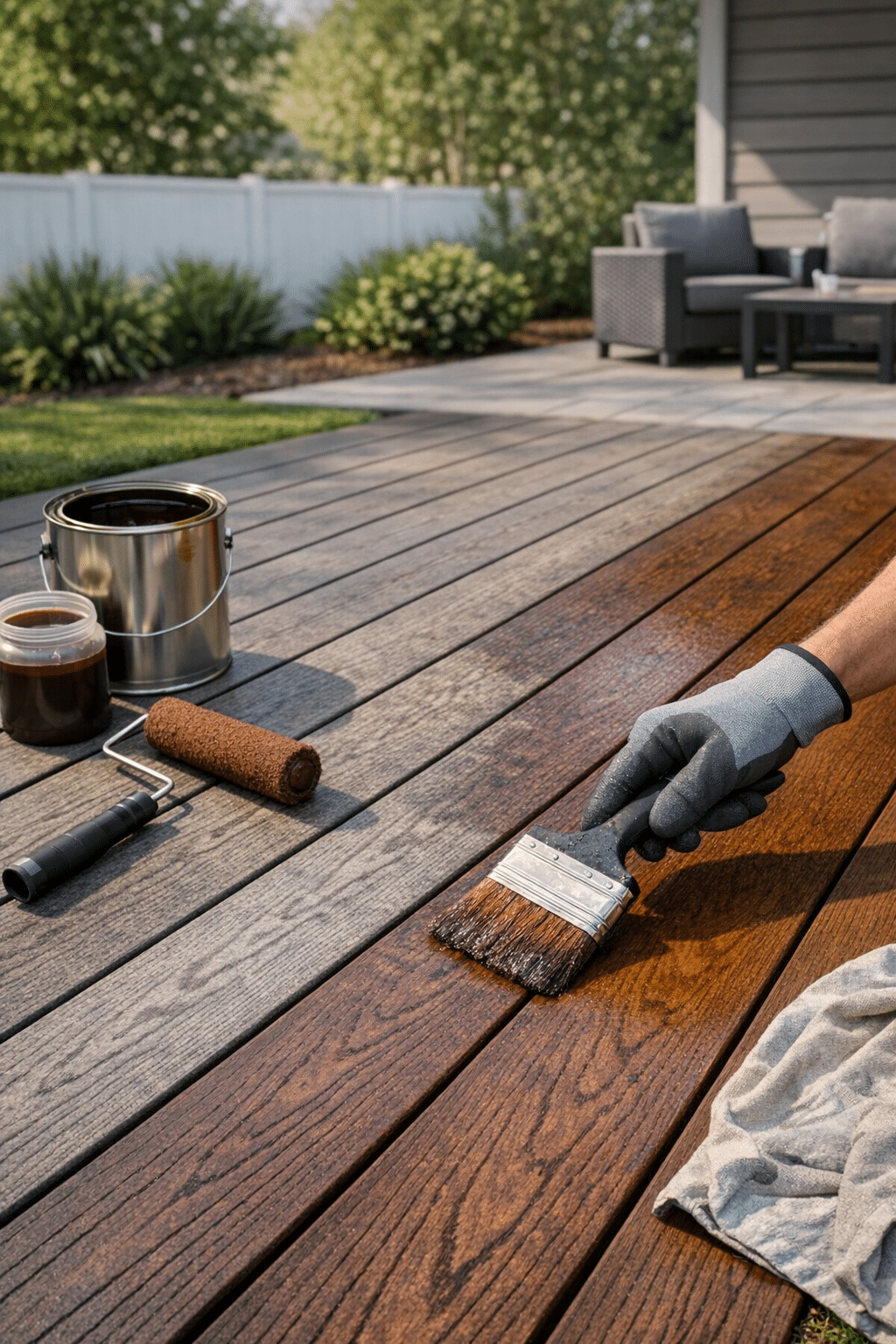
Depending on the product, you may need a roller, pad applicator, brush, or sprayer followed by back-rolling. Always follow label instructions. For most composite refinishing jobs, a roller with a brush for edges works well.
4. Apply Thin, Even Coats
Do not flood the surface. Composite materials are less absorbent than wood, so heavy application can sit on top and cause adhesion problems. Work in manageable sections and keep a wet edge to avoid lap marks.
5. Allow Proper Drying Time
Follow the manufacturer’s cure schedule carefully. The surface may feel dry before it is ready for foot traffic or furniture. Rushing this step can damage the finish.
6. Apply a Second Coat if Needed
Some products require two coats for full coverage and durability. If the first coat looks uneven or lightly translucent, a second coat may improve both appearance and protection.
Should You Seal Composite Decking?
Many homeowners search for staining because they assume sealing is always necessary. In reality, most modern composite decking does not need a traditional sealer. The material is designed to resist moisture better than wood. However, an older deck may benefit from a refinishing system that combines color renewal with surface protection.
If you choose to seal or coat composite, make sure the product is specifically appropriate for composite materials. A sealer meant for bare lumber may not bond correctly or may create a slippery surface.
Common Mistakes to Avoid
To get the best results, avoid these common problems:
Using regular wood stain without checking compatibility: Not all stains work on composite.
Skipping the cleaning step: Dirt and mildew reduce adhesion.
Applying coating to capped boards without approval: This often leads to peeling.
Coating in humid or rainy weather: Moisture can ruin curing.
Applying the finish too thickly: Thin, even coats perform better.
Ignoring a test patch: Testing is essential on composite surfaces.
Alternatives to Staining Composite Decking
If your deck cannot be stained, you still have options for improving its appearance.
Professional Cleaning and Brightening
A deep professional clean can remove years of grime and restore some of the original tone.
Composite Restoration Coating
A specialized deck coating may work even when a traditional stain will not, provided the product is approved for your decking type.
Board Replacement
If only a few sections are damaged or badly faded, replacing individual boards may be more effective than coating the whole deck.
Design Updates Around the Deck
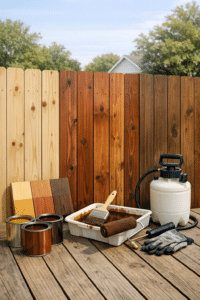
Sometimes the deck is not the only visual issue. Coordinating the surrounding fence, railings, and outdoor features can make an older deck look much better. If staining the deck is not possible, consider fence staining alternatives such as painting fencing, using UV-stable exterior coatings, adding decorative screening, or installing complementary cladding. These updates can refresh the entire outdoor area without forcing a finish onto a surface that should remain uncoated.
How Long Does a Composite Deck Coating Last?
The lifespan of a refinished surface depends on several factors:
• The age and condition of the decking
• Whether the deck is capped or uncapped
• Product quality
• Surface preparation
• Foot traffic and sun exposure
• Ongoing maintenance
In many cases, a properly applied deck coating may last several years before needing touch-ups or recoating. High-traffic zones and south-facing decks usually wear faster.
Maintenance Tips After Staining
Once your deck has been refinished, routine care will help protect the new finish:
• Sweep regularly to remove grit and leaves
• Clean spills quickly, especially grease and food stains
• Use furniture pads to reduce scratching
• Avoid dragging heavy planters or grills
• Wash the surface seasonally with an approved cleaner
• Inspect annually for wear, peeling, or fading
Good maintenance not only preserves appearance but also helps you spot moisture or adhesion issues early.
Is DIY Staining a Good Idea?
If your deck is in fair condition and you are comfortable with cleaning, prep, and careful application, DIY can work well. But if the decking type is uncertain, the surface is badly weathered, or the warranty status matters, professional help is often worth it.
A contractor experienced with composite materials can identify whether your deck can accept a composite decking stain, recommend the right deck coating, and apply it in a way that improves durability and appearance. They can also advise on related outdoor upgrades, including railing refreshes and fence staining alternatives that create a more cohesive finish across your garden or patio space.
Final Thoughts
Staining composite decking is possible in some situations, but it should never be treated like a standard wood-staining project. Success depends on knowing your decking type, following manufacturer guidance, preparing the surface properly, and choosing a compatible composite decking stain or deck coating. If staining is not recommended, there are still effective ways to improve the look of your outdoor space, from restoration coatings to smart design updates and fence staining alternatives.
Want the best result for your deck? Assess your decking carefully, test products before full application, and speak with a professional if you are unsure. A little planning now can help you protect your investment and enjoy a better-looking outdoor space for years to come.