
Understanding the Different Types of Fence Paints and Stains
Choosing the right finish for a fence does more than improve curb appeal. It also helps protect wood from moisture, sunlight, temperature changes, and everyday wear. With so many types of fence paints, finishes, and stain varieties available, it can be difficult to know which product is best for your property. Some homeowners want a bold, solid color. Others prefer a natural wood look that highlights the grain. The best option often depends on the fence material, the condition of the wood, your local climate, and how much maintenance you are willing to do over time.
In this guide, we will break down the most common fence paints and stains, explain their benefits and drawbacks, and review the most popular wood finishing options for residential fences. Whether you are refreshing an old fence or finishing a new installation, understanding your choices will help you make a smart, long-lasting decision.
Why Fence Finishes Matter
A fence is constantly exposed to the elements. Rain can seep into unprotected wood, causing swelling, warping, and rot. UV rays can fade color and dry out the surface. Dirt, mold, and mildew can also shorten the life of a fence if it is not properly sealed or coated.
That is why selecting from the right types of fence paints and stains is about more than appearance. A quality finish can:
Protect against moisture damage
Reduce sun-related fading and cracking
Extend the lifespan of the wood
Improve the overall look of the property
Make routine maintenance easier
The key is to match the finish to the wood type, exposure level, and style you want to achieve.
The Main Difference Between Paint and Stain
Before looking at specific products, it helps to understand the basic difference between paint and stain.
Paint sits on top of the wood and creates a more opaque, protective film. It covers the grain and provides a uniform color. Paint is often chosen when homeowners want a polished, decorative finish or when older wood has imperfections they would rather conceal.
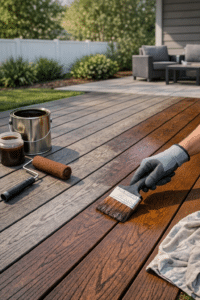
Stain penetrates into the wood instead of simply coating the surface. It typically allows more of the natural texture and grain to show through. Many stain varieties are designed to enhance the organic appearance of the fence while still providing weather resistance.
Both can work well, but the right choice depends on your priorities: full coverage and color consistency, or a more natural finish with visible wood character.
Common Types of Fence Paints
1. Acrylic Latex Fence Paint
Acrylic latex is one of the most popular types of fence paints for exterior wood. It is water-based, easy to apply, and generally quick to dry. It also expands and contracts well with temperature changes, which helps reduce cracking and peeling over time.
Best for: Most wooden fences, especially in climates with changing weather
Advantages:
Easy cleanup with water
Low odor compared to oil-based products
Good color retention
Flexible and less likely to become brittle
Considerations:
May require more thorough surface preparation on older fences
Lower-quality formulas may not cover as well in a single coat
2. Oil-Based Fence Paint
Oil-based paint provides a durable coating and strong adhesion, especially on weathered or previously painted wood. It has long been used for exterior applications because it penetrates slightly and offers a hard finish.
Best for: Older fences or surfaces that need a tough, traditional coating
Advantages:
Excellent adhesion
Rich finish and strong durability
Can perform well on rough or aged wood
Considerations:
Longer drying time
Stronger odor
Cleanup requires solvents rather than water
Can become brittle with age in some conditions
Many homeowners today prefer acrylic products for convenience, but oil-based options still remain relevant among certain wood finishing options.
3. Exterior Enamel Paint
Exterior enamel paint is designed for hard-wearing outdoor use. It creates a smooth, durable surface and can be found in various sheens, though lower sheen finishes are often preferred for fences.
Best for: Decorative fences where appearance and durability are equally important
Advantages:
Strong protective layer
Resists wear and weather exposure
Provides a neat, finished appearance
Considerations:
May show peeling more obviously if preparation is poor
Can highlight surface flaws if too glossy
4. Chalky or Matte Fence Paint Finishes
While not a separate formula in every case, matte and chalky finishes are a design choice worth noting. These types of fence paints are favored for modern, rustic, or cottage-style outdoor spaces because they reduce glare and create a softer appearance.
Best for: Stylish garden fencing and decorative backyard designs
Advantages:
Modern, understated look
Helps hide minor imperfections
Less reflective in bright sunlight
Considerations:
Some matte finishes may hold dirt more visibly than satin formulas
Always verify the product is suitable for exterior fencing
Popular Stain Varieties for Fences
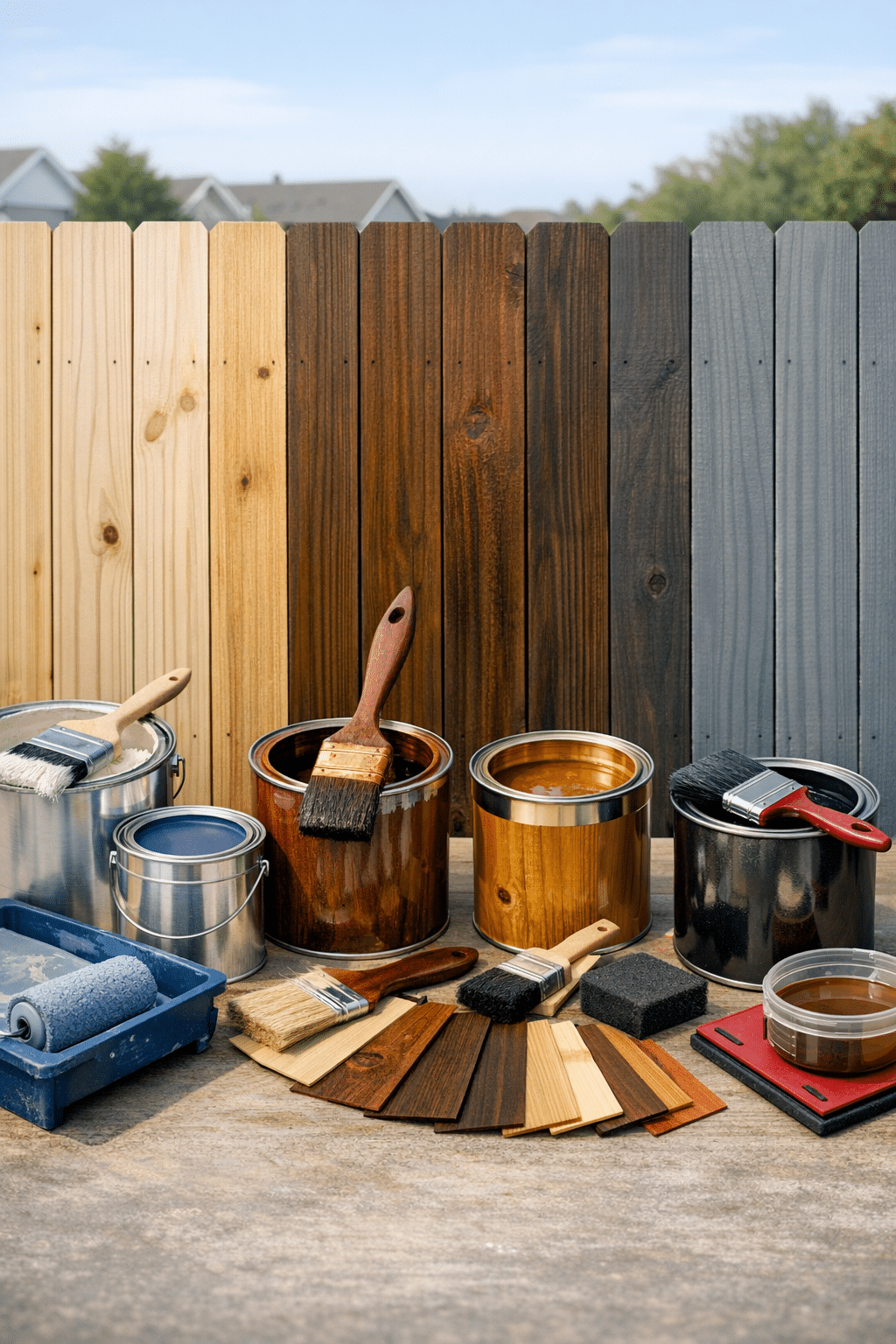
1. Transparent Stain
Transparent stain offers the most natural look of all major stain varieties. It adds subtle color while allowing the wood grain, knots, and texture to remain highly visible. This is often used on new, attractive wood species where appearance is a top priority.
Best for: New cedar, redwood, or other visually appealing wood
Advantages:
Enhances natural beauty
Minimal film buildup
Easy to maintain with reapplication
Considerations:
Offers less UV protection than more heavily pigmented stains
May need more frequent maintenance
2. Semi-Transparent Stain
Semi-transparent stain is one of the most balanced wood finishing options for homeowners. It allows some grain to show while adding more pigment and protection than a transparent formula. This makes it a favorite for people who want both beauty and performance.
Best for: Homeowners who want a natural wood look with moderate protection
Advantages:
Highlights wood texture
Provides better UV resistance than clear or transparent products
Available in many natural tones
Considerations:
Does not fully hide inconsistencies in older wood
Color results can vary depending on wood species
3. Semi-Solid Stain
Semi-solid stain contains more pigment, so it hides more grain while still soaking into the surface rather than forming a thick outer film like paint. Among different stain varieties, this is a strong option for fences that are no longer pristine but still have enough character to show through.
Best for: Slightly weathered fences that need stronger color and added protection
Advantages:
Better coverage than semi-transparent stain
Good weather protection
Less likely to peel than traditional paint
Considerations:
Natural wood grain becomes less visible
Color can look more uniform and less organic
4. Solid Color Stain
Solid color stain often looks similar to paint at first glance, but it behaves differently. It penetrates the wood and usually does not crack or peel as easily as paint because it does not create the same thick surface film. For many homeowners comparing types of fence paints with stains, solid stain sits somewhere in the middle.
Best for: Older fences, weathered wood, or homeowners who want bold color with easier upkeep than paint
Advantages:
Excellent color coverage
Good protection from sun and moisture
Often easier to recoat than paint
Considerations:
Mostly hides the wood grain
Surface prep is still important for best results
Other Wood Finishing Options to Consider
In addition to standard paints and stains, there are other wood finishing options worth knowing about.
Water Repellents and Clear Sealers
Clear sealers are designed to reduce water penetration while keeping the fence close to its original appearance. Some contain UV blockers, but many provide limited sun protection compared to pigmented stains.
Best for: Homeowners who want a nearly invisible finish
Drawback: Usually requires more frequent reapplication
Preservative Treatments
Preservative finishes may include ingredients that help guard against rot, mold, mildew, and insects. These can be especially useful in damp climates or shaded areas where moisture tends to linger.
Hybrid Paint-Stain Products
Some modern products are marketed as hybrids, combining features from both paint and stain. These can offer improved penetration, easier maintenance, or stronger protection, depending on the formula. They can be useful when comparing specialized wood finishing options for problem areas or older fences.
How to Choose the Best Finish for Your Fence
With so many types of fence paints and stain varieties on the market, the best choice usually comes down to a few practical questions.
What Condition Is the Fence In?
If the wood is new and attractive, a transparent or semi-transparent stain can show off its natural beauty. If the fence is older, discolored, or patched, solid stain or paint may provide better coverage.
Do You Want to See the Wood Grain?
If preserving a natural look matters, choose one of the more transparent stain varieties. If you prefer a uniform color, paint or solid stain is usually the better fit.
How Much Maintenance Are You Comfortable With?
Transparent and clear finishes often need more frequent upkeep. Paint may last a long time, but when it fails, scraping and prep can be more labor-intensive. Solid stains are often seen as a practical compromise among common wood finishing options.
What Is Your Local Climate Like?
In sunny regions, UV resistance is essential. In wet or humid climates, moisture protection and mildew resistance should be top priorities. Always choose a product rated for exterior use in your environment.
What Style Are You Going For?
A sleek black painted fence creates a modern statement. A warm cedar-tone stain feels classic and natural. Design goals matter just as much as performance when evaluating types of fence paints.
Application Tips for Better Results
Even the best finish will not perform well if it is applied incorrectly. No matter which of the available wood finishing options you choose, keep these basic tips in mind:
Clean the surface first. Remove dirt, mildew, and loose material before applying any finish.
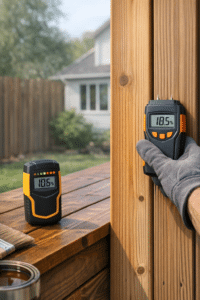
Let the wood dry fully. Wet wood can prevent proper adhesion or penetration.
Follow temperature guidelines. Avoid painting or staining in extreme heat, cold, or direct intense sun.
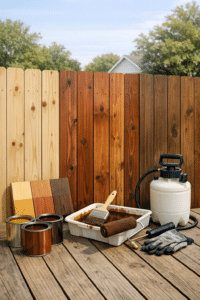
Use the right tools. Brushes, rollers, and sprayers each have advantages depending on the product and fence style.
Test the color. Different woods absorb finishes differently, so try a small hidden section first.
Do not skip preparation. Sand rough spots and address peeling or failing old coatings before recoating.
Paint vs. Stain: Which One Lasts Longer?
There is no one-size-fits-all answer. Some high-quality paints can last many years, especially on well-prepared surfaces. Many stains also perform exceptionally well and are often easier to maintain because they fade gradually rather than peel dramatically.
In general:
Paint may provide the boldest appearance and strongest surface coverage.
Stain often offers easier maintenance and a more natural aging process.
Solid stain can be an excellent middle-ground option among modern stain varieties.
The better question is not simply which lasts longer, but which finish will age in a way that fits your expectations and maintenance habits.
Final Thoughts on Fence Finishes
Understanding the different types of fence paints, stain varieties, and other wood finishing options makes it much easier to choose a finish that looks great and protects your investment. Paint offers strong color and full coverage, while stains let the character of the wood remain part of the design. The best option depends on the condition of your fence, the style you want, and how much upkeep you are prepared to handle.
If you are planning a fence update, take time to compare products carefully, test colors, and match the finish to your climate and wood type. The right choice can transform your fence from a basic boundary into a long-lasting feature that enhances your entire outdoor space. Ready to refresh your fence? Start by choosing the finish that fits your goals and give your yard the protection and style it deserves.