
Using Stain to Enhance Fence and Deck Architectural Features
A well-built fence or deck already adds structure, value, and charm to an outdoor space, but the right stain can take those features much further. Instead of treating stain as only a protective finish, homeowners can use it as a design tool to draw attention to shape, craftsmanship, and distinctive details. With thoughtful color choices and placement, staining can turn ordinary boards, rails, posts, and trim into standout architectural highlights that give a yard more personality and polish.
Whether you want a warm, natural look or a bold contrast that emphasizes lines and layers, strategic stain effects can transform the visual impact of your exterior woodwork. From subtle framing techniques to creative fence decoration, this guide explores practical ways to use stain to accentuate unique fence and deck features while preserving the beauty of the wood underneath.
Why Stain Is More Than a Protective Coating
Most people choose stain because it protects wood from sun, moisture, and wear. That matters, especially for fences and decks that face constant exposure to the elements. But stain also offers an aesthetic advantage that paint often cannot match. Because stain allows wood grain to remain visible, it enhances texture and depth rather than covering it up.
This makes stain especially useful for outdoor structures with decorative details. Arched fence tops, pergola-style deck covers, stair railings, post caps, lattice panels, built-in benches, skirting, and picture-frame borders all respond beautifully to layered or contrasting finishes. When used intentionally, stain can guide the eye to the parts of a structure you want people to notice most.
In other words, the right stain does two jobs at once: it preserves the material and elevates the design.
Identify the Features Worth Highlighting
Before selecting colors or planning patterns, look closely at the fence or deck itself. Good staining starts with understanding the visual strengths already built into the structure. Ask which elements create shape, movement, symmetry, or texture. Those are the best candidates for enhancement.
Fence Features to Emphasize
Fences often include more character than homeowners realize. Common details that work well as architectural highlights include:
Decorative post caps: These can be stained in a deeper or richer shade to create definition at regular intervals.
Lattice tops or inserts: A contrasting stain helps these patterned sections stand out without making them feel disconnected.
Horizontal and vertical framing: Staining frame pieces differently from infill boards adds dimension and a custom look.
Gates: Since gates naturally serve as focal points, they are ideal for special stain effects that create visual interest.
Arches and curved tops: Curved forms become more dramatic when outlined with a slightly darker or lighter tone.
Deck Features to Emphasize
Decks offer even more opportunities for layered finishes and subtle contrast. Consider highlighting:
Railings and balusters: A two-tone stain can define the boundary of the deck while adding elegance.
Stairs and risers: Contrasting tones on treads, risers, or stringers make the structure feel more intentional.
Built-in seating and planters: These features can stand out as integrated design elements with a complementary stain color.
Picture-frame borders: A darker perimeter creates a refined, finished appearance.
Pergolas and overhead accents: These architectural components often benefit from richer stains that draw the eye upward.
Choose Stain Colors That Support the Design
Color selection is where function meets style. The goal is not to use many different shades, but to create enough contrast to emphasize form without making the fence or deck look busy. In most cases, a primary stain tone plus one accent tone is enough.
Use Contrast for Definition
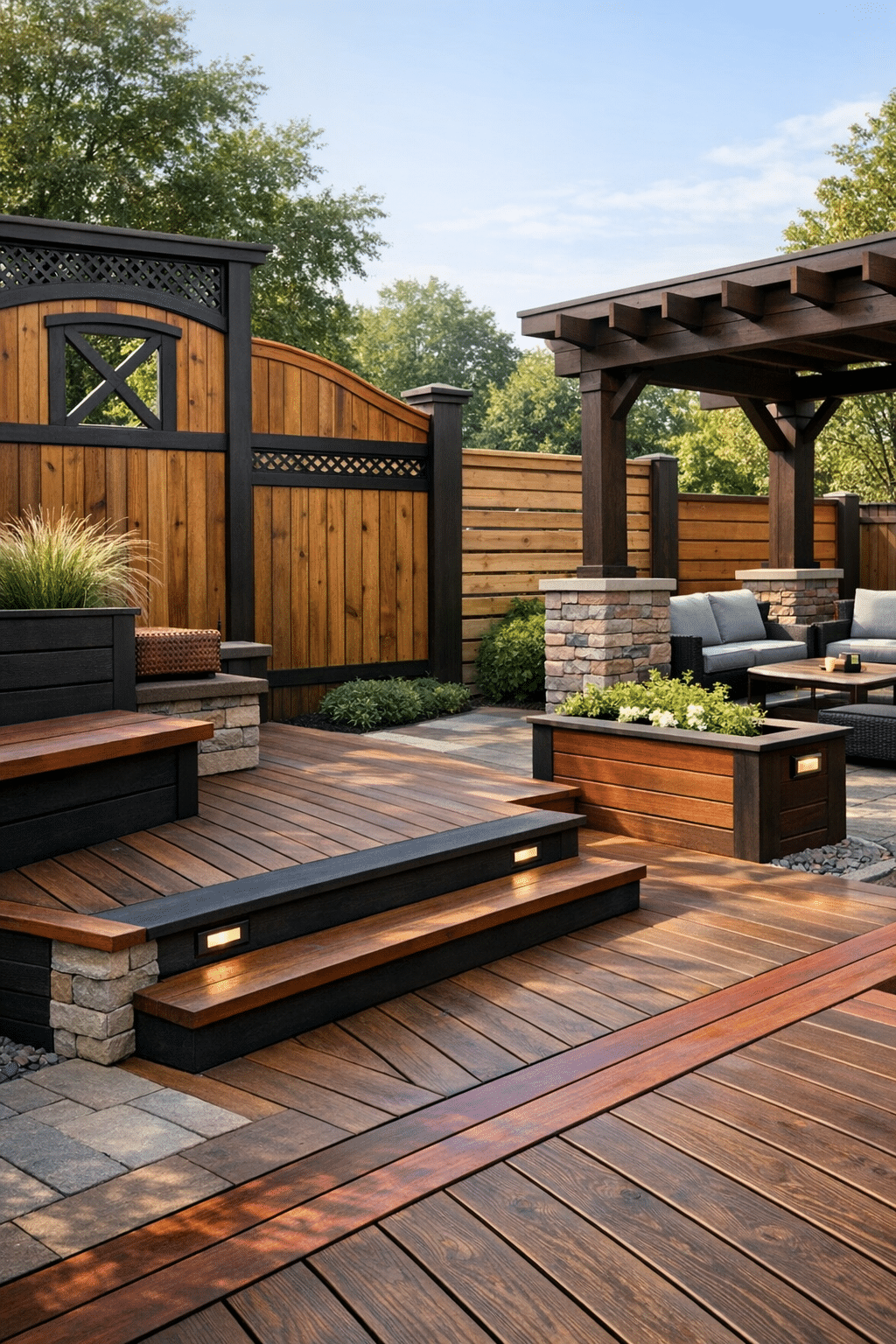
If you want strong visual separation, choose two stain colors within the same family but with different depths. For example, a medium walnut field with espresso posts and trim can produce clean, sophisticated stain effects. On a deck, a natural cedar surface paired with a dark brown border can clearly define the layout.
Use Tonal Variation for a Softer Look
Not every design needs dramatic contrast. A gentle shift from honey to chestnut, or from driftwood gray to weathered brown, can still create depth while maintaining a calm, unified appearance. This approach works especially well when the goal is subtle fence decoration rather than a bold statement.
Consider the Surrounding Environment
Stain should also work with the house exterior, landscaping, and hardscaping. Warm tones often pair nicely with brick, cream siding, and natural stone. Cooler or more muted stains can complement modern homes with black fixtures, gray trim, or concrete patios. A stain that coordinates with nearby materials will make the fence or deck feel like an intentional part of the overall property design.
Creative Staining Techniques for Architectural Highlights
Once you know what to emphasize and which colors to use, the next step is application strategy. The most effective architectural highlights usually come from deliberate placement rather than novelty. Here are several practical ways to achieve that polished look.
Frame-and-Panel Staining
This technique works beautifully for both fences and deck skirting. Stain the outer frame a darker tone and the interior boards a lighter one. The result resembles custom millwork and gives flat surfaces more depth. It is one of the simplest ways to create elegant stain effects without changing the structure itself.
Accent the Posts
Fence and deck posts are natural vertical anchors. Staining them a darker shade than the surrounding rails or panels gives the entire structure rhythm and definition. This is particularly effective on long fence runs, where repeated post accents help break up visual monotony and add refined fence decoration.
Highlight Borders and Edges
On decks, a stained border around the perimeter can create a picture-frame effect that makes the space appear more finished and upscale. On fences, top rails or cap boards can be stained in a contrasting shade to emphasize line and length. This method is especially useful for contemporary designs, where crisp horizontal or vertical emphasis matters.
Use Feature Zones
Not every section needs equal attention. Consider applying a special stain treatment only to a gate, privacy screen, built-in bench, or stair rail. A focused accent area can become a destination point in the yard without overwhelming the overall design. These targeted architectural highlights feel thoughtful and custom.
Blend Transparency Levels
Combining semi-transparent and semi-solid finishes can create rich visual layering. For example, a semi-transparent stain on deck boards preserves grain detail underfoot, while a semi-solid finish on railings or posts delivers sharper color contrast. Used carefully, this technique adds varied stain effects while maintaining cohesion.
Fence Decoration Ideas That Still Look Sophisticated
Fence decoration does not have to mean attaching ornaments or adding clutter. In fact, stain itself can be the decorative element. A few restrained ideas can dramatically improve curb appeal and backyard atmosphere.
Create a Gate Focal Point
A front or garden gate can be stained in a richer shade than the surrounding fence to mark the entrance and make it feel more welcoming. Add black hardware, and the gate becomes a strong design feature with minimal effort.
Define Sections in Large Yards
If your fence encloses different outdoor zones, such as a garden, play area, and entertainment space, stain can help distinguish those areas. Slight shifts in tone can signal transitions while keeping the entire perimeter cohesive.
Emphasize Decorative Cutouts or Patterns
Fences with lattice, geometric slats, or custom cutouts benefit from contrasting stain that reveals the design from a distance. This is one of the most effective uses of stain for both fence decoration and architectural highlights.
Practical Tips for Best Results
Good design depends on good preparation. Even the best color plan will fall flat if the application is uneven or the wood is in poor condition.
Prep the Surface Thoroughly
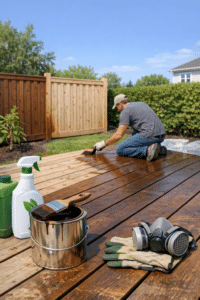
Clean the wood, remove debris, and let it dry fully before staining. Old finishes may need stripping or sanding, especially if you are changing tones or aiming for crisp contrast between elements.
Test Before Committing
Always sample stain on the actual wood in a few locations. Lighting changes throughout the day, and stain can appear warmer, cooler, lighter, or darker than expected once it penetrates the wood grain.
Keep Contrast Intentional
Too many colors can make a fence or deck feel fragmented. Stick to a small, coordinated palette and repeat it consistently. Effective stain effects depend on clarity and restraint.
Maintain the Finish
Because highlighted areas often draw the most attention, they should be maintained carefully. Recoat as needed based on sun exposure, weather conditions, and product recommendations. A well-maintained finish keeps your architectural highlights sharp and your investment protected.
When to Go DIY and When to Hire a Pro
Simple staining projects can be very manageable for homeowners, especially on newer fences or small decks. If the design involves multiple stain colors, detailed masking, elevated structures, or older wood with existing coatings, professional help may be worthwhile. Precision matters when creating contrast lines, accent borders, and decorative finishes. A skilled contractor can also recommend stain types that balance beauty with durability.
If your goal is to create custom fence decoration or advanced stain effects that elevate the entire outdoor space, expert application often pays off in the final look.
Conclusion
Stain can do far more than preserve wood. When used with intention, it can reveal craftsmanship, define structure, and turn fences and decks into true architectural highlights. From subtle tonal shifts to bold borders and elegant fence decoration, the right stain effects help outdoor spaces feel more finished, inviting, and unique.
If you are planning to refresh your fence or deck, think beyond basic coverage and start designing with stain. Choose the features you want to showcase, test a thoughtful color palette, and create an outdoor space that stands out for all the right reasons. Ready to transform your exterior woodwork? Start with a stain plan that highlights its best features.