
Fence and Deck Staining Templates for Different Wood Finishes
Choosing the right stain for a fence or deck should feel exciting—not overwhelming. This guide gives you practical, visual frameworks and easy-to-use stain color templates so you can confidently match stain to different wood types and achieve finishes you’ll love season after season. Whether you prefer a natural, transparent look or a bold, solid color, you’ll find clear guidance and finish examples tailored to your specific project.
Why Use Stain Color Templates for Fences and Decks?
Stain isn’t just about color—it’s about how light, texture, age, and environment interact with a specific wood surface. Stain color templates help you account for all these variables in a simple, repeatable way. With templates, you can:
– Compare colors consistently across wood types and conditions
– Predict how stain will look outdoors vs. indoors
– Choose an opacity that suits the wood’s character and the project’s maintenance goals
– Document your choices so touch-ups and future projects match perfectly
Know Your Wood Types Before You Stain
Different wood types respond uniquely to stain due to density, grain, natural oils, and color. Start with the species you’re working with:
Cedar
Cedar’s warm, reddish undertones and aromatic oils accept stain beautifully. Transparent and semi-transparent stains enhance its grain. Avoid overly cool grays unless you like high contrast; cedar warms them up.
Redwood
Redwood features rich red-brown hues. Transparent stains in redwood tones are stunning; if you need to tone down redness, choose a neutral brown semi-transparent or driftwood-inspired semi-solid.
Pine, Spruce, and Fir
These paler softwoods have varied grain absorption. Pre-conditioning is helpful. Semi-transparent to semi-solid stains deliver more even color, while transparent stains may blotch.
Pressure-Treated Pine
Often has a green or yellow cast when new. Let it dry thoroughly before staining. Semi-solid or solid stains neutralize green tones and disguise treatment marks and fasteners.
Ipe and Other Tropical Hardwoods
Extremely dense with natural oils. Use penetrating, hardwood-specific oils in natural or warm brown tones. Expect more frequent maintenance to retain depth of color.
Mahogany
Fine-grained and elegant. Transparent or lightly tinted penetrating finishes highlight chatoyance; avoid heavy films that can peel on horizontal surfaces.
Opacity and Finish Levels: What They Mean for Results
Understanding opacity makes your finish examples more predictable:
– Transparent: Highest wood visibility; best on new or premium boards; shortest maintenance cycle.
– Semi-Transparent: Adds color while letting grain show; balanced choice for many decks and fences.
– Semi-Solid: Masks more variation; ideal for older or mismatched boards; longer color longevity.
– Solid: Paint-like coverage while still soaking in; hides flaws and mismatched wood types; longest color life and most UV resistance.
Also consider film-forming vs. penetrating stains. For decks, low-sheen, penetrating finishes are preferred to maintain traction and reduce peeling risk. Fences can use any opacity depending on your aesthetic and maintenance goals.
Stain Color Templates You Can Use Today
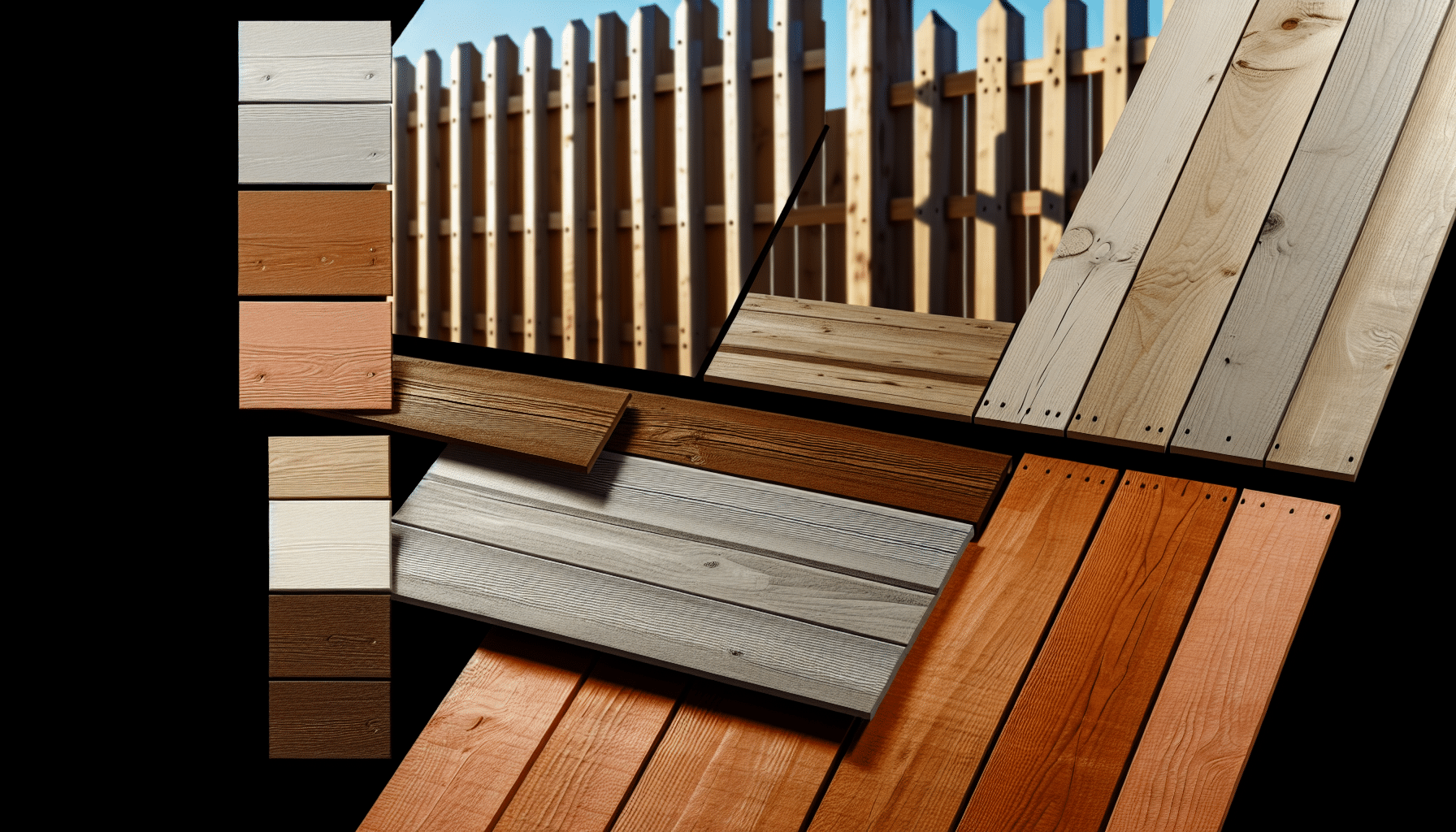
Template 1: Quick-Pick by Wood Type Matrix
Use this fast-start template to align each wood species with proven color families. Mark your first and second choices, then create test swatches.
– Cedar: Honey amber, cedar tone, warm brown; alt: coastal gray (semi-solid)
– Redwood: Redwood natural, cinnamon brown; alt: neutral chestnut (semi-transparent)
– Pine/Spruce/Fir: Golden oak, light walnut; alt: chestnut (semi-solid) for consistency
– Pressure-Treated Pine: Medium walnut, espresso, warm greige (semi-solid/solid)
– Ipe: Natural hardwood oil, teak brown
– Mahogany: Amber mahogany, light cherry-brown penetrating oil
Label this as your “Species Match” board in your stain color templates notebook or project file.
Template 2: Undertone Harmony
Match or balance undertones in your environment to avoid clashing with siding, stone, or metal accents.
– Warm Framework: Honey, amber, golden brown, chestnut
– Cool-Neutral Framework: Driftwood gray, taupe-gray, weathered oak
– Rich Accent Framework: Espresso, dark walnut, charcoal solid
Strategy: If your home exterior is cool (blue/gray), choose a cool-neutral or rich accent. If it’s warm (tan/brown/brick), lean warm or use a neutral brown to bridge.
Template 3: Sun, Shade, and Surroundings
Outdoor light brightens colors. Expect stains to read 1–2 steps lighter outside than on a sample card.
– High UV/Full Sun: Deeper tones and semi-solid/solid for longevity
– Partial Shade: Semi-transparent looks vibrant without washing out
– Dense Shade: Avoid very dark stains that can look flat; use warm mid-tones for depth
Note your site exposure within your stain color templates so you can adjust depth accordingly.
Template 4: Age and Condition
Board age and wear affect absorption and uniformity.
– New Boards: Transparent or semi-transparent to showcase grain (except pressure-treated—let it season)
– Mixed/Patched: Semi-solid to unify, solid to fully disguise differences
– Heavily Weathered: Solid stain after prep and repairs for best coverage
Template 5: Maintenance Planning
Choose color depth based on how often you’re willing to recoat.
– Low Maintenance: Solid or semi-solid; 3–5+ years on fences, 2–4 on decks depending on climate
– Medium: Semi-transparent; 2–3 years decks; 3–4 fences
– High Touch: Transparent oils; yearly or as needed, especially for hardwood decks
Finish Examples for Popular Wood Types
Use these finish examples as starting points and adapt to your project using the templates above.
1) New Cedar Fence: Warm and Natural
Template Path: Species Match → Undertone Harmony (warm) → Sun Exposure (partial) → Maintenance (medium).
Pick: Semi-transparent honey amber or “cedar tone.”
Result: Enhances cedar’s figure and keeps a classic, inviting look. Pair with matte black hardware for contrast.
2) Weathered Cedar Deck: Modern Coastal
Template Path: Age/Condition (weathered) → Undertone (cool-neutral) → High UV.
Pick: Semi-solid coastal gray.
Result: Unifies sun-faded boards, minimizes blotching, and resists fade. Add a slip-resistant topcoat if needed.
3) Pressure-Treated Pine Fence: Neutralized and Clean
Template Path: Species Match (PT Pine) → Undertone (neutral) → Sun (full).
Pick: Semi-solid chestnut or warm greige.
Result: Mutes green/yellow cast, hides stamps and fasteners, and offers great UV holdout.
4) Spruce Privacy Fence: Architectural Greige
Template Path: Species Match (SPF) → Undertone (cool-neutral) → Low Maintenance.
Pick: Solid warm greige.
Result: Smooth, uniform finish that pairs with stone and modern siding.
5) Redwood Pergola: Depth and Glow
Template Path: Species Match (redwood) → Undertone (warm) → Partial Shade.
Pick: Transparent or lightly tinted redwood natural.
Result: Accentuates ribbon grain and natural warmth without going too dark overhead.
6) Ipe Deck: Classic Hardwood Richness
Template Path: Species Match (hardwood) → Maintenance (high touch) → Full Sun.
Pick: Penetrating hardwood oil in natural brown/teak.
Result: Deep, luxurious brown; plan on seasonal refreshes to prevent silvering.
7) Mahogany Porch: Boutique Sheen without Slipperiness
Template Path: Species Match (mahogany) → Transparent → Shaded.
Pick: Amber-toned penetrating finish.
Result: Highlights figure and color shift; retains traction for covered porches.
8) Mixed-Wood or Patched Deck: Unified and Contemporary
Template Path: Age/Condition (mixed) → Undertone (rich accent) → Low Maintenance.
Pick: Solid espresso or charcoal.
Result: Disguises board-to-board variation and creates a dramatic, modern frame for outdoor furniture.
How to Build and Test Your Own Stain Color Templates
Turn these frameworks into a hands-on system you can reuse on any project.
Step 1: Gather Supplies
Get sample pints in three opacities you’re considering, painter’s tape, a foam brush, lint-free rags, a notebook, and scrap boards of the same species (or hidden sections of