
How to Protect Your Fence and Deck During Winter
When temperatures plunge and moisture lingers, your fence and deck face their toughest season. Snow, ice, and freeze–thaw cycles can wreak havoc on wood fibers and finishes, dulling color, lifting stain, and loosening fasteners. With a few smart steps, you can maintain the beauty and strength of stained wood all winter long—and save yourself from costly fixes in spring. This guide walks you through practical, homeowner-friendly strategies for winter care fence routines, plus proven deck protection cold weather methods and stain winter tips that keep finishes resilient.
Why Winter Is Hard on Wood (and What That Means for You)
Wood is porous. In winter, it absorbs moisture from rain, sleet, and snow. When temperatures drop, trapped water freezes and expands, creating micro-fractures and pushing stain or sealant away from the surface. UV and wind accelerate wear, while de-icing salts can stain and degrade finishes. For fences, ground contact and wind loads are key stressors; for decks, foot traffic on icy surfaces, pooled water, and sun exposure are the main culprits. Understanding these forces sets you up to choose the right winter care fence and deck strategies.
Pre-Winter Checklist: Prep Before the First Frost
Inspect the structure
Walk the perimeter to spot cracked boards, loose rails, lifted nails, and wobbly posts. Tighten hardware and replace corroded screws with exterior-rated fasteners. On decks, pay special attention to rail posts, stairs, and the ledger board.
Trim and clear
Cut back shrubs and vines that trap moisture against wood. Remove leaves and debris from deck board gaps so meltwater drains freely. Clear soil and mulch away from fence pickets to reduce rot at the base.
Check drainage
Ensure downspouts and gutters direct water away from the deck and fence line. If water tends to pool, consider adding gravel trenches or a French drain to move meltwater off-site.
Lubricate and align
For gates, lubricate hinges and latches, verify alignment, and install a stop to prevent wind whipping. Small adjustments now prevent mid-winter sagging.
Deep Clean: The Foundation of Winter Protection
Clean wood holds stain better and dries faster. Before temperatures consistently sit below 50°F (10°C), wash surfaces to remove grime, mildew, and tannin bleed.
How to clean safely
Use a wood-safe cleaner (oxygenated bleach or specialized deck/fence cleaner). Scrub with a stiff brush. If you pressure wash, keep the pressure moderate (generally under 1,200–1,500 PSI) and use a fan tip, holding the wand 10–12 inches from the surface to avoid furring the grain. Rinse thoroughly and allow 24–48 hours of dry weather for the wood to release moisture.
Stain and Seal: Timing, Products, and Technique
An intact finish is your first defense. If water no longer beads on the surface or color looks dull and blotchy, it’s time to refresh the finish. Here are essential stain winter tips to maximize durability when cold weather looms.
Choose the right formula
Penetrating, oil-based stains often perform well in cold, dry air because they soak deeply and enhance water repellency. High-quality water-based formulas have improved dramatically and cure faster, but both types must be applied within the manufacturer’s temperature window (commonly 40–90°F/4–32°C). Look for products rated for low-temperature application if your season is short.
Watch the weather window
Plan for 24–48 hours of dry weather above the minimum application temperature, with nighttime lows that won’t drop below the product’s threshold. Avoid staining when dew is heavy or frost is likely—moisture can cloud the finish or prevent penetration.
Prep the surface
After cleaning, let the wood dry fully (ideally to under 15% moisture content; a basic moisture meter helps). Lightly sand rough spots and open raised grain, then remove dust. Don’t forget end-grain and horizontal surfaces (top rails, stair treads), which absorb the most water.
Apply thin, even coats
Brush or roll thin coats, working boards end to end to avoid lap marks. Wipe off excess with a clean rag to prevent sticky spots. Most penetrating stains require one to two coats; always follow label guidance. For decks, consider adding a traction additive to reduce slips on icy mornings.
Seal vulnerable areas
Cap fence posts and rail ends to keep water out of end grain. Use a clear water repellent on cut ends, not just the face, for added protection—a small step that yields big gains in longevity.
Daily Habits for Cold Months: Practical Deck and Fence Care
Small, consistent actions are the backbone of winter care fence routines and effective deck protection cold strategies.
Remove snow the right way
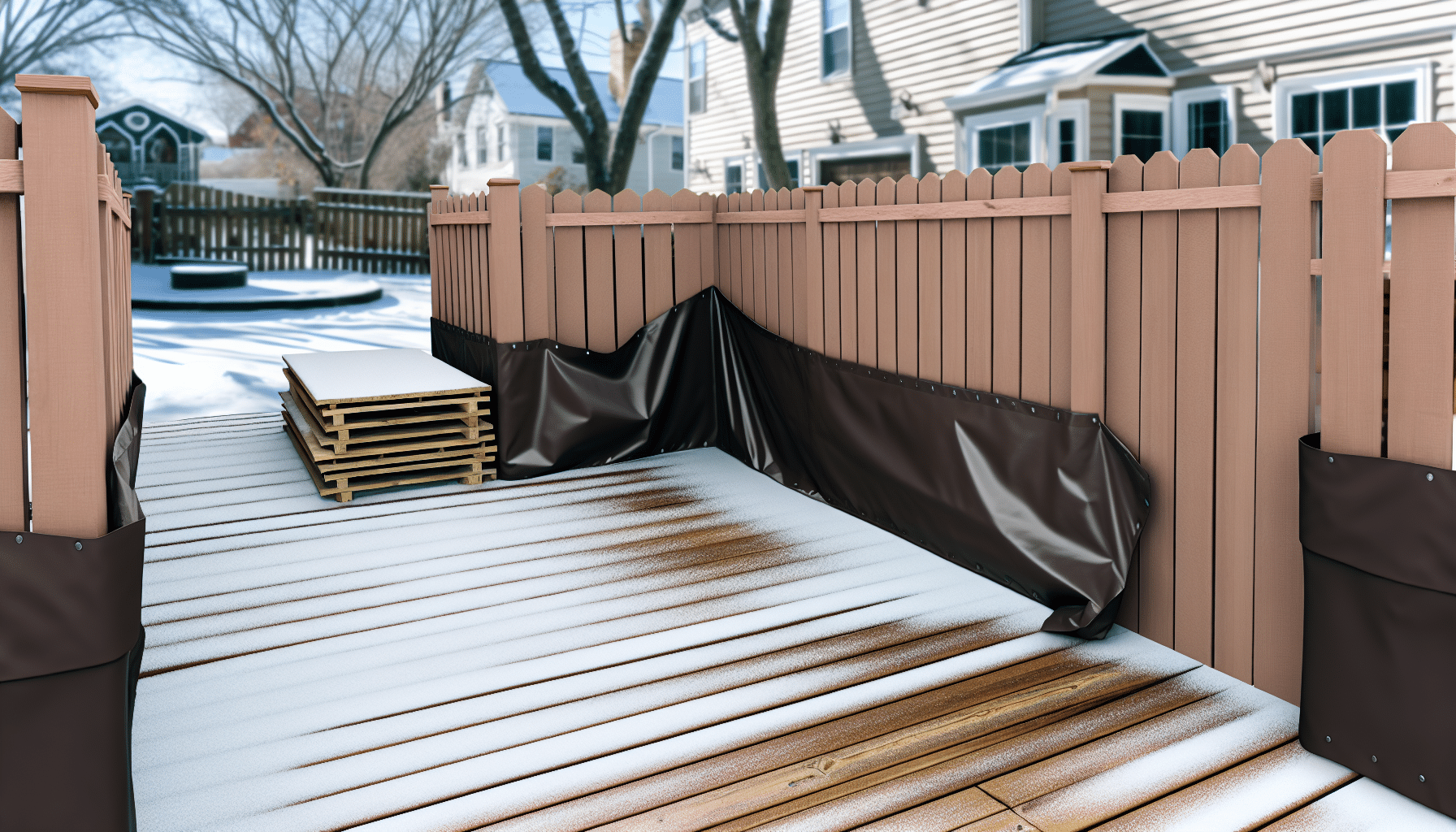
For decks, shovel along the direction of the boards with a plastic shovel to avoid gouges. Keep a 1–2 inch buffer over the surface if you can; you’re removing weight and slush, not polishing the boards. For fences, avoid piling shoveled snow against pickets or rails—this keeps the base wet and encourages rot.
Avoid harsh de-icers
Standard rock salt (sodium chloride) can stain wood and accelerate corrosion of fasteners. Opt for calcium magnesium acetate or sand for traction. Place heavy-duty mats at exterior doors to limit gritty traffic across deck boards.
Protect high-use zones
Under grills or smokers, use a heat-resistant mat and keep open flame or ember-producing heaters clear of rails and posts. Move planters onto risers to prevent trapped moisture beneath them.
Drainage and Moisture Management
Water causes most winter damage; controlling it is the heart of deck protection cold planning.
Keep gaps and channels open
Use a putty knife or gap-cleaning tool to clear debris from between deck boards. Make sure lattice or skirting allows ventilation so moisture doesn’t get trapped.
Improve grade around fences
Ensure soil slopes away from the fence line. Add a few inches of drainage gravel at the base of posts and beneath problem spots to reduce splash-back and standing water.
Mind the melt path
Position snow piles where meltwater won’t run across your deck or sit against your fence. Redirect downspouts with extensions to discharge well away from wood structures.
Freeze–Thaw Defense: Prevent Cracks and Heaving
Freeze–thaw cycles magnify small problems. Seal cracks longer than a credit card’s width in late fall if temperatures permit. Install or repair post caps to block water entry. Monitor fence posts after storms; if they heave or lean, shovel away packed snow and re-tamp the surrounding soil or gravel when conditions allow.
Material-Specific Guidance
Cedar and redwood
These species resist decay naturally but still need a breathable, penetrating finish. Avoid thick film-forming coatings that can peel in cold conditions.
Pressure-treated pine
The grain can raise after cleaning; a quick sanding smooths it. Pay extra attention to sealing end grain and fastener penetrations to keep water out.
Composite decking
Composite doesn’t rot, but its caps can scratch. Use plastic shovels, avoid metal ice chippers, and follow manufacturer-approved cleaners. Mold can still grow on surface grime; keep it clean and dry.
Vinyl and metal fencing
Vinyl is low-maintenance but can become brittle in extreme cold—avoid impacts. For metal, remove road salt promptly to prevent corrosion, and touch up protective coatings as needed.
Safety First During Winter Maintenance
Wear slip-resistant footwear and gloves with good grip. Work in daylight, and keep tools dry. If using cleaners or stains, follow label precautions and ensure good ventilation—especially on covered porches or enclosed decks.
Mid-Winter Checkups: A Simple Schedule
Set reminders after major storms to:
• Brush off heavy snow from rails and benches to reduce load.
• Clear slush channels to restore drainage.
• Re-tighten any hardware that worked loose.
• Spot clean muddy or salty areas before they stain.
• Re-seat a gate if frost shift causes misalignment.
When to Call a Professional
If your fence is leaning, posts are rotted, or your deck’s ledger board shows signs of separation, bring in a pro for structural evaluation. Likewise, complex staining in cold shoulder seasons—especially on large surfaces—can benefit from professional equipment, low-temp product expertise, and moisture testing to ensure a flawless finish.
Plan for Spring Success
Winter protection sets the stage for an easy spring refresh. As temperatures warm, wash away residual grime, check for any winter wear, and touch up stain where needed. A quick recoat on high-traffic zones can extend the life of your full finish cycle by years.
Quick Reference: Core Stain Winter Tips
• Clean thoroughly and let wood dry below 15% moisture before coating.
• Choose a product rated for cool-weather application and watch the dew point.
• Apply thin coats; focus on end grain, top rails, and horizontal faces.
• Maintain drainage and avoid direct contact with snow piles and de-icers.
• Perform small, frequent checks—preventing problems beats repairing them.
Bottom line: A thoughtful winter care fence routine, combined with practical deck protection cold strategies and the right stain winter tips, can keep your outdoor wood looking great and performing even better—no matter how long winter lasts.
Protect Your Investment This Winter
With a weekend of prep and mindful habits through the season, you’ll prevent damage, preserve color, and enjoy a safer outdoor space. Ready to winterize your fence and deck or refresh a worn finish? Take action today: gather your supplies, plan your weather window, and get started—or reach out to a trusted local pro for a fast, durable upgrade before the next cold snap.