
Short answer: with the right product and prep, a professionally stained fence in Northwest Arkansas can stay protected and keep its color for 2–3+ years. With cheap off-the-shelf stain, you’re usually redoing it in a year.
Let’s break down why.
Arkansas Weather Is Brutal on Wood
Northwest Arkansas is beautiful, but it’s not kind to wood.
Between Rogers, Bentonville, and Springdale, we see:
- Intense summer UV that bakes the color out of unprotected wood
- High humidity that swells boards and invites mold and mildew
- Sudden downpours and storms that drive moisture deep into the grain
- Freeze / thaw cycles in winter that dry wood out and cause cracking
Your fence sits in that 24/7 with no shade break, no roof, nothing. Unstained pine or cedar will start to gray, dry out, and cup in as little as a few months in direct Arkansas sun.
That’s why stain isn’t “just for looks.” It’s a protective layer against UV, moisture, and pests. Without it, the wood breaks down faster, and you’re replacing pickets and rails way earlier than you should.
DIY Stain vs. Professional Stain: How Long Do They Actually Last?
Not all stain is the same. Here’s the real difference:
Big-box / DIY stain
This is the stuff you can grab at a home improvement store.
- Uses weaker pigments and more filler
- Sits more on the surface instead of soaking into the wood
- Usually relies on harsh solvent carriers
- Fades fast in direct sun and starts looking washed out in about a year
- Can peel and spot, so the fence looks blotchy instead of evenly aged
The result: you’re right back out there with a pump sprayer every season.
Professional-grade stain & seal (what we use)
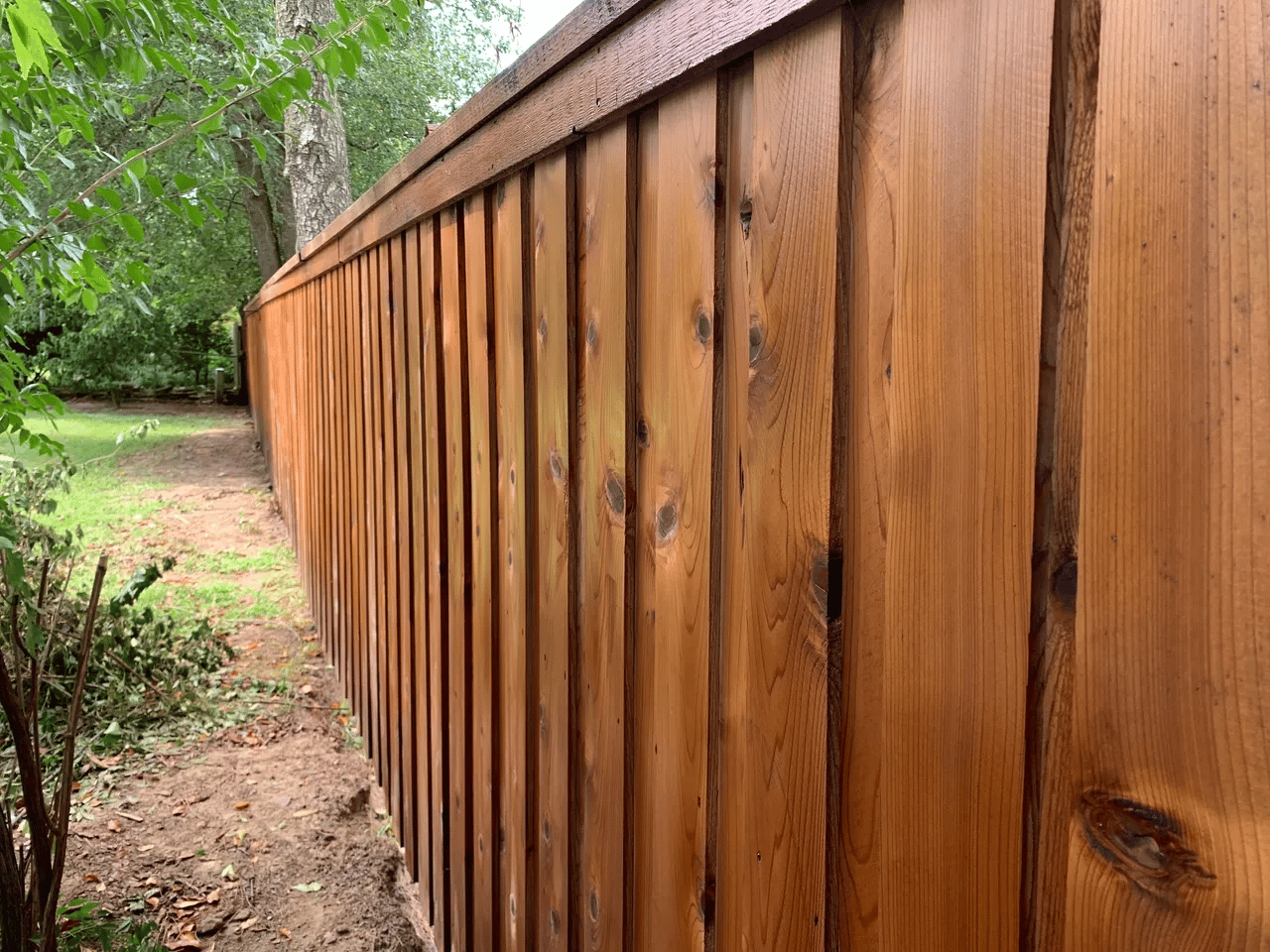
We use commercial products formulated for exterior fencing and decking, low-VOC, deep-penetrating, and built to handle real weather, not showroom lighting.
What that means for you:
- Stronger UV protection, so the color holds longer
- Moisture barrier that helps stop warping, cupping, and splitting
- No harsh “gas-off” chemicals hanging in your yard
- Safer around kids and pets
- No chalky, flaky look six months later
On a typical vertical fence in Arkansas conditions, a pro-grade stain and seal can last 2–3+ years before it needs to be refreshed, and we back our work with a two-to-three year warranty for exactly that reason.
So if you’re asking “how often am I restaining this thing?” the honest answer is:
- DIY / off-the-shelf stain: ~1 year
- Professional low-VOC stain & seal: ~2–3 years, sometimes longer depending on exposure
That’s how you buy time before boards start failing.
3 Biggest Factors That Change How Long Your Stain Lasts
Even with a quality product, every fence ages a little differently. The lifespan really depends on three things:
1. Wood type
- Cedar naturally resists rot and holds stain really well. It tends to age more gracefully and stay more stable.
- Pressure-treated pine is more common in Northwest Arkansas because it’s affordable — but it’s softer, tends to crack as it dries out, and needs stain to slow that down.
If you’ve got pine, you absolutely want stain and seal as early as possible. It keeps the boards from drying out and splitting.
2. Sun exposure
Walk your fence line. Which panels get hammered by full sun all day?
Sections that face direct south or west sun will fade faster than the panels that sit in shade behind a tree line. Those high-exposure runs may need touched up sooner than the rest.
This is also why two neighbors can stain on the same day and, a year later, one fence looks brand new and the other looks baked and tired.
3. Prep and application
This is the part people underestimate the most.
If you just spray stain over dirty, gray, weathered wood, you’re not protecting anything, you’re just tinting the dirt.
Proper prep matters:
- Clean the surface and remove algae, mildew, and gray oxidized wood
- Let the wood dry to the right moisture content
- Apply stain evenly and at the correct saturation so it actually soaks
We do it that way every time because prep is what makes the stain last. Shortcut prep = short life.
How to Tell Your Fence Is No Longer Protected
You don’t have to guess. Your fence will tell you it’s time.
Here are the four biggest red flags:
- The color has gone dull or gray.
Fresh stain has depth and richness. When you start seeing that washed-out driftwood look, UV has already eaten into the top layer of wood fibers. - Hairline cracking at the tops of pickets.
Look along the top edge of the boards. If you’re seeing dry cracking or splitting, that’s sun and moisture cycling. The wood is drying out. - Water doesn’t bead anymore.
After a light rain or garden hose spray, watch the surface. If water immediately soaks in instead of beading up and rolling off, your seal is basically gone. - Uneven color panels.
When one panel looks way lighter than the next, that usually means the lighter section is no longer protected.
If you’re seeing any of that, don’t wait. Once water starts getting in, boards don’t fail all at once, they fail in sections. That’s when you start paying for repairs instead of just maintenance.
When Should You Restain in Arkansas?
You can stain almost any time of year, but not all seasons are equal.
In Northwest Arkansas, the best windows tend to be:
- Fall (after the peak summer heat)
The sun isn’t as intense, temperatures are more stable, and the wood is usually dry enough to take stain well. This locks in protection before winter moisture and freezing temps. - Early spring (before heavy summer UV)
Great time to refresh color and seal the wood before the fence sits through months of high heat and direct sun.
Mid-summer, you’re fighting extreme heat that can flash-dry stain before it has a chance to penetrate. Mid-winter, you’re dealing with cold, damp wood that just won’t absorb product evenly. Fall and early spring are that sweet spot.
Ready to Get Your Fence Protected?
If your fence is already graying, cracking at the top rails, or not repelling water anymore, it’s no longer protected, it’s exposed.
The good news: you don’t have to replace boards to make it look good again. A professional clean, stain, and seal can reset the clock, bring the color back, and give you another 2–3 years of protection.
If you’re in Rogers, Bentonville, or anywhere in Northwest Arkansas, we can take a look and tell you exactly where your fence is on that timeline, no pressure, no upsell. If your fence needs a repair before staining, contact Fence Guys for an estimate.
Get ahead of winter moisture. Get ahead of summer sun. Protect your fence, don’t just cross your fingers.